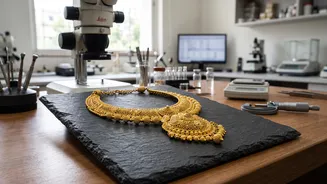




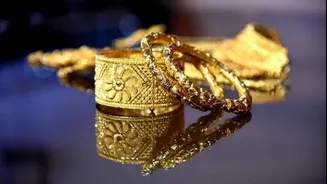

The Gold Standard of Trust: BIS Hallmarking
For generations, gold has been a cornerstone of Indian households, representing both wealth and security. To protect consumers from under-karating and adulteration, the Government of India made hallmarking of gold jewellery mandatory. Overseen by the Bureau
of Indian Standards (BIS), this system certifies the purity of the metal. Since June 2021, all hallmarked gold jewellery must carry a six-character alphanumeric Hallmark Unique Identification (HUID) number. This code is a guarantee of purity, allowing buyers to trace the item's history, including the jeweller and the Assaying and Hallmarking Centre (AHC) that certified it. The system is designed to provide end-to-end traceability and transparency, with over 65 crore gold articles hallmarked with HUID as of October 2026.
What is the Rhenium Controversy?
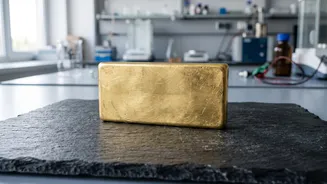
Recently, an investigation by a media house has sparked concern. It alleged that a rare and dense metal called Rhenium is being used to adulterate gold. Rhenium is a silvery-grey metal with a density close to that of gold, making it a potential candidate for illicit mixing. The core of the allegation is that by adding Rhenium powder, the weight of a gold ornament can be increased without being easily detected by some common testing methods. The investigation, conducted in Jodhpur, claimed to have created a piece of jewellery with about 10% rhenium mixed in, which then passed several purity checks and even received a 22-carat hallmark. This has understandably raised questions about the reliability of the very systems designed to protect consumers.
How Rhenium Could Deceive Purity Tests
The challenge lies in the technology used for quick purity assessments. Most jewellery stores use X-Ray Fluorescence (XRF) machines, or 'karatmeters', for a non-destructive, surface-level analysis. According to reports, the energy lines of Rhenium's X-ray signature can be very close to those of gold. A lower-resolution or improperly calibrated XRF machine might misread the Rhenium signal as gold, thus reporting a higher purity than is actually present. The investigation alleged that an ornament with an actual purity of around 20 carats was certified as 22-carat (91.6% pure) gold. It is crucial to note, however, that these claims stem from a media investigation and are yet to be independently confirmed by official government laboratories. Advanced testing methods can indeed detect Rhenium.
Official Response and Industry Stance
As of now, the 'Rhenium debate' is based on reported allegations, and there is no official confirmation from BIS or other government bodies about widespread adulteration using this method. Industry bodies like the All India Gem and Jewellery Domestic Council (GJC) and BIS are aware of the reports. The situation is being monitored, but it's important to distinguish between an investigative report and a confirmed, systemic failure. The hallmarking process at a recognised AHC is supposed to be more rigorous than a simple countertop XRF test. It involves fire assay in cases of dispute, which is a destructive but highly accurate method of determining gold content. Until official labs release their findings, the BIS hallmarking system, especially with the HUID, remains the official benchmark for purity.
How to Protect Yourself as a Gold Buyer
While the industry and regulators investigate, consumers can take several steps to ensure they are protected. The most important step is to always insist on buying jewellery with the three BIS hallmark signs: the BIS logo, the purity grade (e.g., 22K916), and the six-character HUID. Upon purchase, ask for a proper bill that clearly mentions the hallmarking details. You can instantly verify the HUID number using the 'Verify HUID' feature on the BIS CARE mobile app. This will show you the jeweller’s name, registration number, AHC details, and purity of the item. If you have any doubts about your hallmarked jewellery, you have the right to get it tested at any BIS-recognised AHC for a nominal fee.