





What is Operation Economic Outcast?
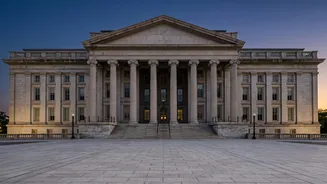
On Monday, August 24, 2026, U.S. Treasury Secretary Scott Bessent announced the launch of 'Operation Economic Outcast,' a sweeping campaign designed to sever Iran's remaining links to the global economy. Described as an 'economic D-Day' and a move to achieve
the 'economic asphyxiation of this regime,' the operation represents an unprecedented level of financial coercion. Unlike previous measures, this initiative explicitly targets third countries and their financial institutions, warning them to cease all interactions with Iran or face being cut off from the US dollar system themselves. Every country has been given a 'defined timeline' to comply, turning this into a global ultimatum.
The Tools of Economic Warfare
The operation expands sanctions to five critical sectors of the Iranian economy: digital assets, technology, gold, aviation, and shipping. In addition, the Treasury Department blacklisted over 60 global entities, individuals, and vessels allegedly tied to Iran's missile programs, cyber operations, and oil revenue generation. The core of this strategy lies in the aggressive use of 'secondary sanctions.' Primary sanctions bar U.S. entities from dealing with a target, but secondary sanctions are extraterritorial, penalizing non-U.S. companies and countries for doing business with the sanctioned nation. By threatening to remove access to the dollar system, the U.S. forces a choice: do business with Iran or do business with the United States.
A Test of the Dollar's Dominance
This is where the 'test' truly begins. For years, the dollar's status as the world's primary reserve currency has given the U.S. immense geopolitical leverage. However, the frequent 'weaponization' of the dollar has spurred other nations to seek alternatives. A growing bloc of countries, including the BRICS nations (Brazil, Russia, India, China, and South Africa, now expanded), have been actively building parallel systems. They are increasingly settling trade in local currencies, developing alternative payment networks to SWIFT, and diversifying their reserves away from the dollar and into gold or other currencies like the yuan. This de-dollarization movement is not about replacing the dollar overnight, but about creating an economic sphere resilient to U.S. sanctions.
Global Ripples and India's Stake
Operation Economic Outcast forces countries like India into a difficult position. India has historically maintained relationships with a wide array of global partners, including both the U.S. and Iran. Iran has been a significant, if inconsistent, source of oil for India, and the two countries share strategic interests, including connectivity projects like the Chabahar Port. The U.S. ultimatum puts this diplomatic balancing act under severe strain. Complying with U.S. demands could mean abandoning strategic projects and energy security options, while defying them risks severe economic penalties. The push for trade in local currencies, something India has explored with multiple partners, becomes more than an economic experiment in this context; it's a potential necessity for maintaining strategic autonomy. The outcome of this standoff will have significant implications for how nations like India navigate the evolving global order.