



The Real Dangers Are Invisible
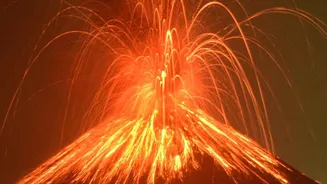
Lava is the most obvious hazard of a volcano, but it’s often the slowest and most predictable threat. The real killers are far more insidious. Closed zones are not arbitrary; they are buffer areas calculated by scientists to protect people from a host
of invisible dangers. Volcanic gases like sulfur dioxide, carbon dioxide, and hydrogen sulfide can be lethal. Carbon dioxide is heavier than air and can collect in low-lying areas, silently causing asphyxiation. Sulfur dioxide irritates the eyes and respiratory system, and at high concentrations, it can be fatal. These gases can be odorless and colorless, meaning a photographer could walk into a deadly pocket of air without any warning. Furthermore, the ground itself is treacherous. What appears to be a solid crust of cooled lava can be a thin shell over a molten tube, prone to collapse. The terrain is unstable, crater edges can crumble without warning, and sudden explosions or pyroclastic flows—superheated clouds of ash and gas moving at hurricane speeds—can occur with little to no notice. These are not risks that can be outrun or outsmarted.
A Reckless Gamble, Not a Calculated Risk
Some photographers might frame trespassing as a calculated risk, a necessary component of capturing extreme nature. This is a dangerous delusion. It is a selfish gamble where the photographer stakes not only their own life but the lives of others. When a trespasser gets into trouble, a rescue mission is launched. This puts park rangers, first responders, and pilots in harm's way, forcing them to enter the very same hazardous zone the photographer chose to violate. As Chief Ranger Jack Corrao of Hawaiʻi Volcanoes National Park once stated, responding to these incidents shifts focus away from ensuring the safety of the general public and places staff in hazardous situations. These operations are expensive, resource-intensive, and fundamentally preventable. The pursuit of social media 'bragging rights' or a portfolio image is not a justifiable reason to endanger the lives of rescue professionals. The penalties for such actions can be severe, including hefty fines and jail time, a clear indication from authorities that this behavior is not tolerated.
The Impact Beyond the Individual
The consequences of ignoring closure signs ripple outwards. Ecologically, volcanic landscapes are often fragile, and foot traffic in restricted areas can cause irreparable damage to unique flora and geological formations. For local communities, especially those reliant on tourism, the irresponsible actions of a few can lead to stricter regulations for everyone. Parks may be forced to close larger areas or restrict access entirely, punishing the vast majority of respectful visitors because of the recklessness of a minority. This also fosters a toxic culture within the photography community itself. When images captured illegally are celebrated online, it encourages copycat behavior, normalizing life-threatening risks for the sake of a photograph. It creates a false narrative that the best shots are the ones that require breaking the rules, disrespecting a core principle of ethical outdoor activity: leaving no trace and respecting boundaries.
An Ethical Line in the Ash
True professionalism in photography is not defined by risk, but by respect—for the subject, the environment, and the community. Ethical photography means recognizing that no picture is worth a life. It means understanding that rules and closures are established by experts for public safety. Countless breathtaking images of volcanoes are captured every year by photographers who follow the rules. They use longer lenses, find legal vantage points, and work with experienced local guides. They understand that patience and respect for nature yield far more powerful results than trespassing. A photographer's responsibility is to capture the majesty of the natural world, not to become a casualty of it. The story of Robert Landsburg, who died photographing the 1980 eruption of Mount St. Helens but protected his film with his body, is often romanticized. But the goal should be to live to share the story, not to become a tragic footnote in it.