





Mehrangarh Fort, Jodhpur
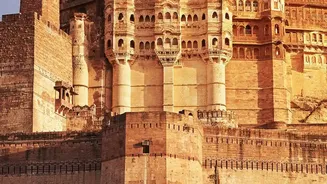
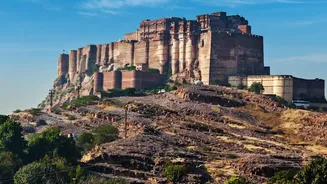
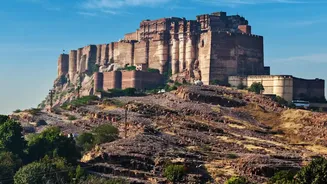
Rising 400 feet above the city of Jodhpur, Mehrangarh seems to emerge directly from the rock it stands on. Its scale is breathtaking, with massive walls up to 36 metres high and 21 metres wide that have proven nearly impenetrable for centuries. The setting
provides a commanding, panoramic view of the 'Blue City' below. Inside its rugged exterior, the craft is exquisite. Palaces like the Moti Mahal (Pearl Palace) and Sheesh Mahal (Hall of Mirrors) feature delicate sandstone carvings and intricate mirror work, showcasing the refined artistry of Rajput builders. The fort is a stunning contrast between brute strength and delicate beauty.
Chittorgarh Fort, Rajasthan
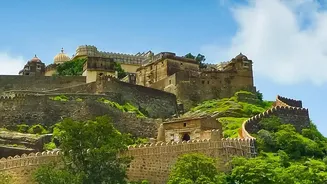
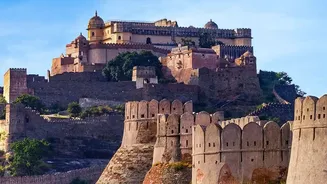
As one of the largest forts in India, Chittorgarh is a city in itself. A UNESCO World Heritage site, it sprawls across 700 acres on a high hill overlooking the plains. Its scale is that of a small town, containing over 65 historic structures, including palaces, temples, and commemorative towers. The setting is steeped in history and legend, the site of epic battles and acts of incredible bravery. The craft is visible in its surviving structures, like the Vijay Stambh (Tower of Victory), a nine-story tower covered in detailed sculptures that celebrates a 15th-century military triumph. The fort also features numerous water bodies, an engineering marvel that made it a self-sustaining fortress.
Golconda Fort, Hyderabad
The genius of Golconda lies in its scientific craft. Located on a granite hill, this fort is famous for its acoustic engineering. A single clap at the entrance gate can be heard clearly at the citadel's highest point, almost a kilometre away, a feature designed as an ingenious security alarm. The fort's scale is immense, with a 10-kilometre-long outer wall and a series of concentric fortifications. Its setting on ancient trade routes once made it a hub for the world's diamond trade. This fort is a testament to the idea that the smartest defence is not always the most visible one.
Amer Fort, Jaipur
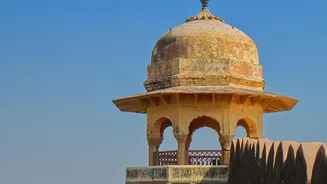
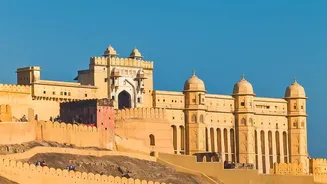
Set on a forested hill overlooking Maota Lake, Amer Fort has one of the most picturesque settings in Rajasthan. Its beauty is a deliberate work of craft, blending robust Rajput defences with ornate Mughal aesthetics. Built from pale yellow and pink sandstone and white marble, the fort is divided into four main sections, each with its own courtyard. The most famous example of its craftsmanship is the Sheesh Mahal (Mirror Palace), where the walls and ceilings are covered in a mosaic of tiny mirrors that glitter in the candlelight. Its scale is that of a sprawling palace complex, connected by cobbled paths and large gates.
Jaisalmer Fort, Jaisalmer
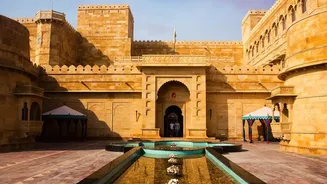
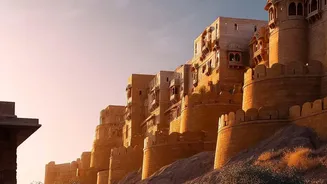
Jaisalmer Fort is unique because it is a 'living fort'. Nearly a quarter of the old city's population still resides within its walls, making its setting not just historical but alive with homes, shops, and restaurants. Built in 1156 and rising from the Thar Desert like a mirage, its craft is defined by the yellow sandstone that gives it the name Sonar Quila, or Golden Fort. The entire structure glows with a golden hue at sunset. Its scale includes 99 bastions and four massive gateways, creating a labyrinthine city on a hill that has withstood centuries of history and continues to thrive.
Gwalior Fort, Madhya Pradesh
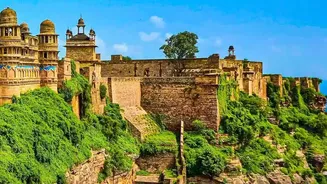
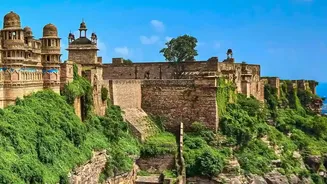
Described by the Mughal emperor Babur as 'the pearl amongst the fortresses of Hind', Gwalior Fort has a commanding presence. Its setting on a steep, isolated sandstone hill made it one of India's most invincible forts. The scale is impressive, with ramparts stretching for two miles. The craft is a vibrant tapestry of its long history, showcasing a blend of architectural styles from different dynasties. The Man Mandir Palace is adorned with brilliant blue ceramic tiles, while giant rock-cut Jain statues are carved into the rock face. The Teli Ka Mandir temple within the fort fuses North and South Indian architectural styles.
Daulatabad Fort, Maharashtra
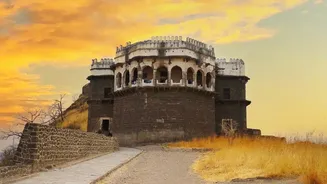
Daulatabad is a masterpiece of defensive craft. Originally known as Devagiri, the fort is built on a 200-metre-high conical hill, with its lower slopes cut away to create a 50-metre vertical drop, making it impossible to scale. The scale is defined by its layered defence system, including multiple walls and a deep moat that was once filled with crocodiles. But its most ingenious feature is the Andheri, or dark passage, a complex and confusing underground tunnel designed to trap and disorient invaders in complete darkness. Its setting on a major trade route made it a prized possession for many dynasties.