






A Uniquely Violent Threat
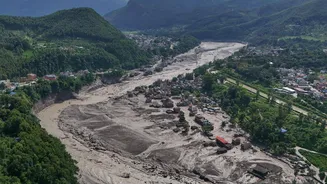
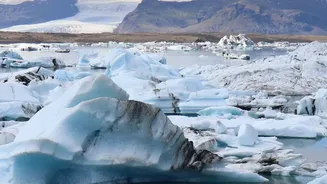
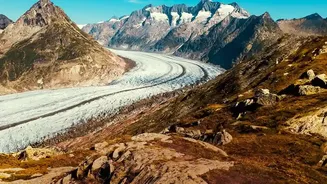
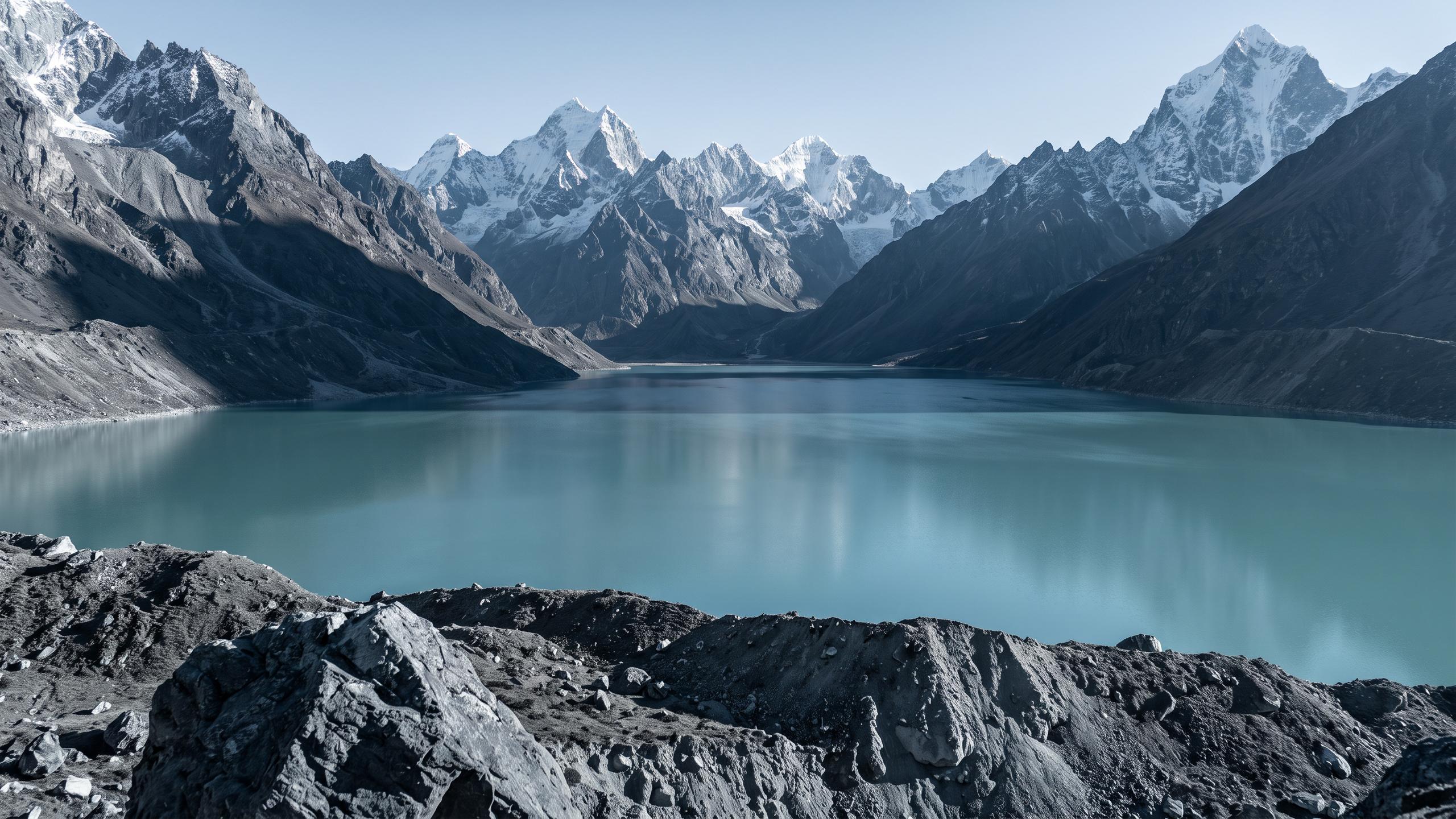
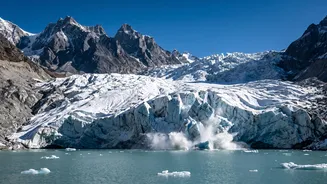
Himalayan floods are not like the slow, creeping river floods of the plains. They are often sudden, violent events known as flash floods. One of the most dangerous types is a Glacial Lake Outburst Flood (GLOF). As climate change warms the region, glaciers
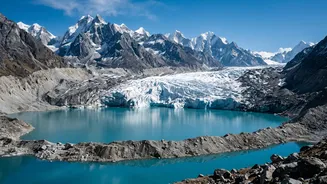
are melting faster, forming vast lakes high in the mountains. These lakes are often held back only by unstable natural dams of loose rock and soil called moraines. An earthquake, a heavy downpour, or a large avalanche of rock or ice can cause these fragile dams to break. The result is catastrophic. Millions of cubic meters of water can be released in an instant, creating a torrent that gathers speed and debris as it hurtles downstream, destroying everything in its path. The 2023 disaster in Sikkim, which began with the breach of the South Lhonak glacial lake, is a tragic recent example of this destructive power.
A Race Against Time
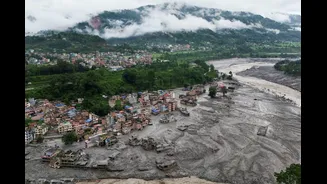
The sheer velocity of these floods makes them especially deadly. Water levels can rise by several metres in just half an hour, as observed in a recent flood in Nepal that had implications for India's Gandak river basin. This leaves almost no time for a spontaneous reaction. By the time the roar of the approaching flood is heard, it is often too late. Entire villages, bridges, and major infrastructure like hydropower dams can be wiped out in minutes. The 2013 Kedarnath tragedy and the 2021 Chamoli disaster in Uttarakhand stand as grim reminders of the human cost, with hundreds killed and communities devastated. The challenge is compounded by the difficult terrain, which limits escape routes and makes rescue operations incredibly complex.
How Early Warnings Work
An Early Warning System (EWS) is a chain of technologies and community protocols designed to buy precious time. It starts with monitoring. Scientists use a combination of satellite imagery, weather radars, and on-site sensors to watch over high-risk glacial lakes and river flows. These IoT-enabled sensors can detect critical changes, such as rising water levels, unusual seismic activity, or sudden increases in water flow. When a dangerous threshold is crossed, an automated alert is triggered. This information is then rapidly communicated to disaster management authorities and, crucially, to the communities downstream. This can happen via sirens, public announcement systems, and mass SMS alerts, giving people a window to evacuate to safer ground.
The Last-Mile Challenge
Deploying these systems in the high Himalayas is a monumental task. The terrain is remote and hostile, making the installation and maintenance of equipment difficult. Moreover, a warning is only effective if it is received, understood, and acted upon. This is the “last-mile connectivity” problem. A siren is useless if people do not know what it means or where to go. Therefore, a successful EWS must be community-based. This involves training local residents, conducting regular drills, clearly marking evacuation routes, and ensuring that warning messages are clear and accessible to everyone. Agencies like the National Disaster Management Authority (NDMA) are working on an end-to-end approach, integrating everything from detection to evacuation and rescue preparedness.
A Future of Resilience
As the Himalayan glaciers continue to retreat, the threat from GLOFs and flash floods is set to increase. India has already identified hundreds of glacial lakes as being at risk. In response, authorities are scaling up efforts to mitigate the danger. The National GLOF Risk Management Programme aims to install EWS on vulnerable lakes across states like Uttarakhand, Himachal Pradesh, Sikkim, and Arunachal Pradesh. Recent efforts in Uttarakhand, for example, involve installing advanced sensors on 13 identified high-risk lakes. This proactive approach, combining advanced technology with community participation, is the key to reducing future tragedies. Cross-border cooperation on data sharing with neighbouring countries like Nepal is also vital, as rivers and disasters do not respect international boundaries.