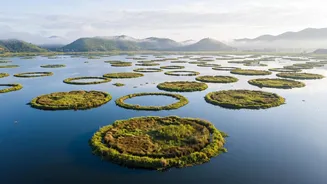



Loktak Lake, Manipur: The Floating World
Loktak Lake is the largest freshwater lake in Northeast India, but its real geographical marvel is the 'phumdis'. These are floating islands made of tangled vegetation, soil, and organic matter in various stages of decomposition. These phumdis are thick
enough to support huts for local fishermen. The largest of these islands is home to Keibul Lamjao, the world's only floating national park, a unique ecosystem created to protect the endangered Sangai deer. This incredible landscape showcases a rare interaction between hydrology and biology, creating a floating world unlike any other.
Gurudongmar Lake, Sikkim: High-Altitude Sanctity
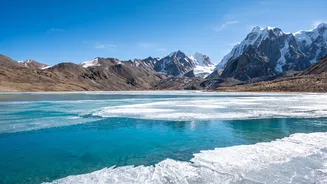
Situated at a breathtaking elevation of over 17,000 feet, Gurudongmar Lake is one of the highest lakes in the world. Fed by a glacier, this moraine-dammed lake sits in a high plateau connected to the Tibetan Plateau, showcasing a stark, wind-swept geography. It is considered sacred by both Buddhists and Sikhs. A fascinating geographical and spiritual phenomenon is that a portion of the lake reportedly never freezes, even in extreme winters when temperatures plummet. Legend holds that Guru Padmasambhava blessed this spot to provide drinking water to the locals year-round.
Umiam Lake, Meghalaya: The Man-Made Marvel
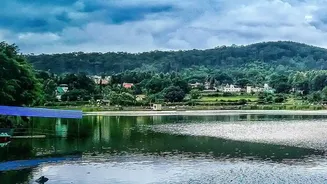
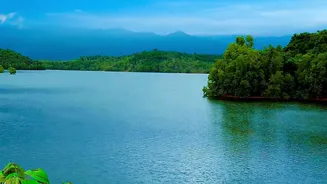
While many of the region's lakes are natural, Umiam Lake is a testament to human engineering shaping the landscape. Created in the early 1960s by damming the Umiam River, it was the first hydroelectric project in the Northeast. This vast reservoir, also known as 'Bara Pani' or big water, is spread over 220 square kilometres amidst the rolling Khasi Hills. Its sheer scale and scenic beauty, often compared to the lochs of Scotland, demonstrate how infrastructure can create new, monumental geographical features and ecosystems that become central to a region's identity.
Tsomgo Lake, Sikkim: The Glacial Chameleon
A classic example of a glacial lake, Tsomgo, or Changu Lake, is nestled at an altitude of 12,313 feet and is fed by melting snow from the surrounding mountains. Its geography is dynamic; the lake's surface famously reflects different colours with the changing seasons and remains completely frozen during winter. This oval-shaped body of water is not just a stunning visual but also a revered site, with local communities believing its changing colours hold prophetic meaning. It perfectly illustrates the life cycle of a high-altitude glacial lake in the Himalayas.
Sangestar Tso, Arunachal Pradesh: Born from an Earthquake
Popularly known as Madhuri Lake after a Bollywood film was shot here, Sangestar Tso has a dramatic origin story. This high-altitude lake, located near the India-China border, was formed following an earthquake in the 1970s. The seismic event caused a landslide that blocked a river, submerging a former pasture. The most striking evidence of this tectonic birth is the cluster of dead tree trunks that still stand upright in the middle of the serene, cold water, creating a hauntingly beautiful landscape. It serves as a powerful reminder of the Himalayas' volatile and ever-changing geology.
Shilloi Lake, Nagaland: The Footprint in the Valley
As the largest natural lake in Nagaland, Shilloi is nestled within the Patkai mountain range. From an aerial perspective, the lake is said to resemble a human footprint, adding to its mystique. Surrounded by pine forests, this landlocked water body is steeped in local folklore, including the belief that the spirit of a child protects the lake, preventing anyone from drowning. Its unique shape and location in a lush valley highlight the diverse topography of Nagaland's hill country.
Sela Lake, Arunachal Pradesh: Paradise at the Pass
Located near the strategic Sela Pass at about 13,700 feet, Sela Lake is another of the state's stunning high-altitude glacial lakes. Known as Paradise Lake, it remains frozen for much of the winter, adding to the stark beauty of the treacherous but vital mountain pass that connects Tawang to the rest of India. The lake's existence at such an altitude, surrounded by sparse alpine vegetation, is a classic feature of Himalayan geography, where pockets of serene beauty thrive in extreme conditions. It is sacred in Tibetan Buddhism and holds spiritual importance for the local Monpa community.
Pala Tipo, Mizoram: The Swallowing Lake
Pala Tipo, or Palak Dil, is the largest lake in Mizoram and sits within the Indo-Burma biodiversity hotspot. Its name translates to 'Swallowing Lake', stemming from a legend that the lake was formed when a village was submerged by water gushing from a cave that was home to a giant serpent. This oval-shaped natural lake is a vital part of the Palak Wildlife Sanctuary, supporting rich flora and fauna. Its origin story, rooted in folklore, speaks to a landscape shaped by powerful, unexplained natural events that become ingrained in cultural memory.