



Yoga: The Inward Journey to Stillness
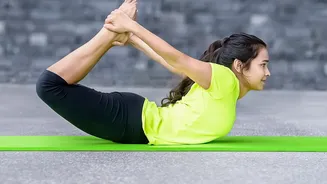
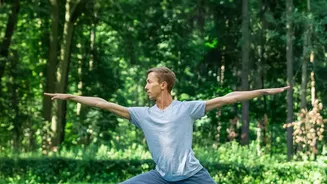
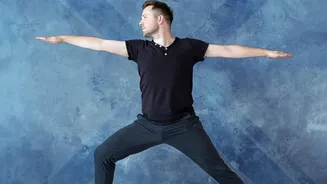
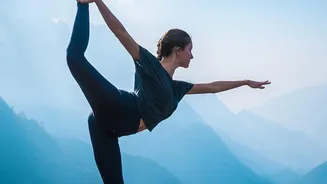
Yoga is often described as a practice of uniting the mind, body, and spirit. It achieves this unity primarily by turning awareness inward. Through asanas (physical postures), practitioners develop strength and balance, which demands mental focus. Poses
like Tree Pose (Vrksasana), for instance, are not just tests of physical stability but also of mental steadiness. Studies have even shown that a consistent yoga practice can lead to structural changes in the brain, thickening parts of the cerebral cortex responsible for attention and information processing. This internal focus helps to quiet the constant mental chatter, creating a sense of peace and reducing stress.
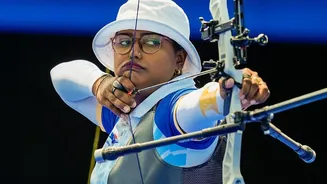
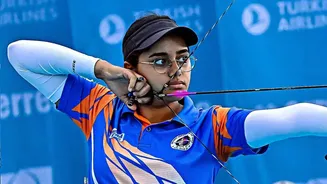
Archery: A Meditation in Action
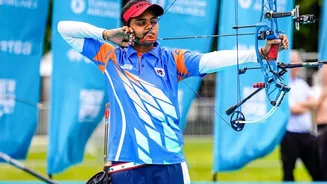
At first glance, archery appears to be an entirely external activity focused on hitting a distant target. However, practitioners quickly learn that the real challenge is internal. The act of shooting an arrow requires an intense level of concentration that blocks out all distractions. This has been described as a form of 'active meditation'. To achieve consistency, an archer must master a state of relaxed focus, where the mind is clear and the body is still. The famous book 'Zen in the Art of Archery' explores this very concept, detailing how the goal is not to just hit the target, but to achieve a state of 'artless art' where the action becomes effortless and the archer, bow, and arrow 'melt into one'.
The Common Thread: The Power of Breath
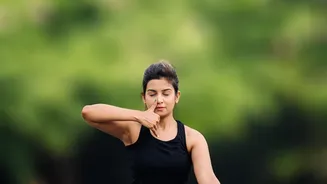
Both disciplines place immense importance on breath control. In yoga, this is known as pranayama, the conscious regulation of breath to manage one's vital energy. Techniques like deep belly breathing help calm the nervous system, reduce stress, and anchor the mind in the present moment. Archery employs breath control in a similar, highly practical way. Archers learn to coordinate their breath with their shot sequence—often inhaling during setup and exhaling slowly upon release—to lower their heart rate, increase stability, and reduce muscle tension. In both practices, the breath becomes a powerful tool to bridge the mind and body, promoting a state of calm focus.
Finding the 'Flow State'
A key similarity is how both activities can induce a 'flow state'—a term for being completely immersed and energized in an activity. In this state, the sense of time fades, self-consciousness disappears, and action and awareness merge. Yoga practitioners find flow when they seamlessly connect breath to movement, moving through a sequence with absorbed focus. Archers experience it when they stop overthinking the shot and instead trust their process, allowing the release to happen naturally. This state is the pinnacle of concentration, and its result is a profound sense of calm and accomplishment that transcends the activity itself.
Discipline and Mindful Repetition
Mastery in both yoga and archery is built upon a foundation of disciplined practice. The repetitive nature of both activities trains the brain and body. In yoga, returning to the mat builds physical memory and mental resilience. In archery, the cycle of drawing, aiming, and releasing hones not just technique but also patience and emotional control. Archers must learn to remain composed after a poor shot, and yogis must learn to sit with discomfort in a challenging pose. This mindful repetition teaches practitioners to stay in the present moment without judgment, a core tenet of mindfulness that carries benefits far beyond the mat or the range.