








A Landmark Launch
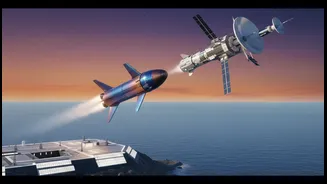
Founded at IIT-Madras, Agnikul Cosmos has already made history. In May 2024, it successfully launched its Agnibaan SubOrbital Technological Demonstrator (SOrTeD). This wasn't just any launch; it was a showcase of several Indian firsts. The mission took
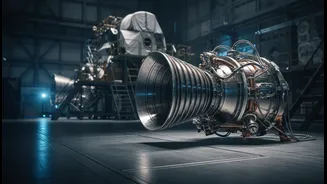
off from 'Dhanush', India’s first-ever private launchpad, located at the Satish Dhawan Space Centre in Sriharikota. The rocket was powered by the Agnilet engine, the world's first single-piece 3D-printed engine to be used in flight. This successful test flight, which validated the company’s home-grown technologies, including a semi-cryogenic engine, provided the critical data and confidence needed for Agnikul to pursue its next, even more audacious goal.
The Quest for Reusability
In the world of rocketry, reusability is the ultimate game-changer. Traditionally, rockets are single-use vehicles, with their expensive components discarded after every launch. This is akin to flying a passenger plane from Delhi to Mumbai and then throwing the aircraft away. Companies like SpaceX revolutionised the industry by proving that rocket boosters—the most expensive part—could be landed and reused, drastically cutting the cost of accessing space. Agnikul Cosmos is now bringing this revolutionary concept to India. The company has announced that its next orbital mission, dubbed 'Mission-02', will have a secondary objective of recovering the first-stage booster. This marks India's first attempt at recovering an orbital-class rocket booster, a feat achieved by only a handful of companies worldwide.
Agnibaan’s Reusable Design
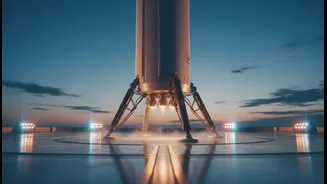
Agni kul's strategy for reusability is built into the core design of Agnibaan. The plan for Mission-02 involves the booster attempting a powered vertical landing on a barge stationed in the Bay of Bengal after it separates from the upper stage. To achieve this, the booster will be equipped with its own landing legs, grid fins for steering, and an independent flight computer and navigation system to fly itself back. The company’s co-founders have stated that making the rocket reusable could cut launch costs by as much as 80%. Furthermore, their vision extends beyond just the booster. Agnikul also plans to convert the rocket's upper stage, which typically becomes space debris, into a functional in-orbit platform, creating an ongoing revenue stream from a single launch.
Why This Matters for India
Agnikul's move toward reusability is a pivotal moment for the 'Make in India' initiative and the nation's burgeoning space economy. India’s space economy was valued at approximately $8.4 billion and is projected to grow to over $40 billion by 2033. By developing cost-effective and reusable launch vehicles, private players like Agnikul can help India capture a larger share of the global commercial satellite launch market. This complements the foundational work done by the Indian Space Research Organisation (ISRO), which has been instrumental in supporting the private sector. The appointment of former ISRO Chairman Dr. S. Somanath as an observer on Agnikul's board underscores this growing synergy between government experience and private-sector agility. Success in this endeavor would not just be a win for Agnikul but a powerful statement about India’s capabilities in high-tech design and manufacturing.
The Challenges Ahead
The path to a fully reusable rocket is incredibly complex and fraught with technical challenges. Executing a controlled vertical landing on a moving barge at sea is one of the most difficult maneuvers in rocketry, requiring immense precision in guidance, navigation, and control. While the successful SOrTeD mission demonstrated Agnikul's control systems, an orbital recovery is an entirely different order of magnitude. The development will require significant capital, rigorous testing, and overcoming the harsh realities of spaceflight. However, the company is confident that the experience gained from its sub-orbital flight has prepared its engineers for this next step. As the company targets its next mission, the global space community will be watching closely to see if this Chennai startup can join the elite club of reusable rocket operators.