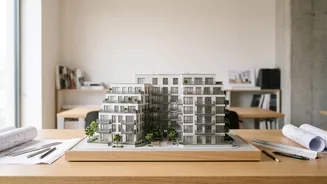








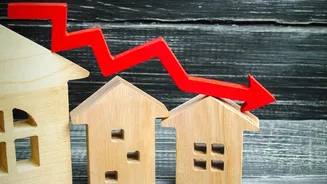
The search for the perfect home in India has always been a delicate balance. But today, the age-old question has a new edge: should you choose a smaller home in a prime, connected area or a larger flat on the developing urban fringe?
The Great Urban Compromise
For decades, 'location,
location, location' was the undisputed mantra of Indian real estate. Proximity to offices, schools, and social hubs was paramount. The pandemic, however, temporarily shifted this focus, creating an unprecedented demand for larger homes with space for home offices and family life. Now, as companies increasingly call employees back to the office, homebuyers are caught in a complex tug-of-war. The desire for space, ignited during lockdown, remains strong, but the daily reality of commuting is back in full force. This has intensified the classic urban compromise, forcing buyers to meticulously weigh their lifestyle priorities against their budgets.
The Enduring Appeal of Connectivity
The argument for a prime location is as compelling as ever. Living closer to central business districts means shorter travel times, more personal time, and lower transportation costs. For families, it offers easier access to established schools, hospitals, and recreational facilities. With the return of hybrid and full-time office work, demand in well-connected areas is robust. These locations are not just about convenience; they often represent a more vibrant, walkable lifestyle where shops, cafes, and parks are just a short stroll away. This promise of an integrated urban experience continues to attract a significant segment of buyers who prioritise access and time-saving above all else.
The Irresistible Lure of More Space
On the other side of the debate is the powerful pull of a larger home. The experience of being confined during the pandemic left a lasting psychological impact, cementing the importance of personal space. Many buyers now aspire for an extra room that can serve as a dedicated home office, a study for children, or a personal gym. This demand for 3BHK and even larger configurations is a clear trend. Achieving this within the budget constraints of a prime city location is often impossible. As a result, many are looking towards peripheral areas where their money can buy significantly more square footage, along with amenities like balconies, green spaces, and a quieter environment.
How Hybrid Work Is Changing the Calculation
The rise of the hybrid work model is a critical factor reshaping this decision. For professionals who only need to commute two or three days a week, a longer travel time from a suburban location can seem like a worthwhile tradeoff for a more spacious and comfortable home. This flexibility allows buyers to expand their search radius beyond the traditional city limits. Research shows that the need for a home office and the frequency of hybrid work are now among the most influential factors driving property purchase intentions, sometimes even more than the distance from the workplace itself. This shift is fundamentally redrawing the real estate map, making suburban living a more practical choice for many.
Infrastructure : The Great Equaliser
Perhaps the most significant development tilting the scales is the massive investment in urban infrastructure across India. New metro lines, expressways, and ring roads are drastically improving connectivity to peripheral areas that were once considered too remote. These projects act as a powerful equaliser, bridging the gap between the suburbs and the city centre. As a result, some peripheral areas in top cities like Bengaluru, Chennai, and the NCR have seen faster property price appreciation than their prime counterparts in recent years. Improved infrastructure not only cuts down commute times but also stimulates economic activity, making these emerging corridors increasingly self - sufficient and attractive to homebuyers.