






The buzz around Artificial Intelligence in hiring is impossible to ignore. But as companies adopt AI to screen and sort candidates, a crucial question emerges: what does this mean for experienced professionals and their deep, specialist knowledge?
How AI is Changing Recruitment
Artificial
Intelligence is no longer a futuristic concept in human resources; it's a tool being actively used to reshape hiring. AI-powered platforms can sift through thousands of resumes in minutes, identifying candidates whose skills match job requirements with incredible speed. These systems automate administrative burdens like screening initial applications, ranking candidates based on set criteria, and even scheduling the first round of interviews through chatbots. The primary goals are to accelerate the hiring process, handle a massive volume of applicants, and create a more efficient workflow for recruiters. By automating these repetitive, high-volume tasks, AI frees up human recruiters to focus on more strategic work.
The Strengths of an Automated Approach
The benefits of integrating AI into hiring are clear. Speed is a significant advantage; roles can be filled faster, reducing the impact of a vacant position on a team's productivity. Efficiency is another major plus, as AI handles the time-consuming work that once bogged down HR departments. Furthermore, when designed and audited properly, AI can help reduce unconscious bias in the initial screening phase. By focusing on objective data points like skills and experience, and removing personal identifiers, these tools can present a more diverse pool of qualified candidates to hiring managers. The result is a process that is not only faster but potentially fairer, allowing companies to tap into a wider talent pool.
Where the Algorithm Falls Short
Despite its power, AI has significant limitations because it is a tool for processing data, not for understanding people. An algorithm cannot truly gauge a candidate's cultural fit, assess their problem-solving style in ambiguous situations, or understand the nuances of their communication skills. It struggles to evaluate soft skills like leadership, empathy, and the ability to collaborate effectively—qualities that are often critical for success. More importantly, AI cannot replicate or recognise 'tacit knowledge', the kind of deep, intuitive understanding a professional gains from years of hands-on experience in a specific field. This is the boundary where automation ends and human judgment becomes irreplaceable.
Specialist Knowledge: The Human Advantage
Specialist knowledge is the unique expertise that an experienced employee brings to the table. It's the seasoned engineer who can anticipate a project failure before the data flags it, or the veteran sales director who leverages a decade of trusted relationships to close a critical deal. This is the kind of insight that isn't written on a resume and can't be quantified by a machine. As AI handles more of the routine, data-driven tasks, the value of these distinctly human capabilities is actually increasing. Critical thinking, ethical judgment, creativity, and strategic decision-making are becoming the most sought after skills. Experienced staff provide context, mentorship, and a level of strategic oversight that AI cannot. They know when an AI generated recommendation is wrong because their expertise allows them to see the bigger picture.
A Hybrid Future: AI and Experts Working Together
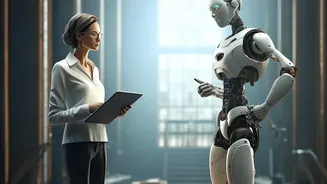
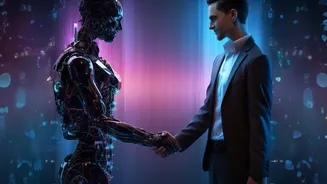
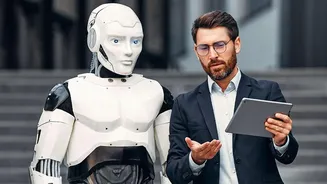
The future of hiring isn't about choosing between AI and human recruiters; it's about creating a powerful collaboration between them. This hybrid model is becoming the foundation of modern hiring strategies. In this system, AI acts as a force multiplier, handling the initial, high volume screening to identify a strong shortlist of candidates. This allows experienced hiring managers and senior staff to dedicate their valuable time to what they do best : building relationships , assessing nuanced skills , and making the final , critical decision on who is the right fit for the team and the company 's future . This approach leverages the efficiency of technology while preserving the irreplaceable value of human insight , ensuring that technology supports , rather than replaces , human expertise.