





A Once-in-a-Century Celestial Event
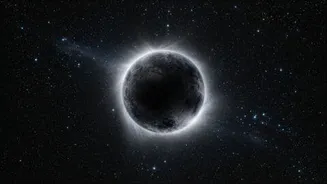
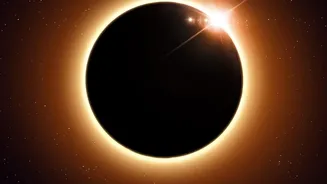
For the first time since 1905, a total solar eclipse will grace the skies of mainland Spain, creating a path of totality that sweeps across the northern part of the country. This astronomical alignment, happening on August 12, 2026, is part of a rare
sequence dubbed the "Iberian trio" of eclipses occurring in 2026, 2027, and 2028. What makes this particular event so profoundly special is its timing. The eclipse will occur late in the day, with totality happening as the Sun dips low toward the western horizon. This unique timing means that for observers in the right locations, the brief, breathtaking moments of total darkness will coincide with the vibrant colours of sunset, a phenomenon few have ever witnessed.
The Final Act in the Balearic Islands
The path of totality will begin in Galicia on the Atlantic coast and travel eastward across regions like Castile and León, Aragon, and Valencia. But the final, and perhaps most dramatic, viewing opportunity will be from the Balearic Islands, specifically Mallorca and Menorca. Here, the sun will be incredibly low in the sky—just a few degrees above the horizon—when the moon completely covers it. In Palma, the capital of Mallorca, totality will begin around 8:31 PM local time and last for about a minute and a half. This setting transforms the event from a purely astronomical observation into a deeply atmospheric experience, as the sun's corona flares out against the backdrop of the Mediterranean Sea at twilight.
The Challenge and Beauty of a Sunset Totality
While a sunset eclipse offers an unparalleled visual spectacle, it also presents challenges for observers. With the sun so low, a clear, unobstructed view of the western horizon is absolutely essential. Hills, buildings, or even a distant mountain range could easily block the view at the critical moment. Astrotourists and locals are already using specialized apps and maps to scout locations, from coastal cliffs to hilltop villages, that promise a perfect sightline. One such village, Jabaloyas in Aragon, has seen so much interest due to its high-altitude views that local authorities are planning to restrict vehicle access to protect the environment and ensure public safety.
What to Expect During the Double Twilight
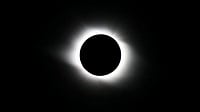
Witnessing a total solar eclipse is often described as an emotional, multi-sensory experience. As totality approaches, daylight fades rapidly, colours appear muted, and the temperature can drop noticeably. When totality occurs near sunset, these effects are magnified, creating a unique "double twilight". The sky darkens from above as the Moon's shadow arrives, while simultaneously darkening from below with the setting sun. For those watching from a picturesque Spanish village or a coastal perch, the experience will be transformative. The sun's corona, the ethereal white halo of light only visible during totality, may even appear tinged with orange hues from atmospheric scattering, making for an unforgettable celestial portrait.