






AI's Unquenchable Thirst for Power
Artificial intelligence is changing the world, but it comes at a steep cost. The massive data centers that power AI models consume enormous amounts of electricity, not just to run the processors but also to keep them cool. Terrestrial data centers are
already straining power grids, competing for land, and consuming vast quantities of water. As AI's capabilities grow, so does its energy appetite. Projections show that by 2030, data centers could consume as much electricity as a country the size of Japan. This creates a fundamental bottleneck: we may not be able to build data centers on the ground fast enough to keep up with AI's demand without significant environmental and infrastructural consequences.
The Audacious Plan: Data Centers in Orbit
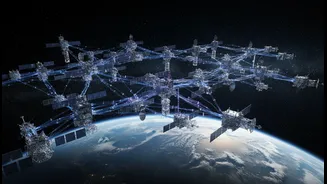
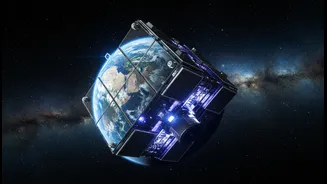
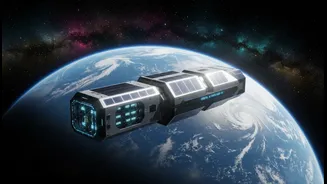
Enter Orbital, a U.S. startup with a radical solution: move the data centers into space. The company has filed plans with the U.S. Federal Communications Commission (FCC) to launch a constellation of up to 100,000 satellites into low-Earth orbit. Each satellite would essentially be a self-contained, solar-powered data center. In orbit, the satellites would have access to continuous, unfiltered sunlight for power—far more efficient than ground-based solar. For cooling, they would use the near-absolute-zero vacuum of space, radiating heat away passively and for free. This approach sidesteps Earth's limitations of grid capacity, land use, and water for cooling.
How It Would Work
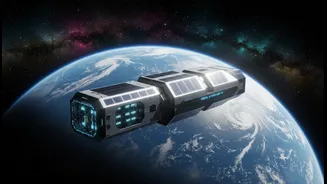
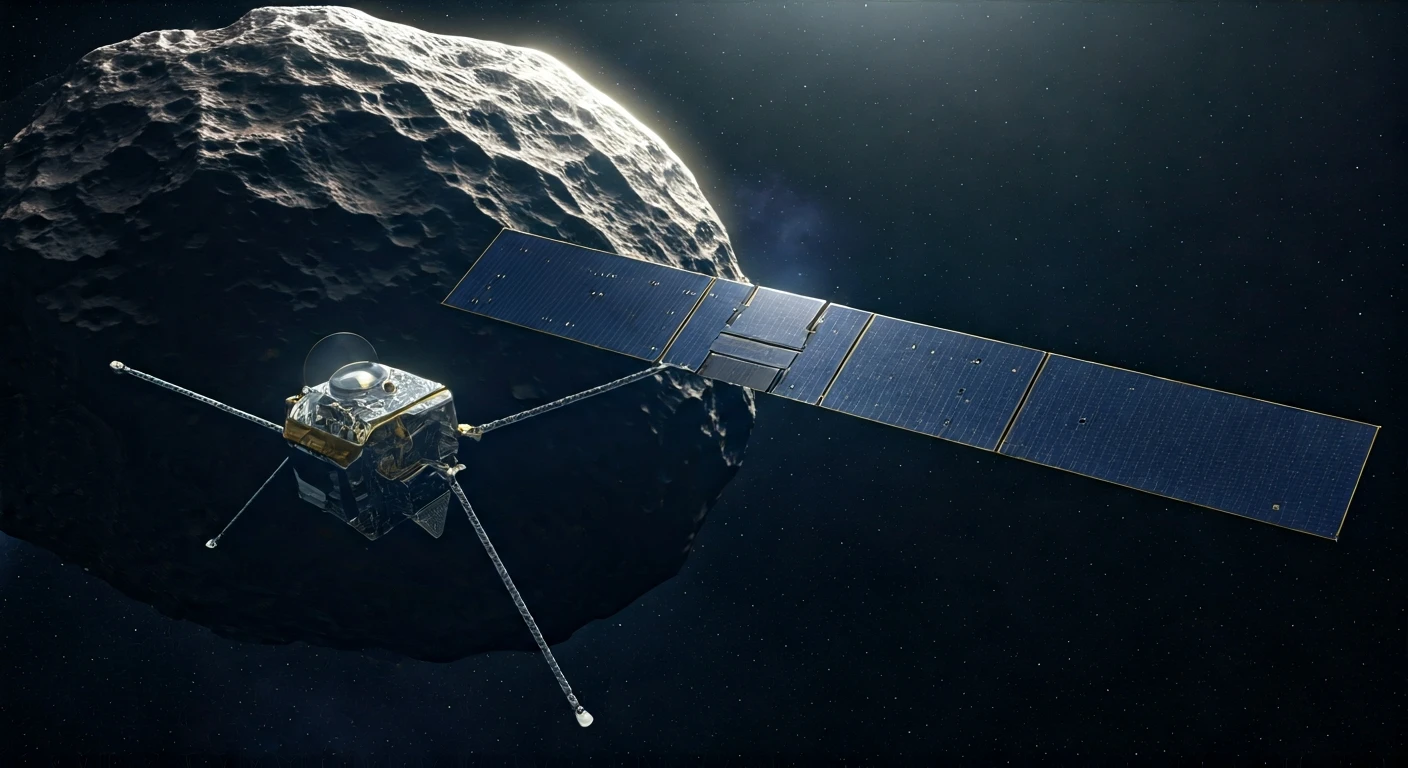
Orbital's vision isn't for one giant space station, but a distributed network of thousands of smaller satellites. Each unit, weighing about two tons and stretching 100 meters with its solar arrays deployed, would function as a single computing rack. The company's initial focus is on AI “inference,” which is the process of running an already-trained model to get an answer—like when you ask a chatbot a question. These tasks can be handled independently across many satellites. This is different from AI “training,” which requires thousands of processors to be tightly networked, a task that remains better suited for Earth for now. The plan begins with a small demonstration mission in 2027, followed by the first purpose-built satellite, Orbital-1, in 2028.
A New Space Race Begins
Orbital, led by founder Euwyn Poon, is a bold new entrant, but it's not alone in seeing a future for computing in the cosmos. The concept of orbital data centers is gaining traction across the tech and aerospace industries. Giants like SpaceX and Google, with its 'Project Suncatcher', are exploring similar concepts. Other startups, including Starcloud and Cowboy Space, are also racing to put AI hardware into orbit, with some already having launched successful test missions. This emerging sector is driven by a shared belief: the next generation of infrastructure won't be built on land, but in low-Earth orbit.
The Billion-Dollar Hurdles
The vision is compelling, but the challenges are astronomical. Firstly, the cost. Launching anything into space is expensive. Orbital's plan is heavily reliant on the next generation of reusable rockets, like SpaceX's Starship, to drastically reduce launch costs to a point where the economics make sense. Secondly, there are immense engineering challenges in designing hardware that can withstand the harsh radiation and temperature swings of space for years on end. Finally, deploying 100,000 satellites—more than all satellites ever launched in history—raises serious concerns about space debris and orbital congestion, creating a regulatory and logistical minefield.