


The Search for the Invisible
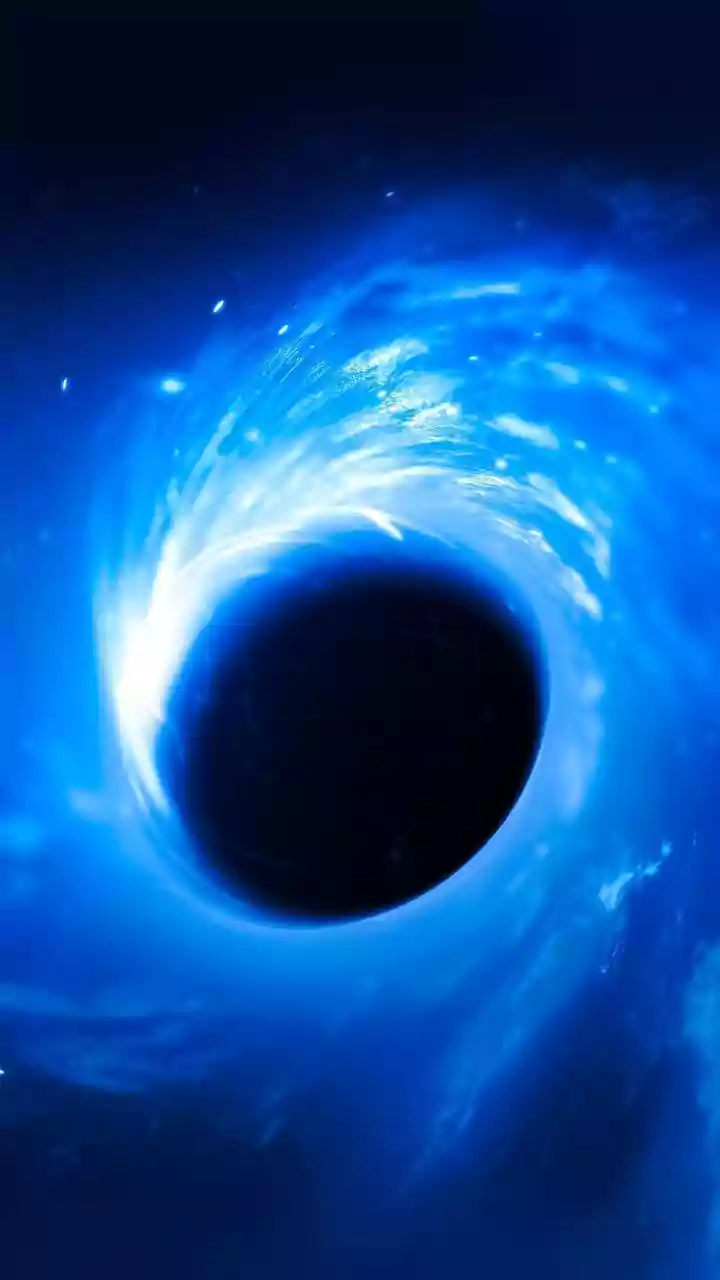
Black holes are the universe's ultimate mystery boxes. Formed from the collapsed cores of massive stars, their gravitational pull is so immense that nothing, not even light, can escape. This, by definition, makes them invisible and incredibly difficult
to detect directly. So, how do you find something you can't see? Astronomers have developed clever indirect methods. Sometimes, they spot black holes that are actively 'feeding' on a nearby star, a process that releases a bright flare of X-rays. Other times, they observe the gravitational wobble of a visible star to infer the presence of an unseen, massive companion. But many black holes are dormant and alone, or paired with a star in a way that doesn't produce these tell-tale signs. It is estimated that millions of these hidden black holes are quietly scattered throughout our galaxy, waiting to be discovered.
A Cosmic Magnifying Glass
The Black Hole Hunters project uses a fascinating phenomenon predicted by Einstein's theory of general relativity: gravitational lensing. A massive object like a black hole warps the fabric of spacetime around it, bending the path of light that passes nearby. If a dormant black hole in a binary system passes directly between its companion star and Earth, its gravity can act like a cosmic magnifying glass. This effect, known as gravitational 'microlensing', briefly makes the background star appear brighter. The Black Hole Hunters project searches for exactly this kind of temporary, unusual brightening in starlight. By spotting these unique flashes, volunteers can flag potential systems where an invisible black hole might be orbiting a star.
Your Mission: Become a Black Hole Hunter
You don't need a PhD in astrophysics to join the hunt. The project, hosted on the citizen science platform Zooniverse, is designed for everyone. Volunteers are shown graphs called 'light curves', which plot a star's brightness over time. The data comes from powerful survey telescopes like NASA's TESS (Transiting Exoplanet Survey Satellite). Your task is to look for a specific pattern: a short, sharp spike in brightness that might indicate a microlensing event caused by a black hole. The platform provides a simple tutorial and examples of what to look for. While computers and AI can perform a first pass to sift through millions of stars, the human eye is still uniquely skilled at spotting subtle patterns and dismissing false positives caused by things like stellar flares or sensor glitches.
Why Your Clicks Matter
Every classification you make contributes directly to a massive scientific undertaking. To ensure accuracy, each light curve is reviewed by multiple volunteers. When enough people flag the same star as a potential candidate, it gets added to a shortlist for professional astronomers to investigate further with more powerful telescopes. This human-powered pre-screening is invaluable. It allows scientists to focus their limited and expensive telescope time on the most promising targets. Since its launch, the project has attracted nearly 23,000 volunteers who have made millions of classifications, proving the power of collective effort. Each click helps narrow down a galaxy's worth of data to a handful of exciting possibilities. As project co-lead Adam McMaster has said, you might be the one to discover a new black hole.