





The Numbers Are In
The first week of October 2026 has been the most polluted for Delhi in three years. Data shows the average Air Quality Index (AQI) for the first seven days of the month settled at 171. While still in the 'moderate' category, this is a significant drop
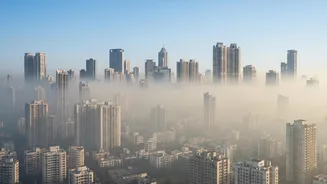
from the 'good' and 'satisfactory' levels seen during the rainy season. On some days and in specific areas, the AQI has already touched the 'poor' category. For instance, on October 4, Delhi recorded its worst AQI of the season at 187, while some stations like Mundka and Narela registered even higher 'poor' readings. Neighbouring cities such as Noida and Ghaziabad have also seen their air quality slip into the 'poor' zone.
Why Is This Happening Now?
The deterioration is a classic case of weather and geography conspiring against the region. With the withdrawal of the monsoon, the two factors that help clean the air—strong winds and rain—have diminished. Currently, low wind speeds are preventing pollutants from dispersing effectively. This is compounded by a phenomenon known as temperature inversion, common during early winter. Cooler, denser air gets trapped near the ground by a layer of warmer air above it, essentially putting a lid on the city and stopping pollution from rising and scattering. These meteorological conditions create a perfect storm for trapping pollutants from local sources like vehicle emissions, construction dust, and industrial activity.
The Return of Stubble Burning
A major contributor to the sharp spike in pollution every year is the practice of stubble burning in neighbouring states, primarily Punjab and Haryana. Farmers burn crop residue to quickly clear their fields for the next sowing season. While monitoring shows that farm fire incidents in Punjab between mid-September and early October are the lowest in seven years, incidents are being recorded daily. As of early October, hundreds of fires have been detected across Punjab, Haryana, Uttar Pradesh, and Madhya Pradesh. The north-westerly winds that are gradually setting in will carry the smoke from these fires directly towards Delhi-NCR, significantly worsening the air quality in the coming weeks.
What is the Graded Response Action Plan (GRAP)?
To combat this predictable crisis, authorities implement the Graded Response Action Plan (GRAP). Notified in 2017, GRAP is an emergency response mechanism that triggers progressively stricter anti-pollution measures as the AQI worsens. The plan is divided into four stages. Stage I ('Poor' AQI) involves measures like mechanised sweeping and enforcing pollution-under-control norms for vehicles. Stage II ('Very Poor') may involve restrictions on diesel generators. Stage III ('Severe') can lead to a ban on non-essential construction and restrictions on older petrol and diesel vehicles. The most extreme Stage IV ('Severe+') could trigger a ban on trucks entering Delhi and the implementation of the odd-even car rationing scheme. For 2026, the plan has been tightened, with some restrictions like those on certain inter-state buses now kicking in at Stage I instead of Stage II.
Health on the Line
This decline in air quality is not just an environmental issue; it is a public health crisis. The primary pollutants of concern are PM2.5 and PM10—fine particulate matter that can penetrate deep into the lungs and even enter the bloodstream. Exposure to such pollutants can cause everything from sore throats and coughing to more severe conditions. It aggravates respiratory ailments like asthma and bronchitis and increases the risk of cardiovascular problems, including heart attacks. Children are especially vulnerable, with studies showing that prolonged exposure to Delhi's toxic air can cause irreversible lung damage.