







A Two-Pronged Push into Orbit
The Indian Space Research Organisation (ISRO) is demonstrating remarkable ambition by simultaneously advancing two cornerstone projects of its human spaceflight program. While the nation eagerly awaits the Gaganyaan mission, which will make India the fourth
country to independently send humans into space, ISRO is already deep into planning its successor: the Bharatiya Antariksha Station (BAS). This dual focus highlights a strategic, long-term vision. Gaganyaan is the crucial first step to develop and prove the capability of launching astronauts into Low Earth Orbit and returning them safely. The space station, on the other hand, represents the next logical leap—transforming short-duration flights into a sustained human presence in space for long-term scientific research and technology demonstration.
Gaganyaan: Nearing the Final Frontier
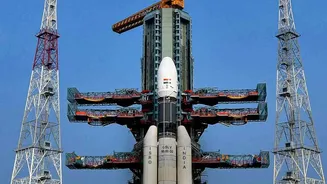
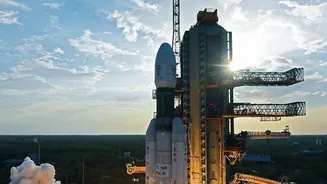
Preparations for the Gaganyaan mission are in an advanced stage. Recent updates from the government confirm that critical systems are either complete or nearing readiness. The Human Rated Launch Vehicle (HLVM3), the powerful rocket modified to safely carry astronauts, has finished the development and ground testing of its propulsion stages. The Orbital Module, which comprises the Crew Module where astronauts will reside and the Service Module that powers it, has also seen significant progress. Key technologies, including the Environmental Control and Life Support System (ECLSS) and the Crew Escape System, have been successfully developed and tested. Before the first crewed flight, targeted for 2027, ISRO plans several uncrewed test missions to validate every system. The first of these, G1, will carry the humanoid robot Vyommitra to simulate human functions and test life support systems in orbit. The four astronaut-designates are also undergoing intensive mission-specific training in Bengaluru after completing their initial training in Russia.
A Home in the Heavens: The Bharatiya Antariksha Station
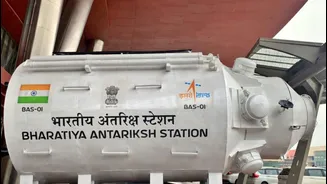
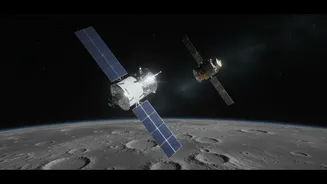
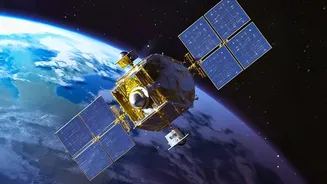
Even as Gaganyaan inches closer to launch, ISRO has officially begun designing critical subsystems for the Bharatiya Antariksha Station. The plan is to establish a modular space station in orbit by 2035. This orbital laboratory will orbit at an altitude of about 400-450 kilometres and is designed to host a crew of three for 15-20 days initially, with longer durations planned later. The station will be constructed in phases, comprising five distinct modules. The first module, BAS-01, is targeted for launch in 2028. This initial module will house crew quarters, life support systems, and docking ports. Recently, the government confirmed that the baseline design review for BAS-01 has been completed, and 31 design documents have been released, paving the way for the development of subsystems. This is a concrete step from concept to reality.
The Foundation of Future Missions
The technologies being perfected for Gaganyaan are the building blocks for the future space station. The expertise gained in life support systems, human-rated launch vehicles, and orbital maneuvering will be directly applied to the BAS project. This synergy is crucial for efficiency and demonstrates a well-thought-out roadmap. For instance, developing a reliable docking system for Gaganyaan missions will be essential for assembling the multiple modules of the space station in orbit. Similarly, perfecting the in-orbit refueling mechanism, a model of which has already been tested, will be critical for sustaining a long-term orbital outpost. By developing these technologies now, ISRO is ensuring that the transition from Gaganyaan to the space station program is as smooth as possible, positioning India for a future of extended human presence in space.
India's Place Among the Stars
Successfully executing both the Gaganyaan and Bharatiya Antariksha Station projects will solidify India's position as a major global space power. Beyond the immense national pride, these missions hold significant scientific and strategic value. A dedicated space station will provide Indian scientists with a unique microgravity laboratory to conduct experiments in biology, materials science, and medicine that are impossible on Earth. It opens up new avenues for research and innovation. Strategically, having an independent space station provides autonomy in human space exploration at a time when the International Space Station is aging. This ambitious roadmap, which also includes a crewed lunar mission by 2040, signals India's intent to not just participate in the new space age, but to become one of its leaders.