



The Quintessential Street-Side Snack
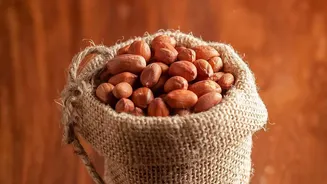
Walk through any bustling Indian market, and you are likely to be greeted by the enticing scent of 'sing-dana' or 'kadala' being roasted. Served in a paper cone, still warm from the pan, these peanuts are a beloved snack, enjoyed by millions daily. They
possess a texture that is distinctly different from the peanuts you might find in a sealed packet at a supermarket. They are not just crunchy, but light and brittle, shattering with a satisfying crispness. This unique quality comes from an age-old, low-tech method known as hot salt roasting, a process that is as much about physics as it is about flavour.
What is Hot Salt Roasting?
Hot salt roasting is a dry-roasting technique where peanuts are cooked in a large wok, or 'kadai', filled with pre-heated salt or, in many cases, sand. The vendor constantly stirs the peanuts within the hot medium, ensuring they never sit still. The salt or sand is not meant to make the peanuts excessively salty, but rather to act as a medium for transferring heat. It envelops each peanut, distributing the heat evenly and indirectly. This prevents the peanuts from coming into direct, harsh contact with the hot metal of the pan, which would lead to scorching and uneven cooking. The same technique is often used for other popular snacks like chickpeas (chana) and puffed rice, proving its versatility and effectiveness.
The Science of the Perfect Crunch
The magic of this method lies in how it manages moisture. Roasting's primary goal is to reduce moisture content, which creates a desirable texture. The hot salt provides a consistent, ambient temperature that cooks the peanut from all sides simultaneously. This allows the moisture within the kernel to be drawn out gradually and uniformly. The result is a porous, delicate internal structure that makes the peanut brittle and easy to bite through. A study on the process confirms that this method significantly reduces moisture while altering the peanut's physical properties to create a less hard, more palatable texture. While some salt is absorbed, giving the peanuts their characteristic savoury taste, the main event is this carefully controlled dehydration.
How It Differs from Oil Roasting
Most commercially packaged peanuts are oil-roasted. In this industrial process, peanuts are essentially fried in hot oil before being salted. While effective, oil roasting imparts a different kind of texture. The oil penetrates the peanut, making it denser and leading to a harder, more solid crunch. Dry-roasted peanuts, another alternative, are cooked with hot air, but achieving the evenness of salt roasting can be difficult, sometimes resulting in a less consistent product. Hot salt roasting, by contrast, avoids added fats and achieves a lighter crispness that oil-roasting cannot replicate. The slow and steady heat from the salt ensures the peanut cooks through without becoming greasy or overly hard.
A Tradition Worth Appreciating
In an era of complex food processing, hot salt roasting is a testament to the enduring wisdom of traditional culinary methods. It is a simple, efficient, and resource-light technique that has been perfected over generations. It relies on basic principles of heat transfer to produce a snack with a superior texture that large-scale industrial methods struggle to match. This process enhances not just the texture but also the aroma and flavour, resulting from the natural caramelization and Maillard reactions that occur during the slow roast. It’s a craft that transforms a humble legume into an iconic and texturally perfect treat.