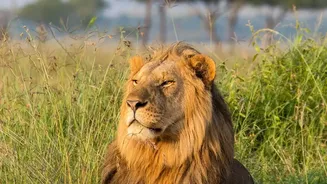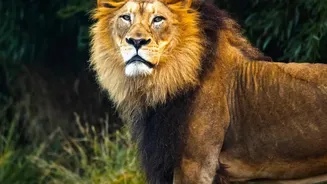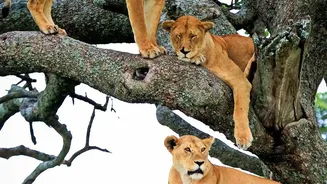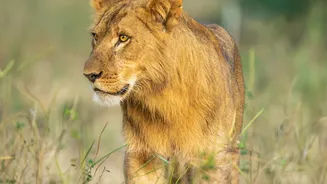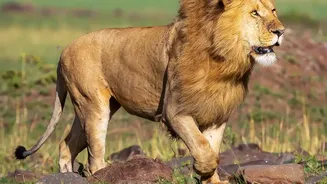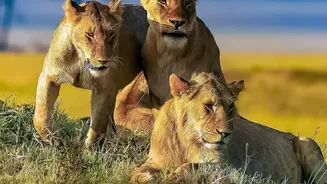





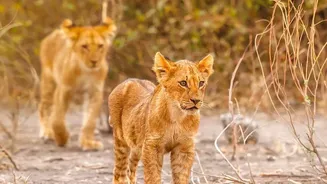
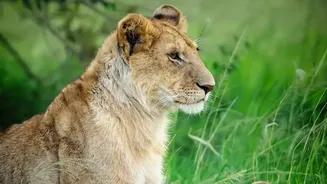
For the first time in 144 years, the roar of the Asiatic lion is echoing through Gujarat's Barda Wildlife Sanctuary. But how do we know these majestic cats are truly making a home here? The answer lies in a remarkable scientific effort.
A Landmark Return and a Crucial Question
The story of the
Asiatic lion is one of a stunning comeback. Once roaming across Asia, their numbers dwindled to a few dozen in Gujarat's Gir forest. Decades of conservation have seen their population grow, but this success has created a new challenge: a single home is a risky strategy. The concentration in Gir left the entire species vulnerable to disease or disaster. For years, conservationists identified the need for a second, separate population. Now, that vision is becoming a reality in the Barda Wildlife Sanctuary, approximately 100 km from Gir. The process began with the natural dispersal of a lone male lion into Barda in 2023, followed by the strategic introduction of five females by the Gujarat Forest Department to establish a viable founding group. As of 2025, the sanctuary is home to 17 lions, a testament to the area's potential. This raised a critical question for researchers: Is Barda truly a suitable long-term stronghold, and how are the lions adapting?
The View from Above: GPS Collars
To understand the lions' new lives, researchers turned to technology. A team from the Gujarat Forest Department and Banda University of Agriculture and Technology fitted six of the pioneering lions—the initial male and five females—with advanced GPS radio-collars. These devices are far more than just location trackers. Between January 2023 and July 2025, the collars transmitted over 169,000 GPS data points. This flood of information allowed scientists to map the lions' movements with incredible precision. They could see the size of the territories they were establishing—averaging around 70 square kilometres—and pinpoint the core areas where they spent most of their time. The data revealed not just where the lions were, but how they were using the landscape, preferring mixed forests and grasslands for their activities. This high-tech surveillance is crucial for understanding habitat preference and ensuring the lions have the space they need.
Unseen Observers: Camera Traps and AI
While GPS collars track movement, they don't capture behaviour. For that, researchers rely on a network of camera traps strategically placed along animal trails and near water sources. These motion-activated cameras act as silent, 24/7 observers, capturing candid images and videos without disturbing the animals. The images are a treasure trove of information, allowing researchers to monitor the lions' physical health, observe social interactions between individuals, and confirm the presence of new cubs. Furthermore, the Gujarat Forest Department has been a pioneer in using artificial intelligence to analyse this visual data. A software called SIMBA (Software with Intelligent Marking Based Identification of Asiatic lions) uses AI to identify individual lions based on their unique whisker patterns and other facial markings, much like a human fingerprint. This non-invasive method helps create a detailed census and tracks the life history of each lion in the new sanctuary.
On-the-Ground Evidence: Scat and Prey Analysis
Technology is only one part of the story. Traditional fieldwork remains indispensable. Researchers collected and analysed 63 lion scat samples to understand their diet in the new environment. The results were encouraging: wild prey, particularly wild pigs, made up the majority of their diet (55%), indicating they are successfully hunting. While some predation on domestic cattle was noted (17%), the reliance on wild animals is a positive sign of adaptation. To further support the growing population, authorities are actively working on prey-base augmentation. This involves reintroducing species like spotted deer and sambar into Barda to ensure a sustainable food source for the predators. This holistic approach, combining high-tech monitoring with on-the-ground ecological management, is fundamental to ensuring the lions not only survive but thrive in their new home.