





A Discovery in the Sand
In a study published in the journal Science Advances, a team of researchers led by geologist Luca Bindi of the University of Florence detailed the discovery of a previously unknown material. The finding came from analysing microscopic, glassy spheres
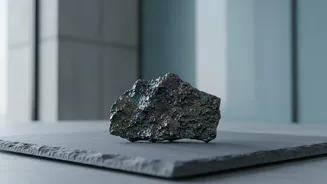
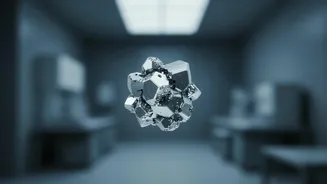
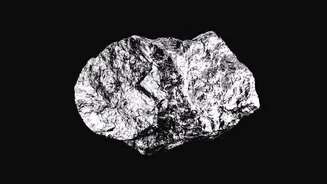
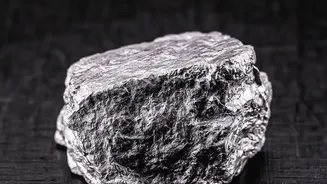
known as "hiroshimaites," which are fallout debris from the 1945 explosion found mixed in with the sands of Hiroshima Bay. Hidden inside one of these tiny beads, which are mere micrometres in size, was a complex metallic alloy. Composed of a mixture of iron, silicon, chromium, nickel, and other elements vaporised from the city's buildings and infrastructure, it possesses a unique, highly ordered crystal structure that has never been documented before.
Forged in a Nuclear Fireball
The formation of this alloy required conditions of almost unimaginable extremity. The atomic detonation generated a fireball with temperatures exceeding 7,000 degrees Celsius, instantly vaporising steel, concrete, and other urban materials into a turbulent cloud of plasma. As this superheated fireball expanded and then cooled in mere moments, a process known as ultrafast quenching occurred. This rapid solidification forced the mixed elemental vapours to condense and lock into a stable, complex structure, preventing them from arranging into more common forms. This violent process created a material that simply could not exist under normal metallurgical conditions, effectively turning the atomic blast into what researchers call a "giant accidental material-science laboratory."
An Earthly Link to Cosmic Events
The significance of the Hiroshima alloy extends far beyond its tragic origins. The extreme environment of a nuclear detonation shares similarities with other high-energy natural phenomena, such as meteor impacts and lightning strikes. These events are also known to create unusual materials. This discovery provides scientists with a terrestrial sample of a material formed under conditions that might mimic the early formation of planets or the chaos of an asteroid collision. Previously, Bindi’s team also discovered a novel quasicrystal in trinitite, the glassy residue from the first atomic bomb test in New Mexico, further suggesting that these events are crucibles for new and exotic forms of matter.
Unlocking the Future of Materials Science
While this microscopic alloy is too rare to be used in engineering, studying it offers profound insights for the future. It falls into a category known as multicomponent, or high-entropy, alloys, which are of great interest to engineers for their potential to combine properties like immense strength, heat resistance, and corrosion immunity in ways traditional alloys cannot. By understanding the unique crystal structure of the Hiroshima alloy and how it formed, scientists may learn how to synthesise new materials with bespoke properties in a controlled lab setting—without the need for a cataclysmic event. The discovery shows how even the most destructive moments in history can inadvertently hold keys to future scientific advancement and a deeper understanding of our universe.