






A New Space Race, Fought by Startups
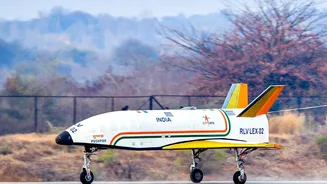
India's journey in space, for decades defined by the monumental achievements of its state-run agency, has entered a dynamic new chapter. Since the government opened the sector to private participation in 2020, the landscape has transformed dramatically.
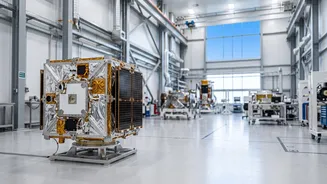
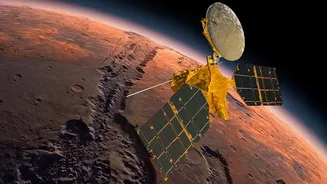
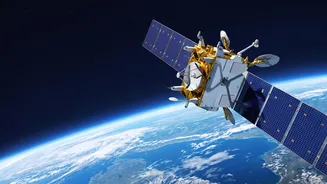
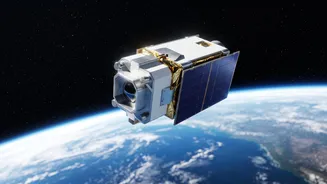
As of 2026, the country is home to over 400 space-tech startups registered with the Department for Promotion of Industry and Internal Trade (DPIIT), a staggering increase that signals a fundamental shift in the nation's space ambitions. This boom is not just about numbers; it represents the birth of a comprehensive commercial ecosystem, with private firms now involved in everything from building rockets and satellites to providing sophisticated data analytics services that impact agriculture, logistics, and disaster management.
The Policy Push That Opened the Skies
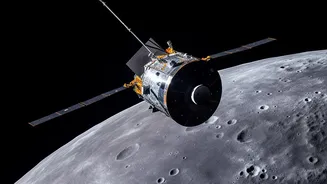
The catalyst for this explosion was a series of deliberate policy reforms. The creation of the Indian National Space Promotion and Authorisation Centre (IN-SPACe) in June 2020 was a landmark decision. IN-SPACe acts as a single-window agency, empowering private companies by authorising their activities, facilitating technology transfers from ISRO, and providing access to state-owned testing facilities and infrastructure. This was further solidified by the Indian Space Policy 2023, which formally clarified the roles of ISRO, IN-SPACe, and commercial entities, creating a more predictable and open environment for private investment. The goal is to move ISRO's focus towards research and deep space exploration while private players drive the commercial aspects of the space economy.
Following the Money: A Surge in Capital
With policy support came a torrent of investment. Private funding in Indian space-tech startups has seen a remarkable climb, surging from just $43 million in 2021 to a record $200 million in 2025. By mid-2026, cumulative investments since 2021 had crossed $871 million. This influx of capital is enabling companies like Skyroot Aerospace, which became the first Indian private company to launch a rocket, and Pixxel, which is building a constellation of hyperspectral imaging satellites, to move from prototypes to commercial operations. Bengaluru has emerged as the nation's space-tech hub, attracting nearly 60% of all funding, followed by Hyderabad and Chennai. This investment is not just coming from domestic VCs but also from global institutional investors, signalling strong confidence in the sector's potential.
Creating a High-Skill Job Engine
The expansion is also creating a significant number of high-value jobs. What was once a career path largely confined to government institutions is now a diversified employment engine. India's space economy is projected to grow to over $40 billion by 2033, creating more than 200,000 new jobs in manufacturing, engineering, and data science. This has also spurred a talent migration, with experienced scientists and engineers from ISRO moving to the private sector, bringing with them invaluable expertise. The sector now demands a wider range of skills, from robotics engineers and avionics specialists to managers who can run complex space-grade programmes and data professionals who can turn satellite imagery into commercial insights.
Challenges on the Launchpad
Despite the incredible momentum, the journey is not without its challenges. Space ventures are capital-intensive with long gestation periods, and access to patient, long-term funding remains a hurdle, particularly for scaling up operations. While the number of startups is high, a large portion has yet to secure equity funding. There are also infrastructural bottlenecks, with a high demand for specialised testing facilities that are still primarily controlled by ISRO. Furthermore, as companies mature, they face the critical test of moving beyond celebrated launches to achieving sustained mission success and demonstrating a clear return on investment in a competitive global market.