




An Idea Takes Root
The journey began in 2006, when then-Chief Minister of Rajasthan, Vasundhara Raje, visited Israel and observed thriving olive farms in the Negev desert. She saw a parallel between Israel's desert climate and Rajasthan's own arid landscape, sparking the idea
that olives could be a viable cash crop for the state. Despite initial skepticism from agricultural bodies, who cited a failed attempt in Himachal Pradesh in 1985, the state government decided to move forward with the ambitious project. This led to the formation of Rajasthan Olive Cultivation Ltd. (ROCL) on April 19, 2007. It was established as a public-private partnership between the Rajasthan government, Pune-based Finolex Plasson Industries for its expertise in micro-irrigation, and Israel's Indolive Limited for its technical know-how.
From Israeli Saplings to Rajasthani Soil
With the corporate structure in place, the next step was to bring the olive trees to India. Over 112,000 saplings of seven different varieties—including Barnea, Arbequina, and Picual—were imported from Israel. These were planted across 182 hectares of government-owned farms in seven districts, including Jaipur, Bikaner, and Sri Ganganagar, to test their adaptability in different agro-climatic zones. The project relied heavily on Israeli technology, using advanced drip irrigation systems and soil sensors to deliver precise amounts of water and nutrients, a critical factor for success in the water-scarce region. After years of careful cultivation, the trees began to flower in 2011 and bore their first fruits in 2012, proving that the concept was viable.
A Landmark Year for Indian Agriculture
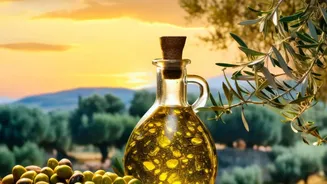
The year 2013 marked the pivotal moment when the experiment transitioned into a commercial enterprise. In September of that year, the first commercial-scale olive oil production commenced in Rajasthan. An oil extraction machine was procured from Italy and a refinery was established in Bikaner to process the harvest. This milestone was the culmination of years of effort and cross-national collaboration. The state produced between 100 and 110 tonnes of olives in 2014, a significant achievement that laid the groundwork for a domestic olive oil brand. This eventually led to the official launch of 'Raj Olive Oil' in November 2016, the country’s first indigenously produced olive oil brand.
The Challenge of Building a Market
Producing the oil was only half the battle. The next major hurdle was competing in a market dominated by established brands from Spain and Italy. Price remains a significant challenge, as high import duties on foreign oils already make the category a premium product in India. For domestic olive oil to succeed, it needed to be competitive. Furthermore, there was the challenge of consumer education. Many Indian consumers perceived olive oil as unsuitable for local cooking methods or were simply unfamiliar with its benefits beyond its use as a massage oil. Despite these obstacles, the rising health consciousness among urban Indians and a growing interest in global cuisines have helped create a niche but expanding market for this homegrown 'liquid gold'.
The State of Olive Farming Today
More than a decade after the first commercial production, Rajasthan's olive industry has had its share of ups and downs. After an initial expansion, the area under cultivation has reportedly shrunk from a peak of around 1,000 hectares to about 300 hectares due to inconsistent yields and water scarcity issues. However, the project continues to evolve. Recent reports from September 2026 indicate a revival of hope, with the olive oil mill in Lunkaransar resuming operations and processing fresh harvests. This suggests that with better-suited plant varieties and improved orchard management, the crop still has a future in the state. The government has also promoted the crop by establishing nurseries and providing subsidies to farmers, encouraging them to diversify from traditional crops.