






An Address in Orbit: The Bharatiya Antariksh Station
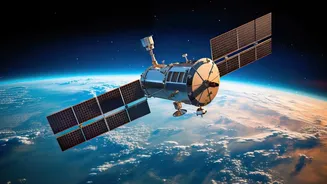
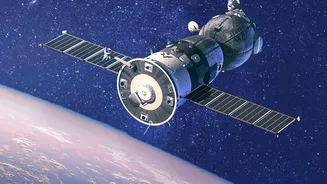
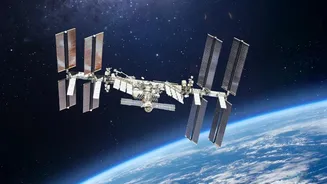
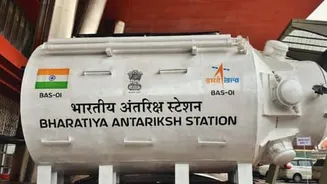
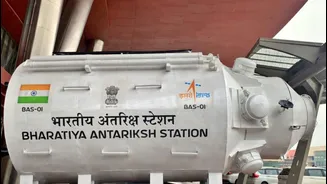
The project at the heart of this announcement is the Bharatiya Antariksh Station (BAS), India’s ambitious plan to build and operate its own modular space station in low-Earth orbit. The clearance specifically applies to BAS-01, the foundational first
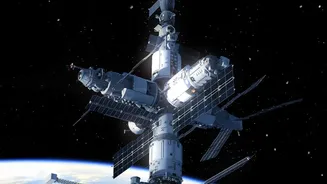
module of this station. According to official government statements, this initial module is slated for launch by 2028. The grander vision is a 52-tonne, five-module orbital laboratory orbiting approximately 400 kilometres above Earth, expected to be fully completed by 2035. This would place India in an elite club of nations capable of maintaining a permanent human presence in space, providing a unique platform for scientific research and long-duration space missions. Once operational, the station could host two to four astronauts for months at a time, cementing India's status as a major space-faring power.
The Blueprint is Approved
The recent news, confirmed in a reply to Parliament, signifies the successful completion of the Baseline Design Review for the BAS-01 module. This isn't just bureaucratic paperwork; it's a critical engineering milestone. In complex projects like a space station, the design review is a rigorous process where a committee of experts scrutinises the fundamental 'blueprint' to ensure it is sound, feasible, and safe before committing to the immense cost and effort of manufacturing. According to the government, a total of 31 baseline design documents were released and evaluated. With the expert committee giving its go-ahead, ISRO now has the official green light to move from architectural plans to the detailed design of the station's individual working parts, known as subsystems.
Inside the Machine: Designing the Subsystems
So, what exactly will ISRO be designing? The term 'subsystems' refers to the essential, interconnected components that will make the space station habitable and functional. Think of it as moving from the blueprint of a house to designing the plumbing, electrical wiring, and air conditioning. For BAS-01, this includes a host of critical technologies. A primary focus is the indigenous Environmental Control and Life Support System (ECLSS), which will provide breathable air, manage temperature, and recycle water for the astronauts. Other key subsystems include the power generation and distribution network (likely using solar panels), propulsion systems for orbital adjustments, communication arrays, and the crucial Bharat Docking System (BDS), which will allow future spacecraft and modules to connect to the station.
Building on Gaganyaan's Shoulders
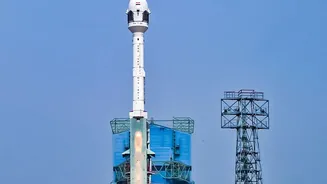
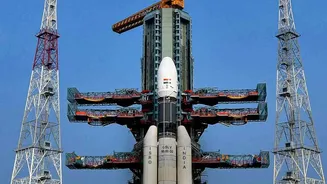
The Bharatiya Antariksh Station is the logical next step after the Gaganyaan programme, India's inaugural human spaceflight mission. The technologies and capabilities being developed to send Indian astronauts into orbit are the building blocks for a more sustained presence in space. The powerful, human-rated LVM3 launch vehicle, the orbital module, life support systems, and the crew escape system are all vital components whose development for Gaganyaan directly feeds into the space station project. Furthermore, experience gained from Gaganyaan in flight operations, communication networks, and crew recovery will be invaluable. The government has explicitly stated that technologies proven during the Gaganyaan missions will be leveraged for the BAS, making the two programmes deeply intertwined pillars of India’s human space exploration strategy.
The Journey from Design to Deployment
While this clearance is a monumental step, the road to an operational space station is a long and methodical one. With the design phase for subsystems now underway, ISRO will proceed to the manufacturing, rigorous testing, and integration of these components. Each part must be proven to withstand the harsh environment of space, from extreme temperatures to radiation and micrometeoroid debris. The plan involves launching the nearly 10-tonne BAS-01 module by 2028 aboard an LVM3 rocket. This first module will serve as a crucial test bed in space, validating all its indigenous systems before subsequent modules are added over the following years to complete the full station by 2035. It is a multi-year, multi-stage process that prioritises safety and perfection at every step.