



Side Plank
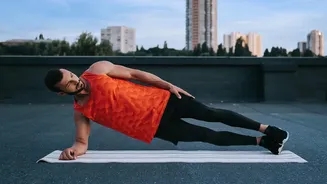
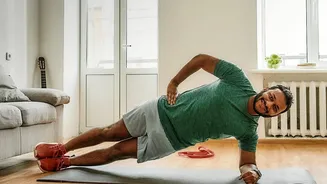
The side plank is a fantastic exercise for targeting the oblique muscles, which run along the sides of your abdomen and are crucial for rotational stability and protecting your spine. To perform it, lie on your side with your legs straight and stacked.
Place your forearm on the ground with your elbow directly under your shoulder. Engage your core and lift your hips until your body forms a straight line from your head to your feet. Avoid letting your hips sag. Hold this position, then gently lower and repeat on the other side. For an easier modification, you can perform the exercise from your knees instead of your feet.
Plank with Leg Raise
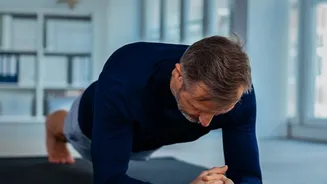
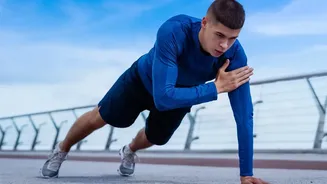
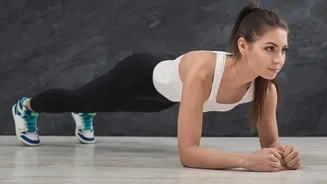
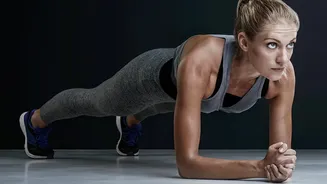
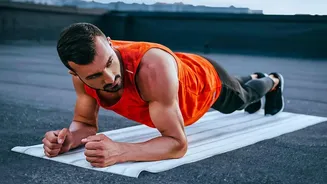
Adding a leg lift to your plank significantly increases the demand on your core to maintain balance and stability. Start in a standard plank position, either on your hands or forearms, ensuring your body forms a straight line. Keeping your core tight and your back flat, slowly lift one leg off the ground to about hip height without bending the knee. Hold for a moment, making sure your hips don’t twist or drop. Lower the leg with control and repeat with the other side. This movement not only fires up your abs but also engages your glutes and lower back.
Renegade Row
This is a powerful, full-body exercise that combines a plank with a dumbbell row, building back strength and serious anti-rotational core stability. Start in a high plank position with your hands gripping a pair of dumbbells (hexagonal ones work best for stability). Your feet should be slightly wider than hip-width apart for a solid base. Bracing your core, row one dumbbell up towards your chest, keeping your elbow tucked in. The key is to keep your hips square and resist the urge to rotate your torso. Control the dumbbell as you lower it back down and repeat on the other side. This move strengthens the lats, upper back, and core all at once.
Plank Jacks
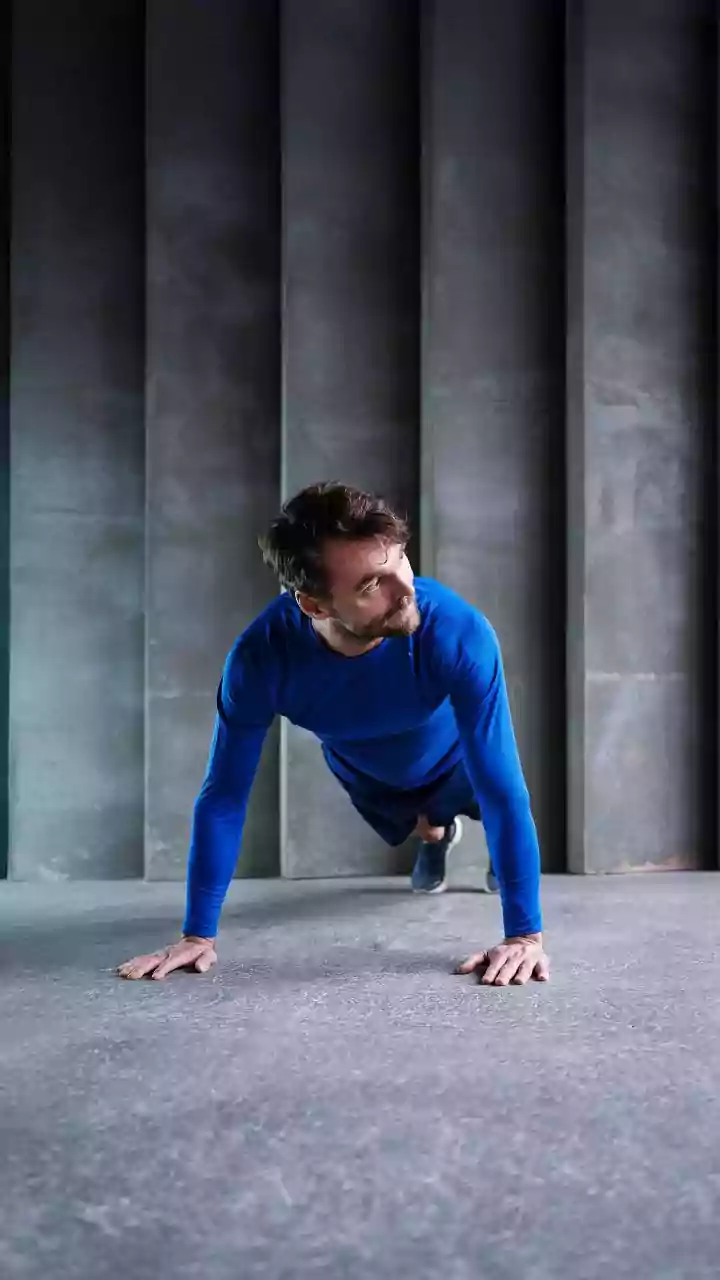
If you want to add a cardiovascular element to your core workout, plank jacks are the perfect solution. This dynamic exercise gets your heart rate up while challenging your abdominal muscles to keep you stable. Begin in a high plank position with your hands under your shoulders and your feet together. While keeping your arms steady and your hips from dropping, jump both feet out wide and then quickly jump them back together, like a horizontal jumping jack. This combination of cardio and core strengthening is effective for building endurance and burning calories. For a lower-impact version, you can step one foot out to the side at a time instead of jumping.
Reverse Plank
Often neglected, the reverse plank is essential for a well-rounded routine, as it targets the posterior chain—your glutes, hamstrings, and lower back. These muscles are just as important for core stability as your abdominals. To start, sit on the floor with your legs extended in front of you and your palms on the floor slightly behind your hips, fingers pointing forward. Press into your hands and lift your hips off the floor until your body forms a straight line from your shoulders to your heels. Keep your arms and legs straight and engage your glutes and abs to prevent your hips from sagging. Hold the position, focusing on a strong, straight body line.