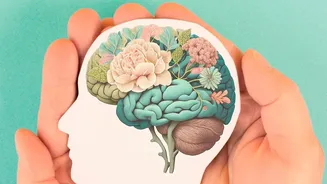








More Than Just a Filing Cabinet
For a long time, we’ve thought of memory as a biological filing cabinet. We experience something, the brain encodes it, and files it away in storage, waiting for us to pull it out later. While the basics of encoding, storage, and retrieval still hold,
scientists are now focusing intensely on the last part of that equation: retrieval. It turns out that the act of pulling a memory out is not a neutral event. Every time you recall a piece of information, you are not just accessing it; you are actively changing and strengthening it. This pivot from viewing memory as a static library to seeing it as a dynamic, living process is why memory retrieval and subsequent recall have become a major focus in cognitive science and neuroscience.
The Power of Active Retrieval
The core of this new focus is a phenomenon known as the "testing effect" or "retrieval practice." Studies have consistently shown that actively trying to recall information is far more effective for long-term retention than passively rereading or reviewing it. When you force your brain to search for and reconstruct a memory, you strengthen the neural pathways associated with it. This effortful process signals to your brain that the information is important. Research has demonstrated dramatic differences in retention; for instance, one landmark study found that students who practiced active recall retained significantly more information after a week compared to those who simply reread the material. Even attempting and failing to recall something has been shown to enhance subsequent learning, making the eventual memory stronger.
How Retrieval Resets Forgetting
Even more fascinating is the idea that retrieval can interrupt the natural process of forgetting. We typically forget details rapidly after an event, with the decline slowing over time. However, new research shows that selectively retrieving a piece of information can revive related, non-retrieved details that were seemingly forgotten. In a sense, the act of recall can bring the memory's strength back to the level it was at shortly after it was first formed. This suggests that remembering isn't just about preserving a memory but can also be an act of restoration, effectively resetting the clock on the forgetting curve and ensuring a more lasting recall later on.
The Role of Consolidation and Sleep
The process of strengthening memories and preparing them for long-term storage is called consolidation. Much of this crucial work happens 'offline', especially during sleep. During sleep, the brain is believed to reactivate or 'replay' recent experiences, which helps move memories from the temporary storage of the hippocampus to more permanent storage in the neocortex. Researchers have even used targeted memory reactivation—presenting sounds associated with a learned task during sleep—to boost recall performance. This highlights the symbiotic relationship between retrieval practice during the day and the brain's consolidation processes at night. The memories we actively retrieve are the ones the brain prioritises for strengthening while we rest.
Why This Research Matters Now
This focus on retrieval and recall has profound real-world implications. In education, it champions study methods like self-quizzing and using flashcards over passive highlighting and rereading. For an aging population, understanding these mechanisms offers new hope. Studies are exploring how interventions that mimic the hippocampus's replay function could help older adults retain more detailed, vivid memories. Furthermore, this research provides insight into conditions like Alzheimer's disease and dementia, where memory retrieval processes are impaired. By understanding how healthy memory retrieval works and how it can be enhanced, scientists hope to develop better strategies to protect and even restore cognitive function in those who are struggling.