







Nature's Intended Fire Cycle
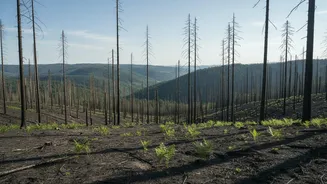
Fire, in many ecosystems, is not an enemy. It is a natural and essential part of a healthy life cycle. For millennia, low-intensity surface fires have cleared out dead undergrowth, returned nutrients to the soil, and helped certain types of trees to release
their seeds. This process prevents the build-up of excessive flammable material. Following these natural fires, seasonal vegetation regrows, contributing to a resilient and diverse landscape. This cycle of burn and regrowth is balanced; fires are typically frequent but not catastrophic, allowing forests to recover and thrive. The key here is balance—a rhythm that human activity and a changing climate have now dangerously disrupted.
From Green Growth to Tinder
The problem Europe faces isn't the vegetation growth itself, but the unprecedented conditions under which that growth now exists. Europe is the planet's fastest-warming continent, heating at more than twice the global average. This leads to prolonged and intense heatwaves and droughts. A wet winter or spring can lead to lush, rapid vegetation growth, which might seem positive. However, when this is followed by a record-hot, dry summer, this abundant plant life quickly cures, turning from green fuel into a vast, continuous carpet of tinder. This mass of dry organic matter is what fire scientists call 'fuel load'. Climate change has dramatically increased the amount of this dangerously dry fuel and extended the period when it is most flammable.
The Anatomy of a Modern 'Megafire'
Today's fires are not the low-intensity ground fires of the past. They are often fast-moving, high-intensity 'megafires'. This new breed of fire is so powerful it can create its own weather systems, including fire-driven thunderstorms that spread embers and start new fires miles away. The extreme dryness of the fuel means fires ignite more easily and spread with terrifying speed. Instead of just burning along the forest floor (a surface fire), the flames climb 'ladder fuels'—smaller trees and shrubs—to reach the forest canopy. This results in a 'crown fire', an inferno that moves from treetop to treetop and is almost impossible to contain. The combination of high fuel loads, extreme heat, drought, and strong winds creates these explosive and erratic fire behaviours.
The Human Factor: Land Use and Ignitions
Climate change sets the stage, but human factors often provide the script. Over the past few decades, changes in land management have exacerbated the fire risk. In many parts of southern Europe, people have moved away from rural areas, leading to the decline of traditional agriculture and grazing that once helped clear undergrowth. This has allowed forests and shrublands to become denser and more continuous, creating uninterrupted paths for fire to travel. Furthermore, unsustainable forestry practices, such as planting vast monocultures of flammable trees like pine, have created landscapes that are much more vulnerable to fire. On top of this, the majority of wildfires are started by human activity, whether through accident, negligence, or arson, providing the initial spark in these primed landscapes.
The 2026 Crisis: A Perfect Storm
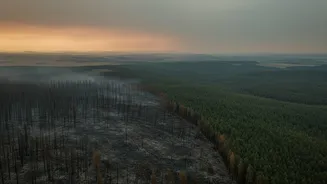
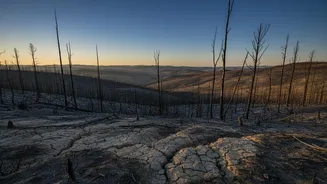
The summer of 2026 exemplifies this dangerous new reality. Countries across the Mediterranean, including Greece, Spain, France, and Italy, have battled devastating fires that have forced mass evacuations and destroyed vast areas. As of early August 2026, the total burnt area in the EU had already surpassed 500,000 hectares for the year. Scientists have directly linked the hot, dry, and windy conditions fueling these fires to human-caused climate change, making such events far more likely. The fires in France and Spain, in particular, have broken modern records for their scale and intensity. This isn't just a bad fire season; it is a clear symptom of a systemic shift towards a hotter, drier, and more flammable Europe.