






A Vision of Paradise and Light
They are known as the ‘Gate of Paradise’ and the ‘Halo of Light’. One features lenses of matching Colombian emeralds, the other, flawless diamonds from the legendary Golconda mines. Believed to date back to the 17th century, a period of immense wealth
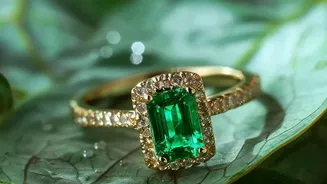
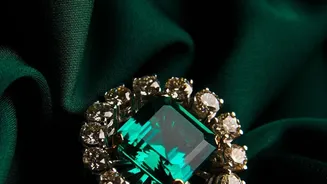
and artistic achievement for the Mughal Empire, these spectacles are more than just vision aids; they are masterpieces of lapidary art and symbols of ultimate status. While the exact patron is unknown, the sheer quality and size of the gems suggest they were reserved for an emperor or a high-ranking member of the royal court. The emerald lenses, named ‘Astaneh-ye Ferdaws’ or ‘Gate of Paradise’, weigh a combined 27 carats and were sliced from a single rough emerald estimated to have weighed over 300 carats. The diamond pair, ‘Halqeh-ye Nur’ or ‘Halo of Light’, are thought to have been carved from a single 200-carat diamond.
The Science of Seeing, The Art of Believing
In the 17th century, the lines between science, art, and faith were beautifully blurred. Gemstones were not just prized for their beauty but for their perceived metaphysical properties. Emeralds, in particular, were associated with healing, protection from evil, and even paradise itself. The colour green holds special significance in Islamic tradition, linked to salvation and eternal life. Wearing these emerald lenses may have been seen as having a spiritual aid, a way to glimpse a heavenly realm. There are even legends that the Mughal emperor Shah Jahan, devastated after the death of his wife Mumtaz Mahal, used emeralds to soothe his weeping eyes. Diamonds, meanwhile, were associated with spiritual illumination and enlightenment. These glasses were therefore not just for seeing the world, but for understanding one's place within it on a cosmic scale.
An Unthinkable Feat of Craftsmanship
The creation of these lenses was an act of supreme mastery and immense risk. To slice a massive, flawless emerald or diamond into thin, transparent lenses without shattering them required technology and expertise that was virtually unparalleled at the time. The lapidary traditions of the Mughal court were highly advanced, but this was an undertaking of a different order. The gems had to be cleaved perfectly to preserve their clarity and size, a feat so difficult that no other comparable examples are known to exist. It is a testament to the genius of the unknown artisan and the limitless resources of their imperial patron. The original 17th-century lenses were later placed in new frames around 1890, which were decorated with rose-cut diamonds to suit the aesthetics of that later period.
The Ultimate Symbol of Power
In an empire defined by opulence, owning such objects was the ultimate expression of power. The gems required—a flawless 200-carat diamond and a 300-carat emerald—were of a quality that would have been immediately claimed by the imperial treasury upon discovery. They simply would not have been available to anyone outside the emperor's immediate circle. While spectacles existed in Mughal India, often signifying wisdom and scholarly pursuits, these were on another level entirely. They were not functional items for the masses but bespoke treasures designed to merge worldly power with divine favour. Their purpose was to signify that the wearer was not just wealthy, but touched by the divine, someone who could literally see the world through a lens of paradise.