








A New Roadmap for Economic Cooperation
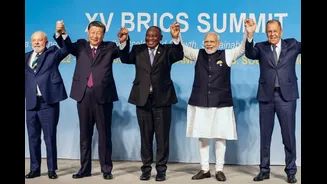
The BRICS bloc, now a formidable group of eleven nations including major emerging economies, is actively working to increase its internal trade and investment. The BRICS Chamber of Commerce & Industry has outlined a strategic roadmap for 2026 aimed at boosting
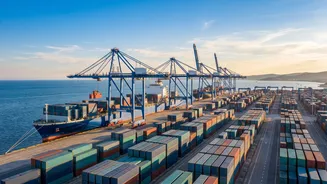
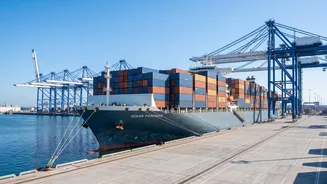
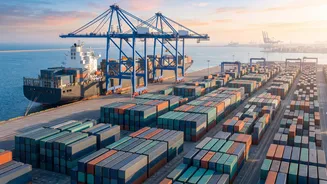
business connectivity and simplifying cross-border procedures. This initiative moves beyond high-level political statements to focus on practical implementation, creating stronger direct links between businesses and small and medium-sized enterprises (SMEs) across member countries. The goal is to build more resilient and efficient supply chains, encouraging greater market access and investment among members, as outlined in the proposed BRICS Global Value Chains Action Plan for 2026–2030. This trade push is significant, as intra-BRICS trade has already surged from $84 billion in 2003 to approximately $1.17 trillion in 2024.
The 'Key Qualification': Trading in Local Currencies
The central pillar of this new trade push—the 'key qualification'—is the increasing emphasis on using national currencies for bilateral trade settlements. The idea is to create a framework that allows for cross-border transactions to be settled directly in the currencies of the trading partners, such as the rupee, ruble, or yuan. This move is not about creating a single common BRICS currency, an idea that has been met with scepticism due to the vast geographical and economic differences between members. Instead, the focus is on developing an interoperable network of national payment systems, like India's Unified Payments Interface (UPI), China's CIPS, and Russia's SPFS. According to recent data, over two-thirds of trade among BRICS nations was already conducted in national currencies in 2025, a trend that has accelerated due to geopolitical tensions.
The Broader Goal: De-Risking from the Dollar
This shift towards local currencies is part of a wider strategy often described as 'de-risking' or 'de-dollarization'. For members like Russia and China, reducing dependence on the US dollar is a clear strategic goal, aimed at insulating their economies from Western sanctions and financial leverage. By building an alternative financial infrastructure, the bloc hopes to make transactions faster, cheaper, and less vulnerable to the volatility of a single dominant currency. However, this is a delicate balancing act. The push for a parallel payments highway is significant, but it is not yet a replacement for the dollar-dominated global system. The ambition is to create 'immunity' against Western economic leverage, but turning this vision into a fully functional and trusted corridor remains a major challenge.
India's Cautious and Calculated Stance
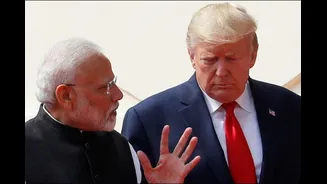
India has approached the issue with caution, embracing the benefits of local currency trade while officially distancing itself from an explicit 'de-dollarization' agenda. Officials have clarified that India supports promoting trade in local currencies to mitigate risks but is not actively working to undermine the US dollar, which remains a key currency in its trade relationships. New Delhi's strategy is pragmatic; it seeks to enhance economic cooperation within BRICS and champion the 'Global South', but not at the cost of its relationships with Western partners. India is a major proponent of using its Digital Public Infrastructure, especially UPI, to build interoperable payment systems that facilitate smoother trade. This allows India to align with the BRICS goal of financial autonomy while navigating its own strategic interests and avoiding being drawn into an anti-Western posture.