



A New Ghost in the Galactic Graveyard
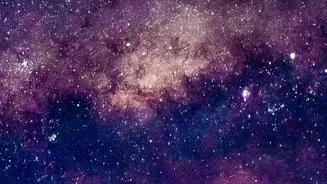
Imagine looking at a familiar map of your city and suddenly noticing a new park that wasn't there before. That's a little like what astronomers experienced while studying data from the heart of the Milky Way. Using powerful telescopes like NASA's Chandra
X-ray Observatory and the MeerKAT radio telescope in South Africa, they identified a blob of emission that stands out. Located roughly 26,000 light-years from Earth and just a few dozen light-years from Sagittarius A*, the supermassive black hole at our galaxy's center, this object is a candidate for being a supernova remnant. It's a cosmic crime scene—the expanding debris from a massive star that blew itself apart. What makes this particular scene so exciting is the possibility that the explosion happened very recently in cosmic terms.
What Makes a Supernova Remnant 'Young'?
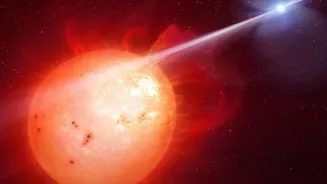
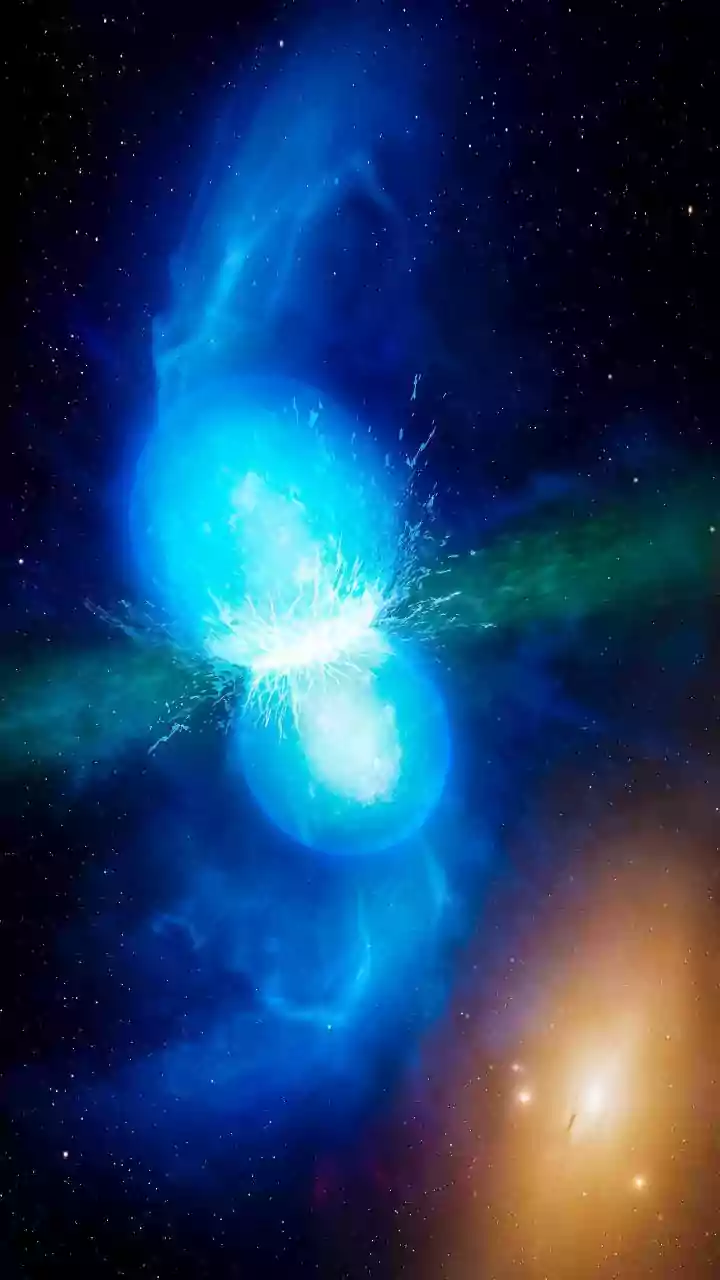
When a massive star runs out of fuel, it collapses under its own gravity and then rebounds in a titanic explosion called a supernova. This blast hurls the star's guts into space at incredible speeds, up to 10% the speed of light. The resulting structure of ejected material and shocked interstellar gas is called a supernova remnant. Most remnants we see are thousands of years old, their initial fury having faded and slowed. A 'young' remnant, by contrast, is one that is perhaps only a few hundred or a couple of thousand years old. These youngsters are prized by scientists because they offer a direct look into the immediate aftermath of a star's death. They are pristine laboratories for studying extreme physics and the creation of heavy elements—like the iron in our blood—that are essential for life.
The Evidence So Far
The case for this being a young remnant is built on several key clues. The object, found within a larger bubble of gas known as Sagittarius C, appears as a distinct 'blob' in X-ray data from Chandra. This is consistent with the superheated material expected from a recent explosion. Scientists estimate that if it is a remnant, the material is expanding at a blistering 3.2 million kilometres per hour. Based on this speed and its size, they calculate an age of at least 1,700 years. This might sound old, but it's a blink of an eye in the life of the galaxy. For comparison, the youngest confirmed supernova remnant in the Milky Way, G1.9+0.3, is estimated to be only around 140 years old, but this new candidate is in a much more dynamic and interesting region near the galactic center.
Awaiting a Smoking Gun
While the evidence is compelling, the case isn't closed. The headline-making claim of a 'possible' remnant is a crucial part of the scientific process. Researchers need more proof to move from 'candidate' to 'confirmed'. The ultimate confirmation would be finding the 'smoking gun' of the explosion: a pulsar. A pulsar is the super-dense, rapidly spinning corpse of the star's core that should be left behind after this type of supernova. Locating a pulsar within the debris cloud would seal the deal. Astronomers will now use other powerful instruments, potentially including the James Webb Space Telescope, to search for this stellar remnant and study the expanding gas in greater detail across different wavelengths of light. These follow-up observations will be critical to confirming its identity and unlocking the secrets it holds.