



The Tradition of Togetherness
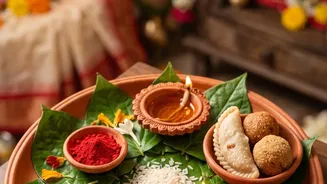
Subho Bijoya marks the period after the immersion of the Durga idol, a time that stretches until Diwali, celebrating the victory of good over evil. It's a deeply cherished tradition in Bengali culture, defined by visiting the homes of relatives and neighbours.
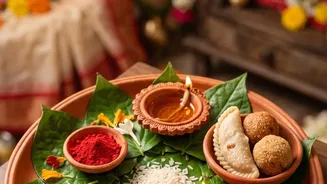
Younger members touch the feet of elders to seek blessings, and friends embrace in a warm 'kolakuli'. Central to these visits is the custom of 'mishti mukh', or offering guests something to eat, turning every household into a hub of culinary hospitality. No visit is complete without sharing snacks, a gesture that symbolises love, community, and the joy of the festive season.
The Quintessential Crunch: Nimki
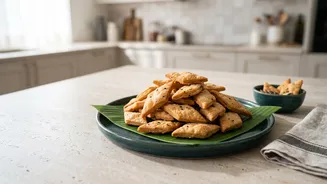
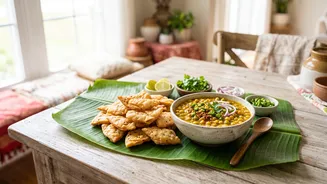
On any Bijoya platter, the savoury crunch of Nimki is essential. These small, diamond-shaped, deep-fried crackers are a staple in every Bengali household. Made from a simple but stiff dough of refined flour (maida), they are characteristically flavoured with kalonji (nigella seeds), which gives them a distinct, slightly oniony aroma. The secret to a perfect Nimki lies in achieving a flaky, crispy texture rather than just a browned exterior. This is done by frying them slowly on a low flame. Whether you prefer the tiny 'kucho nimki' or larger triangular versions, these savoury bites are the perfect foil to the array of sweets on offer.
The Hearty Companion: Ghugni
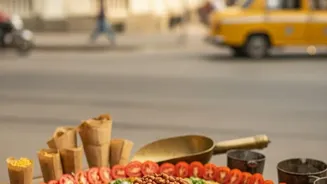
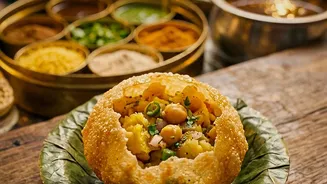
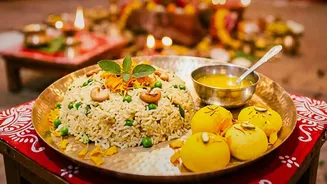
Where there is Nimki, a bowl of warm, comforting Ghugni is never far behind. This beloved curry, made from dried white or yellow peas, is a fixture at festive gatherings. It's a hugely popular street food in Kolkata and a household favourite across Eastern India. The peas are slow-cooked into a mildly spiced, flavourful gravy, often with potatoes to add body. Unlike many other curries, traditional Bengali ghugni gets its authentic character from a fragrant blend of ginger, cumin, and coriander rather than a heavy onion-tomato base. Served hot and garnished with chopped onions, green chillies, and a squeeze of lemon, Ghugni is the perfect hearty dish to offer guests.
Beyond the Famous Duo
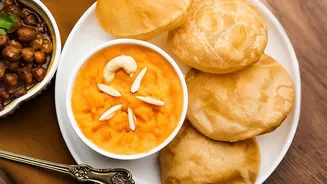
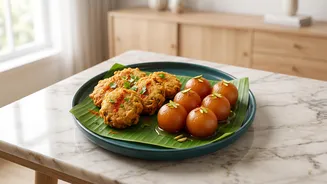
While Nimki and Ghugni are the stars, the Subho Bijoya table has room for many other delicacies. For a more substantial offering, the classic combination of Luchi and Aloor Dum is a champion. Luchis are soft, puffy, deep-fried breads that pair wonderfully with the slow-cooked, aromatic potato curry. Another popular item is the fish chop, where boiled fish is mixed with spices, coated, and deep-fried to create a crispy snack that goes perfectly with kasundi, the iconic Bengali mustard sauce. For a vegetable alternative, mochar chop, made from banana flowers, offers a rare and delicious treat that is well worth the effort of preparation.
A Sweet Conclusion with Mishti
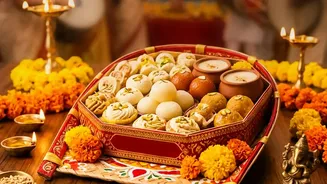
No Bengali celebration is complete without sweets, and Bijoya is no exception. The most traditional homemade sweet is Narkel Naru, delightful coconut balls that are a nostalgic staple. These bite-sized spheres are made from freshly grated coconut and sweetened with either sugar or the more aromatic date palm jaggery. The process of making them is often a cherished family activity itself. Another quintessential sweet is Sandesh, a delicate fudge made from fresh 'chhana' (cottage cheese). For Bijoya, a simple, classic Sandesh, sometimes steamed to create a wonderfully soft and moist 'Bhapa Sandesh', is often preferred for its subtle and sophisticated sweetness.