






An Unfair Reputation
For centuries, the dodo has been the poster child for extinction, its name synonymous with foolishness. Discovered by sailors on the island of Mauritius in the late 16th century, the flightless bird disappeared in less than a hundred years. Its apparent
lack of fear towards humans—who were new to its predator-free world—was misinterpreted as a lack of intelligence. This narrative was cemented by its scientific name, Dodus ineptus, which literally means 'inept dodo'. It became a caricature in popular culture, from Alice in Wonderland to modern cartoons, forever portrayed as a bumbling creature that deserved its fate. But this reputation was built on scant evidence and centuries of speculation, not hard science.
A Digital Look Inside the Skull
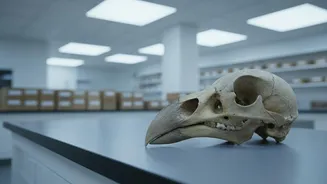
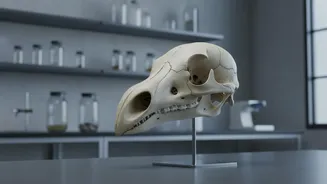
To get a clearer picture, an international team of scientists turned to modern technology. They used high-resolution CT scanners on some of the only complete dodo skulls known to exist, including precious specimens at the Natural History Museum Denmark and the Oxford University Museum of Natural History. This non-destructive technique allowed them to create detailed 3D digital models of the skulls' interiors. Although the dodos' brains were lost centuries ago, they left imprints on the inner surface of the bone as they developed. By creating a digital 'endocast'—a model of the brain cavity—researchers could finally get a detailed look at the brain's shape and size, offering clues about the bird's sensory capabilities without damaging the priceless fossils.
A Surprisingly Powerful Nose
One of the most striking discoveries is that the dodo likely had a powerful sense of smell. The digital reconstructions showed that the brain's olfactory bulbs—the region responsible for processing smells—were significantly larger than those of its closest living relatives, pigeons and doves. This enhanced sense of smell would have been a major advantage on Mauritius, helping the dodo locate fallen fruit and other food sources in a complex forest environment. It suggests a creature finely tuned to its specific habitat, relying more on scent than many other birds.
More Than Just a 'Bird Brain'
The long-held belief that the dodo was unintelligent also takes a serious hit from this new evidence. The study found no evidence that the dodo had diminished cognitive abilities compared to its relatives. The part of the brain associated with higher-level thinking was proportionally just as large as you would expect for a bird of its size. The idea that it was 'stupid' seems to be completely unfounded. Furthermore, analysis of its skull suggests its large beak was highly sensitive to touch, acting like a probe to gather information about its surroundings. This points to a complex animal with a unique set of sensory tools for survival.
A Creature of Twilight
The scans also provided clues about the dodo’s daily life. While its eyes were relatively large, the part of the brain that processes visual information, the optic lobes, were unusually small. This combination is often seen in birds that are not exclusively active during the day. Scientists now believe the dodo may have been crepuscular, meaning it was most active during the low-light hours of dawn and dusk. This behaviour would have helped it avoid the midday heat and find food when competition was lower. Rather than being a slow, lumbering daytime animal, it might have been a creature that thrived in the twilight.