





Why Start with the Wall?
The traditional floor push-up is a fantastic exercise, but it demands a significant amount of strength, stability, and joint integrity that many people, especially beginners, may not have. The wall push-up is its welcoming cousin. By performing the movement
against a vertical surface, you reduce the amount of body weight you have to lift, making it much gentler on your wrists, elbows, and shoulders. This doesn't mean it's 'easy' in a non-beneficial way. Instead, it's a foundational exercise that builds strength and teaches you the correct movement patterns you'll need for more challenging variations. It allows you to focus on proper form, muscle engagement, and breathing without the strain of battling gravity at full force.
A Step-by-Step Guide to Perfect Form
Proper form is crucial to get the most out of the exercise and prevent injury. Follow these steps: 1. Stance: Stand facing a solid wall, about an arm's length away, with your feet hip-width apart on a non-slip surface. 2. Hand Placement: Place your hands on the wall, slightly wider than shoulder-width and at shoulder height. To protect your wrists, you can turn your hands slightly inwards. 3. Body Alignment: Your body should form a straight line from your head to your heels. Engage your core by tucking your pelvis slightly and squeezing your glutes. This prevents your lower back from sagging. 4. The Movement: Inhale as you slowly bend your elbows, keeping them at about a 45-degree angle to your body, and lower your chest toward the wall. Avoid flaring your elbows out to the sides. Pause when you are close to the wall. 5. The Push: Exhale as you push through your palms to straighten your arms and return to the starting position. Focus on your shoulder blades spreading apart as you push away.
The Real Prize: Gaining Upper-Body Control
The headline promises 'upper-body control', and that's precisely what wall push-ups deliver. This exercise strengthens the chest (pectorals), the front of your shoulders (deltoids), and the back of your arms (triceps). But it's more than just building muscle. It enhances what's known as neuromuscular control—the communication between your brain and your muscles. By focusing on slow, controlled movements, you train your serratus anterior, a key muscle for shoulder blade stability, and your core muscles, which keep your torso rigid. This control translates directly into daily life, making it easier to push heavy doors, lift objects, or even catch yourself if you stumble.
Sidestep These Common Mistakes
To ensure you're building strength safely, watch out for these common errors. First, avoid letting your hips sag or your lower back arch. This indicates a lack of core engagement and puts stress on your spine. The fix is to actively squeeze your core and glutes throughout the movement. Second, don't just 'fall' toward the wall; control the descent. A rushed, jerky movement robs you of the strength-building benefits. Finally, watch your head position. Don't lead with your chin or let your head droop. Keep your neck in a neutral position, aligned with the rest of your spine.
Ready for More? Progressing Your Push-Up
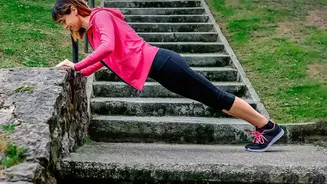
When you can comfortably perform several sets of wall push-ups with perfect form, it's time to increase the challenge. The simplest progression is to move your feet further back from the wall. This increases the angle of your body and forces you to lift more of your own weight. From there, you can progress to incline push-ups, placing your hands on a sturdy surface like a countertop, a bench, or a strong chair. The lower the surface, the harder the exercise becomes, gradually preparing you for knee push-ups and, eventually, the full floor push-up. This progressive approach ensures you build strength on a solid foundation.