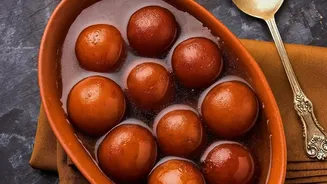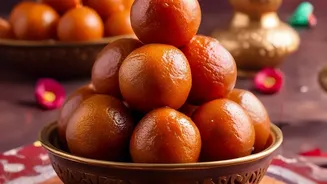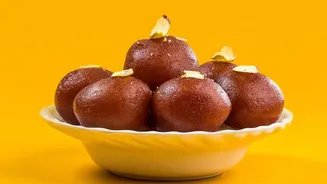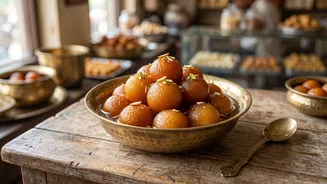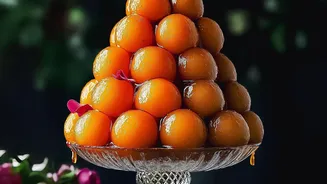



The hypnotic rhythm of a North Indian highway journey can lull any traveller. But on the route between Delhi and Lucknow, a sweet aroma awakens the senses, promising a legendary reward: the hot, syrupy gulab jamuns of Maigalganj.
A Sweet Stop on the Highway
For frequent travellers
on National Highway 30, the small town of Maigalganj in Uttar Pradesh's Lakhimpur Kheri district is more than just a landmark; it's a ritual. This otherwise unassuming village has earned a singular reputation for one of India's most beloved sweets. A stretch of the highway, barely a few hundred metres long, is lined with dozens of shops, all dedicated to the art of making and serving gulab jamuns. Cars, buses, and trucks pull over at all hours, their occupants spilling out, not just to stretch their legs, but to get a taste of what many claim are the best gulab jamuns in the country. This isn't a seasonal treat; here, the woks are always bubbling, and the sweets are served fresh and hot, year-round.
The Secret in the Khoya
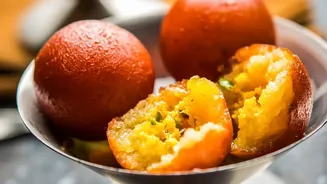
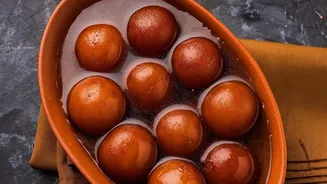
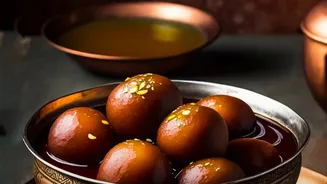
What makes the Maigalganj gulab jamun so special? The consensus among shopkeepers and connoisseurs points to one key ingredient: the khoya. Unlike the smooth, paste-like milk solids used in many commercial preparations, the khoya here is 'danedar' or grainy. Sourced from local dairy farmers, it's made from rich buffalo milk, giving the dessert a uniquely soft and slightly textured quality that melts in your mouth. The process is a craft honed over generations. The dough, a simple mix of this special khoya, a bit of flour, and a leavening agent, is kneaded and shaped into perfectly round balls. These are then fried slowly in ghee or oil until they achieve a deep golden-brown hue, before being plunged into a fragrant sugar syrup. The syrup itself is an art, cooked to the 'ek-taar' or 'single-string' consistency, ensuring it's sweet but not cloying, and perfectly absorbed by the fried dough balls.
A Legacy of Taste Since 1941
The story of Maigalganj's sweet fame reportedly began in 1941. Shop owners say a vendor named Dhanpal set up the first humble stall, perhaps in a small hut. At the time, the area was undeveloped, but travellers began to discover the exceptional quality of his gulab jamuns. Word of mouth did the rest. Over the decades, inspired by his success, numerous other shops sprang up. Today, names like Dhanpal Misthan Bhandar, Balaji Misthan Bhandar, and several that simply call themselves 'Mashhoor Gulab Jamun ki Purani Dukaan' (Famous Old Gulab Jamun Shop) continue the tradition. The competition is friendly, with an understanding that the town's collective reputation benefits everyone. As one shopkeeper noted, travellers come for the 'Maigalganj gulab jamun', and there's enough love to go around for all the vendors who uphold the quality.
An Unforgettable Experience
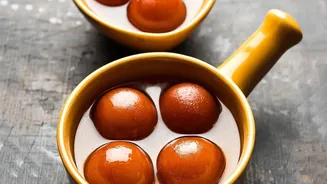
Eating a gulab jamun in Maigalganj is about more than just the taste; it's the entire experience. The sweet is almost always served piping hot, straight from the syrup, in traditional, eco-friendly earthenware bowls called 'kulhads' or leaf 'donas'. This rustic presentation enhances the flavour and the sense of authenticity. The shops themselves are simple, often just open-fronted establishments with large woks of oil and syrup displayed prominently. The air is thick with the sweet, milky aroma and the buzz of happy customers. For many, it's a cherished memory associated with family road trips and the simple joy of discovering a local culinary treasure. The town's identity is so intertwined with the dessert that, as one long-time worker mentioned, without its gulab jamuns, Maigalganj would be just another anonymous village on a long highway.