




A Historic Catch Sets the Stage
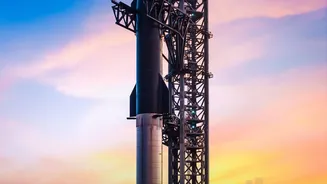
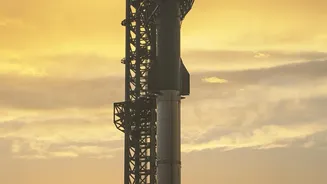
On November 14, 2026, after a 22.5-hour mission that saw it circle the Earth 14 times, the Starship upper stage descended from the sky and was deftly caught by the launch tower, nicknamed 'Mechazilla', at SpaceX's Starbase facility in Texas. This marked
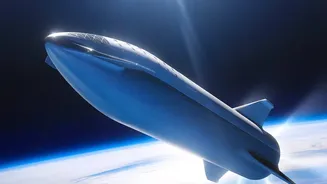
the first time in history an orbital-class upper stage has been recovered in this manner. The mission, known as Flight 15, launched a day earlier and also successfully deployed 26 Starlink satellites into orbit. While the catch of the Ship was a resounding success, the mission's other major objective—catching the Super Heavy booster—was not met. The booster aborted its own landing attempt due to a low fuel reading and was directed to a safe splashdown in the Gulf of Mexico. Despite this, the successful recovery of the Starship spacecraft itself is a monumental achievement, paving the way for the true endgame: rapid and complete reusability.
The Billion-Dollar Goal of Reusability
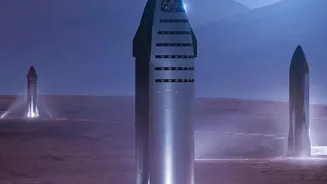
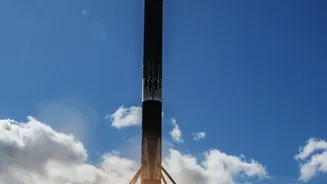
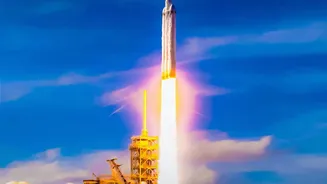
For SpaceX, catching rockets is not just a spectacle; it's the cornerstone of its business model. The company has already revolutionized the launch industry by routinely recovering and reusing the first-stage boosters of its Falcon 9 rockets. This has dramatically lowered the cost of accessing space. Starship, however, is designed to take this concept to its logical conclusion by making the entire launch system—both the Super Heavy booster and the Starship upper stage—fully reusable. The goal is to operate more like a commercial airline, where hardware is inspected, refueled, and flown again in short order. Achieving this 'airplane-like cadence' is what could fundamentally alter the economics of space travel, making ambitious projects like massive satellite constellations and, eventually, settlements on Mars, financially viable. Elon Musk has stated a long-term goal of launching thousands of Starship flights per year, a pace only possible with full and rapid reusability.
From Catch to Reflight
With the Ship 42 vehicle now secured in the tower's arms, the next logical step is a thorough inspection to assess its condition after facing the extreme heat and stress of atmospheric reentry. The vehicle is protected by approximately 18,000 ceramic heat-shield tiles, and the integrity of this system is crucial for reuse. The ultimate test of the recovery's success is not the catch itself, but whether the hardware can be flown again without extensive and costly refurbishment. Musk has expressed hope that the vehicle could be ready for reflight in a matter of weeks, potentially on a mission like Flight 16. A more conservative approach might involve first reusing high-value components like Raptor engines or heat shield tiles on a new vehicle before attempting to refly an entire recovered stage. SpaceX has previously reflown two Super Heavy boosters, but those turnarounds took several months. Reusing a Starship upper stage, which endures the much harsher conditions of returning from orbital velocity, is a far greater challenge.
What Happens Next?
All eyes are now on SpaceX for post-flight analysis. Engineers will be poring over the recovered Starship, checking every system from its engines to its heat shield. The company will also be investigating the cause of the Super Heavy booster's landing abort to ensure the 'double catch' can be achieved on a future flight. The path to reflight involves several key questions: How much damage did the spacecraft sustain? How long will inspections and any necessary repairs take? And what will be the first piece of recovered hardware to fly again? The success of Flight 15 has already been hailed as a game-changer. One SpaceX spokesperson called the catch 'the holy grail of spaceflight'. Proving that the recovered hardware can be quickly and affordably turned around for another launch would be the final piece of the puzzle, transforming a historic engineering feat into a revolutionary and sustainable business practice that could define the future of space exploration.