




A New Crater is Found
In early August 2026, a 4-tonne upper stage of a SpaceX Falcon 9 rocket concluded its long, unguided journey through space by slamming into the lunar surface at over 8,700 km/h. The impact itself, happening on the sunlit side of the Moon, was invisible
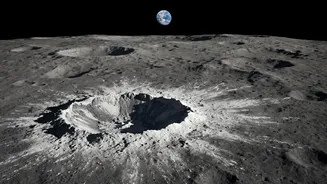
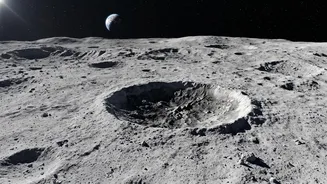
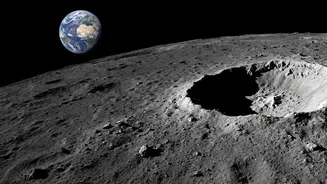
from Earth. However, scientists knew exactly where to look. Using orbital predictions from a global community of astronomers, NASA pointed its Lunar Reconnaissance Orbiter (LRO) toward the impact zone. Between August 11 and 12, the LRO's cameras, passing 97 kilometers above, captured before-and-after images that confirmed the crash. The photos revealed a brand-new crater, approximately 18 meters (60 feet) wide and less than 3 meters (10 feet) deep, a fresh blemish on the ancient landscape near Einstein crater.
The Anatomy of an Impact
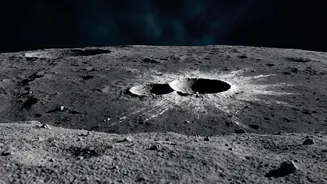
The images sent back by the LRO are more than just a confirmation; they provide a wealth of scientific detail. The impact blasted lunar soil, or regolith, across the surrounding area. The images show both bright and dark streaks fanning out from the crater. According to NASA, the darker streaks are older, weathered surface material excavated by the crash, while the brighter rays near the rim are 'fresh' material from deeper underground that has not been exposed to the harsh environment of space. The entire operation was a testament to precision. South Korea's Danuri lunar orbiter first imaged the site, narrowing down the coordinates for the LRO team, which then had to time its own photos within a 10-second window to get a clear shot. This successful hunt serves as a powerful test of planetary defense techniques, showing how accurately we can now track and observe human-made impacts.
Not the First, But Different
This isn't the first time human-made debris has hit the Moon. The Soviet Union’s Luna 2 was the first, intentionally crashing in 1959. Several stages of the Apollo-era Saturn V rockets were also deliberately impacted for seismic study. What makes this SpaceX event notable is that it was an accidental, uncontrolled crash of modern space hardware. The Falcon 9 upper stage, from a January 2025 launch carrying commercial lunar landers, was left in a high orbit after its mission was complete. Over 18 months, the combined gravitational pull of the Earth, Moon, and Sun, along with solar radiation pressure, nudged its orbit until a collision became inevitable. It highlights a new reality: as space traffic increases, so does the amount of orbital debris without a clear disposal plan.
A Growing Junkyard?
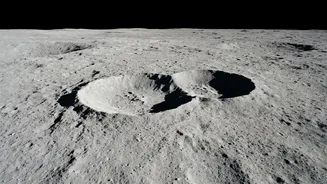
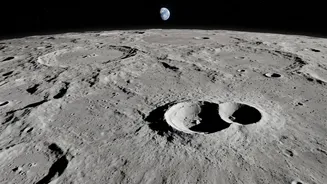
The incident is a prelude to a much busier future around the Moon. With NASA's Artemis program aiming to establish a sustained human presence and multiple countries and companies planning their own lunar missions, the space between the Earth and Moon is set to become more crowded. This crash, and another from a suspected Chinese rocket booster in 2022, underscore a growing concern. That 2022 impact was particularly puzzling, creating a strange double crater that hinted the rocket might have been carrying an unusual or undisclosed payload. While the risk to future astronauts from a direct hit remains low, the accumulation of debris poses a long-term challenge. Unlike Earth, the Moon has no atmosphere to burn up incoming objects, meaning every piece of junk, large or small, will eventually hit the surface, preserving a record of our ventures into space, for better or worse.