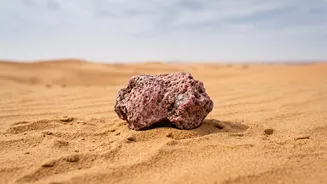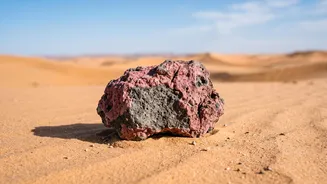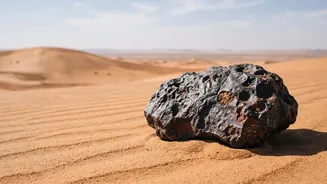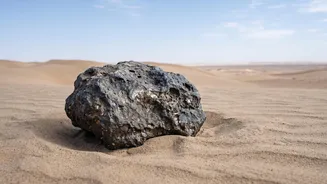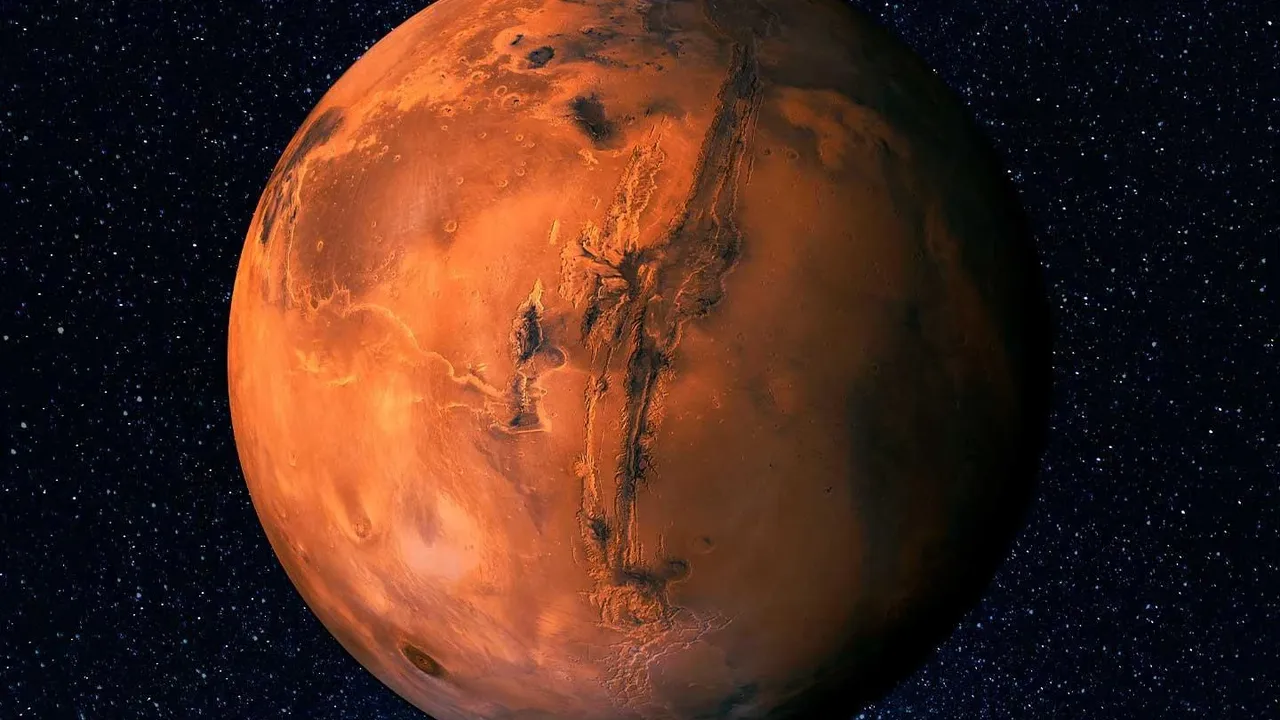



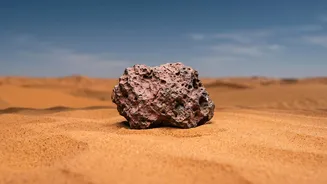
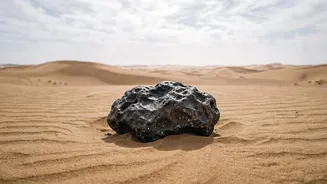
Imagine holding a rock that is older than almost any on Earth. Now imagine that rock travelled millions of kilometres from Mars. That's the story of Teghaza 001, a messenger from the past rewriting the first chapter of the Red Planet.
A Messenger From the Ancient Past
In 2022, meteorite
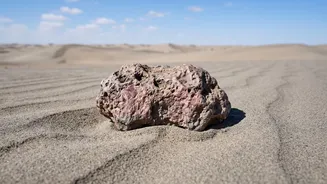
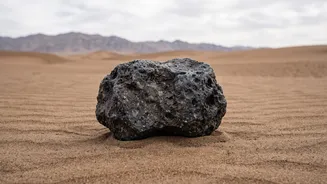
hunters discovered a peculiar, rose-coloured rock on a salt plain in Mali's Sahara Desert.. Weighing around 800 grams, the meteorite, now named Teghaza 001, was soon identified as a traveler from Mars.. While we have around 435 known Martian meteorites, Teghaza 001 is exceptionally special.. Scientists, funded by NASA, determined it is one of the three most ancient Martian meteorites ever found, having formed at least 4.1 billion years ago.. This makes it a priceless sample from the first 400 million years of Mars's existence, a time when our own planet was just beginning to host life..
Reading a 4-Billion-Year-Old Diary
So, how do scientists read the story locked inside a rock? The key lies in tiny, durable crystals called zircons.. These crystals act like geological time capsules. By analysing the radioactive decay of elements like uranium within them, researchers can precisely date when the rock first solidified from magma.. The team studying Teghaza 001 used this method, along with a novel rubidium-strontium dating technique, to confirm its incredible age.. But its age is only part of the story. Unlike most Martian meteorites, which are much younger, Teghaza 001 is a single, unadulterated piece of igneous rock that cooled slowly, likely deep underground.. This pristine state makes it a 'Rosetta Stone' for early Mars, as one reviewer noted.
Evidence of a Warmer, Wetter Mars
The most exciting revelation from Teghaza 001 is the clear evidence of its interaction with liquid water.. Analysis showed that the rock was chemically altered by water around 4.1 billion years ago, suggesting the rock itself is even older.. This finding strongly supports the idea that early Mars had a dynamic water cycle, with water percolating through the planet's crust.. Hydrogen isotopes trapped in the meteorite even offer an imprint of the Martian atmosphere as it was beginning to be lost to space.. This contrasts sharply with the cold, dry Mars we see today and provides crucial context for why Earth remained wet while Mars did not..
A Piece of the Primordial Crust
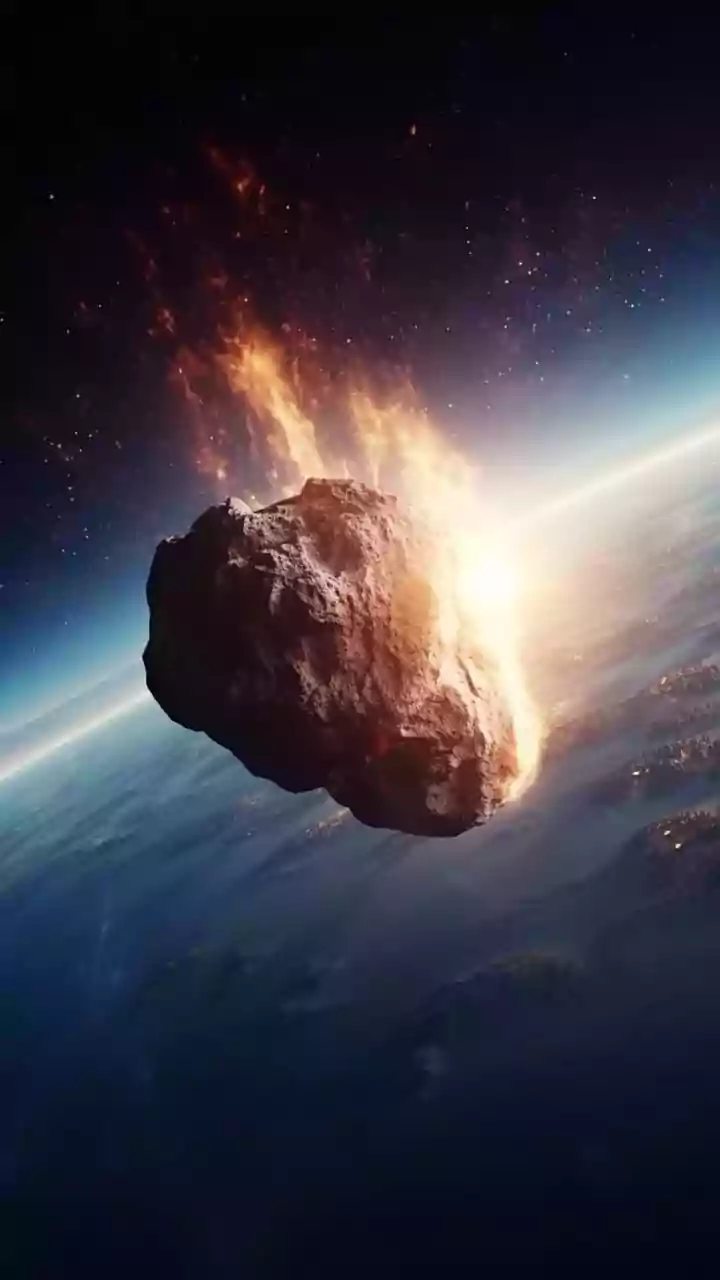
Teghaza 001 provides our first ever sample of Mars's primordial crust from a region we've never been able to study before.. Most of the Red Planet's surface is over 3 billion years old, yet almost all other meteorites are far younger.. The composition of Teghaza 001, rich in certain volcanic minerals, closely matches observations of the southern highlands made by NASA's Mars Reconnaissance Orbiter.. This heavily cratered region is believed to be the oldest part of the Martian surface, and scientists have identified 13 potential locations where this rock may have originated before being blasted into space by an asteroid impact.. It gives us a physical piece of the puzzle of how Mars first formed from a global magma ocean.
Why This Cosmic Stone Matters
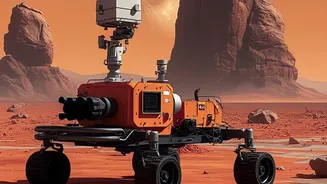
Each new Martian meteorite offers a free sample delivered to Earth, complementing the incredible work done by rovers and orbiters, including India's own Mangalyaan. But a sample this ancient is transformative. It allows us to ground truth theories about planetary formation and ask deeper questions about habitability.. The evidence of abundant water so early in Mars's history bolsters the idea that conditions may once have been conducive to life.. By studying this messenger from a time when Earth and Mars were more alike, we can better understand the divergent paths our two worlds took. As research leader Yang Liu stated, scientists have only just scratched the surface of what Teghaza 001 can teach us..