






A Crisis of Melting Ice
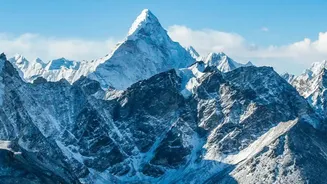
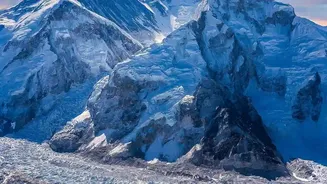
The Hindu Kush Himalaya region holds the largest volume of ice outside the polar caps, feeding river systems that nearly two billion people depend on. However, this vital cryosphere is in retreat. According to landmark 2026 reports from the International
Centre for Integrated Mountain Development (ICIMOD), the rate of glacier ice loss has doubled since the year 2000. This accelerated melting is not a distant problem; it is a real-time crisis unfolding across the mountain range. The Himalayas are warming at a rate significantly faster than the global average, leading to profound changes in the landscape. Since 1975, some glaciers have lost up to 27 metres in ice thickness, a clear signal that parts of the system may be nearing an irreversible tipping point.
Understanding GLOFs and Other Hazards
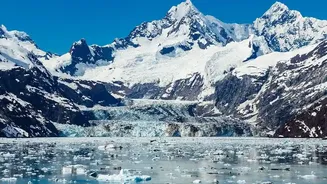
One of the most immediate dangers stemming from melting glaciers is the formation of unstable glacial lakes. As glaciers shrink, they often leave behind vast pools of meltwater dammed by unstable walls of rock and debris called moraines. A Glacial Lake Outburst Flood, or GLOF, occurs when this natural dam fails, releasing an enormous volume of water and debris downstream at incredible speed. But the risks are more complex than just GLOFs. Recent catastrophic events, like the disaster in Nepal's Rasuwa district in August 2026, are now understood to have been triggered by massive ice-rock avalanches. In these events, a huge section of a glacier breaks away, creating a devastating debris flow. Furthermore, warming temperatures are thawing permafrost—the permanently frozen ground that acts like cement for mountain slopes—increasing the frequency of landslides.
Nepal: On the Frontline
Nepal is acutely vulnerable to these escalating cryospheric hazards. A recent study identified 47 high-risk glacial lakes in the Koshi, Gandaki, and Karnali river systems, with 21 of those located within Nepal itself. The August 2026 disaster, which originated from a glacier collapse near the Nepal-China border, served as a catastrophic reminder of this vulnerability, claiming over a thousand lives and causing widespread destruction. Water levels in the Trishuli River rose by as much as nine metres in just half an hour, sweeping away homes, bridges, and hydropower projects. This event highlighted how quickly these disasters can unfold, leaving downstream communities with almost no time to react. The country's foreign minister has since stated that such events are becoming a recurring scenario for which the international community must accept shared responsibility.
A Threat That Crosses Borders to India
What happens in the high Himalayas of Nepal does not stay in Nepal. The major river systems that originate in the shared mountain range flow directly into India, meaning a disaster upstream can have severe consequences for downstream states. The recent Nepal flood has been described as a serious warning for India's Himalayan states. Experts point to hundreds of potentially unstable glaciers across the Indian Himalayas that could pose a similar threat. The Kosi and Gandak rivers, which flow from Nepal into Bihar and Uttar Pradesh, can carry floodwaters far into India's populous plains. Following the 2026 Nepal disaster, India ordered an urgent review of its own high-risk lakes and early-warning systems, acknowledging the interconnected nature of this regional threat.
The Race for a Coordinated Response
Addressing this growing crisis requires a multi-pronged approach. Scientists have called for a major expansion of glacier monitoring, as huge areas of the Himalayas remain data blind spots. Only a small fraction of the region's glaciers are monitored to global standards. Improved early-warning systems are crucial, but they must be designed to handle cascading events like ice avalanches, not just traditional GLOFs. Most importantly, the alerts must reach remote, last-mile communities with clear instructions on how to respond. There is also a push for stronger regional cooperation between countries like Nepal, India, and China to share data and coordinate disaster response across borders. As officials have noted, clear skies are no longer a guarantee of safety in a mountain system that can fail so suddenly.