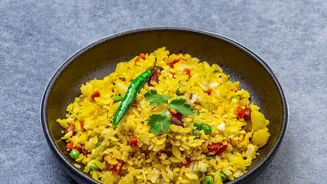






For millions across India, a plate of poha is the ultimate comfort breakfast. But this simple, wholesome dish of flattened rice is far from uniform. From state to state, it transforms, reflecting local tastes and culinary traditions.
The Classic: Maharashtrian Kanda Poha
This is perhaps the
most widespread and recognised version of poha. Hailing from Maharashtra, 'kanda' means onion, and true to its name, this variant features finely chopped onions sautéed with mustard seeds, curry leaves, and peanuts. Turmeric gives it a characteristic warm, yellow hue. Often, small cubes of potato ('batata') are also added, turning it into Kanda Batata Poha. It's a quick, savoury, and nutritious meal, beloved for its simplicity and satisfying texture. A final squeeze of lemon juice and a garnish of fresh coriander brighten up the flavours, making it an all-time favourite in households and on the streets of Mumbai.
The Street Food Star: Indori Poha
Travel to Indore in Madhya Pradesh, and you'll discover a poha that is a street food legend. What makes Indori Poha unique is its preparation method; the flattened rice is gently steamed until soft and fluffy, not sautéed in a pan. This gives it a remarkably light texture that stays soft for hours. The real magic, however, lies in the toppings. A plate of Indori Poha is generously garnished with crunchy sev (fried chickpea flour noodles), finely chopped onions, and fresh coriander. A special spice mix called 'jeeravan masala' is sprinkled on top, lending a tangy, spicy, and slightly sweet flavour profile. It’s often served with a side of sweet jalebi, a combination that perfectly balances sweet and savoury.
The Fiery One: Nagpuri Tarri Poha
In Nagpur, poha gets a fiery and bold makeover. The dish consists of a simple plate of poha that serves as a base for a spicy gravy called 'tarri'. This tarri is typically made from black chickpeas (kala chana) and a potent blend of spices, including a special 'kala masala' that gives it a dark colour and intense heat. The hot, flavourful curry is ladled generously over the soft poha, creating a dish that is both comforting and exhilarating. Topped with raw onions and crunchy sev, Tarri Poha is a breakfast for those who love a spicy start to their day.
The No-Cook Wonder: Dadpe Poha
From the Konkan region of Maharashtra comes a version of poha that requires minimal cooking, making it perfect for a quick snack. 'Dadpe' means 'to press', and this recipe uses thin poha (patal pohe), which softens without being cooked. The raw flattened rice is mixed with freshly grated coconut, finely chopped onions, tomatoes, and coriander. The moisture from the vegetables and a squeeze of lemon juice is enough to soften the thin poha flakes over about 10–20 minutes. The dish is finished with a hot tempering (tadka) of oil, mustard seeds, asafoetida, and peanuts, which is poured over the mixture. The result is a light, refreshing, and crunchy snack.
The Tangy Twist:
Karnataka's Vangi Bath Poha
In Karnataka, flattened rice (known as 'avalakki') is often used to create dishes that mirror popular rice preparations. One such example is a poha version of Vangi Bath. Traditionally a rice dish made with brinjal (eggplant), the poha variant uses the same core flavours. The brinjals are cooked with a special, aromatic Vangi Bath masala powder, tamarind pulp for tanginess, and a tempering of dals and spices. The cooked and softened poha is then mixed into this flavourful brinjal base. Another popular tangy version is Gojju Avalakki, which uses a tamarind and jaggery–based gravy to create a sweet,
sour,
and spicy flavour profile.