





Beyond the Beautiful Streak
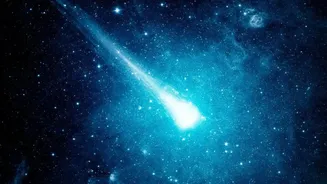
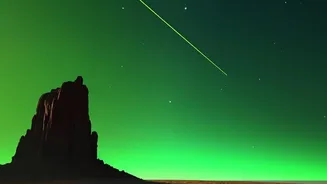
For as long as we have looked up, shooting stars have captured our imagination. That brilliant, transient line drawn across the night sky feels magical. But science tells a more fascinating, and far more fiery, story. What we see as a simple white streak
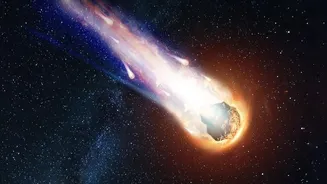
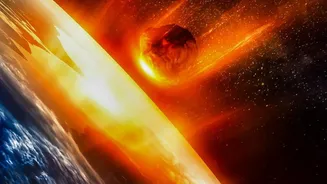
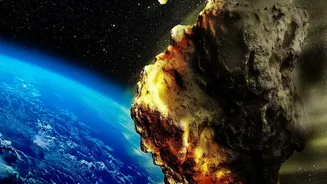
is actually a high-energy event involving a small piece of space rock, known as a meteoroid, entering Earth's atmosphere at incredible speed. It’s not the rock itself that’s glowing, at least not at first. The intense light is primarily caused by the air around the meteoroid being compressed and heated to thousands of degrees. This process, called atmospheric entry, turns a tiny pebble into a spectacular fireball. NASA's ongoing studies, including space-based cameras and laboratory experiments, are peeling back the layers of this process, showing it is a complex interaction of physics and chemistry.
A Chemical Fingerprint in Light
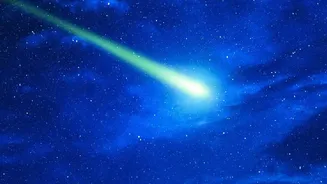
One of the most revealing aspects of recent meteor studies is the ability to read the light they produce. Using a technique called spectroscopy, scientists can break down the light from a meteor into its constituent colors, much like a prism creates a rainbow. This spectrum acts as a chemical fingerprint, revealing the elements that make up the vaporising meteoroid. For example, the presence of sodium creates a brilliant orange-yellow light, while iron glows in a yellowish-white, and magnesium produces a blue-green hue. By observing meteors from platforms like the International Space Station, NASA's Meteor experiment can capture this data without the interference of the lower atmosphere. These observations confirm that meteors deliver elements like iron, silicon, oxygen, and magnesium into our upper atmosphere, creating a fine dust of extraterrestrial material. It's a direct way of sampling the building blocks of our solar system without leaving Earth.
It's Not Friction, It's Compression
A common misconception is that meteors burn up due to friction with the air. While friction plays a small part, the real star of the show is compression. A meteoroid can travel at speeds of up to 70 kilometers per second. At this velocity, it can’t move the air in front of it out of the way fast enough. The air gets compressed into a super-hot, incandescent shockwave. This intense heat then begins to melt and vaporise the meteoroid's surface layers. Recent NASA-supported lab experiments have taken this further, heating meteorite samples to over 2,000 degrees Fahrenheit to simulate atmospheric entry. They discovered something surprising: as minerals like iron sulfide inside the rock vaporised, they left voids, making the material more porous. This progressive weakening helps explain why so many meteoroids break apart high in the atmosphere, creating a shower of smaller fragments rather than one large impactor.
Why This Deeper Look Matters
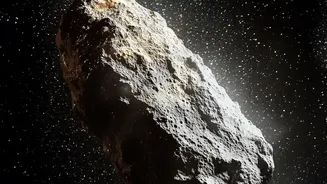
Understanding precisely how meteors behave during atmospheric entry isn't just an academic exercise. This research has crucial real-world applications. By analysing the composition of meteors, we learn about their parent bodies—asteroids and comets—which are remnants from the formation of the solar system 4.5 billion years ago. This helps scientists piece together the history of our cosmic neighbourhood. Furthermore, studying how these objects heat up, vaporise, and fragment provides critical data for planetary defense. Models that predict the threat from incoming asteroids need accurate data on how they will behave in our atmosphere. This research helps NASA and other agencies better assess whether a space rock will disintegrate harmlessly or pose a threat on the ground. The same physics also informs the design of spacecraft and heat shields meant to survive their own fiery reentry into Earth's atmosphere.