




Uncorking the Bronze Age
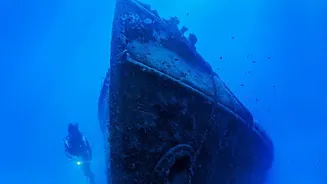
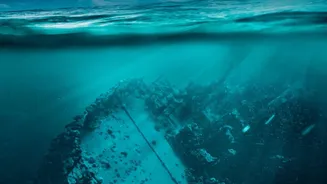
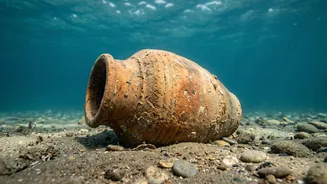
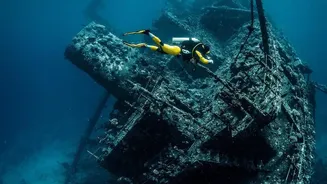
Off the coast of Turkey, a recent discovery is making waves in the archaeological community. Researchers from Akdeniz University have been investigating what may be the world's oldest known shipwreck, dating back as far as 4,700 years. The wooden ship itself
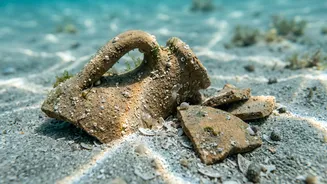
has long since disintegrated, but its cargo of more than 30 large ceramic jars, known as amphorae, remains scattered on the seabed. These containers, characteristic of the Early Bronze Age, are giving experts a tantalizing glimpse into the bustling trade networks that crisscrossed the Mediterranean long before the rise of Rome. The style of the pottery suggests it originated in the Levant region, which includes modern-day Syria, Lebanon, and Israel, and was likely headed west.
The Science of Scraps
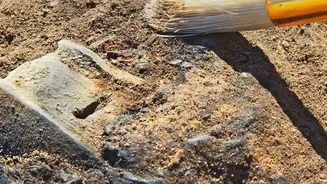
So, how can scientists tell what was inside a jar nearly 5,000 years ago? The answer lies in the invisible traces left behind. Even after millennia underwater, some of the Turkish amphorae still contained a visible residue. This is where archaeological science, or archaeometry, comes in. Researchers use a technique called organic residue analysis to study these microscopic leftovers. By taking a small sample of the pottery and the sediment inside, they can run it through advanced lab equipment like a gas chromatograph-mass spectrometer (GC-MS). This process separates the ancient material into its chemical components, allowing scientists to identify specific 'biomarkers'. For example, the presence of tartaric acid is a strong indicator of wine, while certain fatty acids like oleic acid point to olive oil. This powerful combination of archaeology and chemistry turns a simple clay pot into a detailed historical document.
The Lifeblood of the Ancient World
The initial analysis of the Bronze Age amphorae off Turkey suggests they carried some of the ancient world's most vital commodities: wine, olive oil, and possibly tree resin. For ancient civilizations, these weren't just groceries; they were the backbone of the economy. Amphorae were the shipping containers of their day, produced on an industrial scale to transport goods across the sea. Their distinctive shapes, which varied by region and era, allow archaeologists to trace ancient trade routes with remarkable precision. A shipwreck laden with jars from a specific region provides a clear snapshot of commerce, showing who was trading what with whom. The discovery of Levantine jars off the Turkish coast, for instance, helps reinforce our understanding of extensive trade networks connecting the eastern and western Mediterranean thousands of years ago.
More Than Just a Jar
While wine and oil were common cargo, these discoveries sometimes reveal surprising details about life at sea. One of the jars from the Turkish wreck had two mysterious holes in its side. Archaeologists have speculated that it might have been used as a churn to make butter or cheese, suggesting the sailors may have kept live goats on board for dairy during their long voyages. This transforms the find from a simple tale of trade into a vivid story about the daily routines and resourcefulness of ancient mariners. These vessels weren't just carrying goods to sell; they were carrying the ingredients for life on the open water. This kind of detail helps researchers build a more complete picture of the past, moving beyond simple economics to understand the human experience.