





Ready for Liftoff, Awaiting the Nod
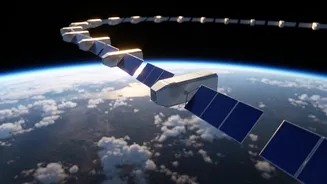
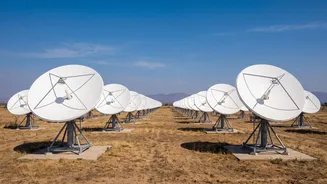
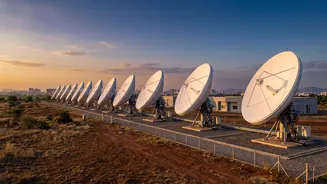
Starlink, the satellite internet division of SpaceX, has been proactively laying the groundwork for its services in India. The company has established 20 gateway earth stations across the country, complete with hundreds of antennas. These ground stations are
vital, acting as the bridge between the satellites in low-Earth orbit and India's terrestrial internet backbone. Speaking at the India Mobile Congress, a senior company executive confirmed that the physical infrastructure and operational systems are in place, designed specifically to meet India's security and data localisation requirements. This significant investment underscores Starlink's readiness to commence operations as soon as it receives the final government approvals.
Navigating the Regulatory Maze
The path to launching in India is a multi-step process involving several government bodies. Starlink has already cleared significant hurdles. In June 2025, it was granted the crucial Global Mobile Personal Communication by Satellite (GMPCS) licence by the Department of Telecommunications (DoT). This was followed by authorisation from the Indian National Space Promotion and Authorisation Centre (IN-SPACe) in July 2025. However, possessing these licenses is not the final step. The company still awaits final security clearances for its network and the formal allocation of spectrum, the radio frequencies needed to transmit data. These pending approvals are what currently prevent the service from going live for Indian consumers.
Security, Strategy, and a Cautious Approach
The Indian government's cautious stance is rooted in national security concerns, a framework tightened significantly after the 2008 Mumbai attacks, where attackers used satellite phones that were difficult to trace. Regulators require robust lawful interception and monitoring capabilities, and an assurance that all Indian user data is routed through Indian gateways and remains within the country. Starlink has stated its systems were built to comply with these rules. The situation grew more complex recently when Elon Musk publicly claimed that powerful 'oligarchs' were blocking Starlink's entry to protect their market dominance, an allegation the Indian government countered by stating its framework is fair and non-discriminatory. The government clarified that all three licensed satcom providers—Starlink, Jio Satellite Communications, and Bharti-backed Eutelsat OneWeb—are currently undergoing the same security assessment process.
The Promise of a Connected India
The eventual launch of Starlink and its competitors could be transformative for India's digital landscape, particularly in rural and remote regions where terrestrial fibre and mobile broadband are difficult and expensive to deploy. With hundreds of millions of Indians still lacking reliable high-speed internet, satellite broadband offers a promising solution to bridge the digital divide. To accelerate its market entry, Starlink has already entered into partnerships with telecom giants Reliance Jio and Bharti Airtel, a strategic shift from initial rivalry to cooperation. These agreements could leverage the established distribution networks of Jio and Airtel to help Starlink reach a mass audience quickly. For consumers, this new frontier of competition promises more choice and could potentially drive down costs, though Starlink's final pricing for the Indian market remains unannounced.