



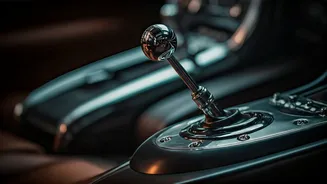


The Legend of the Gated Shifter
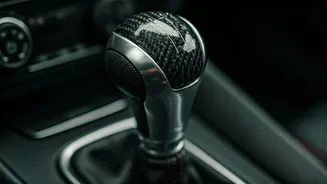
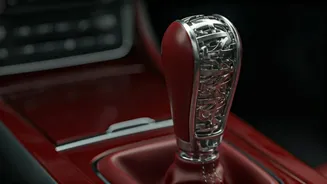
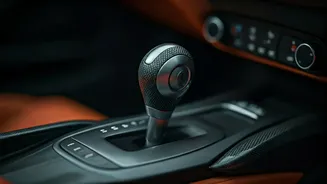
For driving purists, few things are as iconic as a classic Ferrari with an open-gate manual shifter. That polished metal lever, moving through its distinct H-pattern, was more than just a way to change gears. It was a physical connection to the car's
soul, a ritual that demanded skill and involvement. Each metallic 'click' as the lever slotted into place was a key part of the symphony, alongside the roar of a naturally aspirated V12 engine. But as technology marched on, this beloved feature vanished. Automatics, specifically dual-clutch transmissions (DCTs), became faster, more efficient, and ultimately, more popular, leading Ferrari to cease production of manual cars entirely after the California and 599 GTB. Enthusiasts have mourned its loss ever since, creating a powerful sense of nostalgia that the brand has finally decided to address.
What Exactly Is 'By-Wire'?
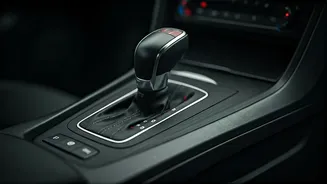
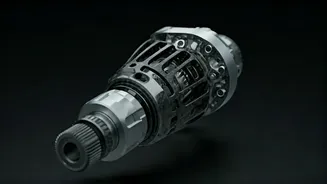
To understand Ferrari's new invention, one must first understand the term 'by-wire'. Think of it as the difference between a mechanical typewriter and a modern keyboard. In a traditional car, moving the gear lever physically moves rods and forks inside the transmission. With a 'by-wire' system, that physical link is replaced by electronics. The gear lever and clutch pedal are not connected to the gearbox directly; instead, they are connected to sensors. When the driver moves the shifter or presses the clutch, these sensors send an electrical signal to a computer, which then tells actuators in the transmission how to behave. This technology is already common for throttles and even steering in some modern cars, but applying it to a manual-style shifter is a bold new step. It allows for complete control over the feel and response, but severs the direct mechanical bond drivers have traditionally cherished.
A Patent Comes to Life
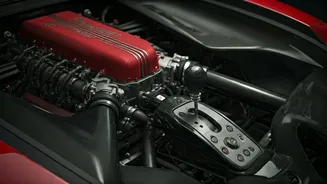
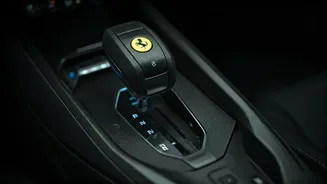
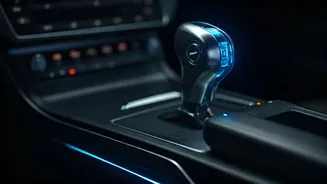
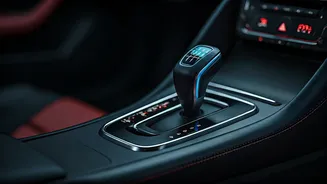
Recent patent filings, which came to light in mid-June 2026, revealed Ferrari's plan: an H-pattern shifter that looks and feels like the classic gated manual but controls the car's modern automatic transmission. This was not just a patent for a theoretical idea. On July 4th, the company announced the limited-edition 12Cilindri Manuale, the first car to feature the 'Manuale By-Wire' system. The system pairs a physical clutch pedal and a six-speed gated shifter with the car's existing eight-speed dual-clutch gearbox. There is no mechanical linkage whatsoever. Instead, the driver's inputs are translated into digital commands, blending the theatre of old-school shifting with the performance of a cutting-edge automatic.
The Best of Both Worlds?
Ferrari's marketing chief, Emanuele Carando, explained that while the company could have built a true mechanical manual, it would have gone against their principle of never sacrificing performance. The by-wire system is a clever compromise. It retains the lightning-fast shifts and efficiency of the DCT, ensuring the car's 819 hp V12 engine can deliver its full potential without compromise. The entire by-wire system adds only about five kilograms to the car's weight. Crucially, Ferrari has engineered the system to feel authentic. They've programmed in resistance and feedback, and a driver can even stall the car if they get the clutch timing wrong. This approach is similar to the 'Engage Shift System' offered by Swedish hypercar maker Koenigsegg, which also simulates a manual experience atop an advanced automatic transmission.
Progress or Pretence?
The announcement has inevitably divided opinion. To some, it is a brilliant innovation that saves the engaging, three-pedal driving experience from extinction in an era of electrification and automation. It allows the driver to feel involved while retaining the objective performance benefits of modern technology. For others, it's an elaborate simulation—a high-tech ghost in the machine. They argue that the beauty of a manual was its raw, mechanical honesty, something that can't be replicated with sensors and software. Purists might call it a gimmick, a complex solution that only mimics the feeling it replaces. However, the overwhelming demand from customers for a more tactile experience is what drove Ferrari to invest two years into the system's development. With only 1,499 examples of the 12Cilindri Manuale being produced, it is an exclusive answer to that call.