








A Landmark Orbital Achievement
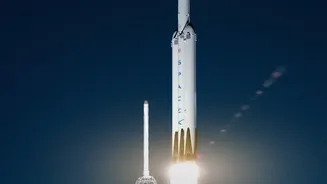
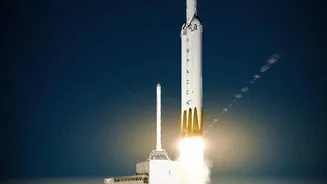
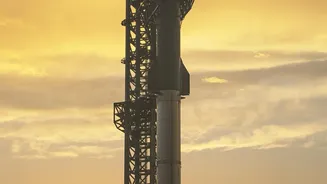
On Monday, September 28, 2026, the world's largest and most powerful rocket system, collectively known as Starship, blasted off from SpaceX's Starbase facility in Texas. This was its 14th test flight, but it was unlike any before it. For the first time,
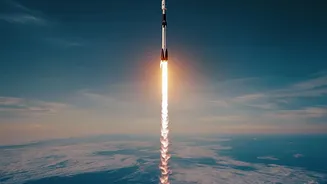
the vehicle was not just aiming for a high-altitude arc but a full trip into Earth's orbit. The mission overcame some in-flight drama, including an early shutdown of one of the upper stage's six Raptor engines. Despite the anomaly, flight controllers made the bold call to proceed. Around 25 minutes after liftoff, Starship fired another engine to push itself into a stable orbit, marking a monumental success for the program. While the original plan for a 10-hour, six-orbit journey was shortened to about three hours out of caution, the primary objective was met with roaring applause at mission control.
From Suborbital Hops to Orbit
Previous test flights of the massive rocket were all suborbital. This meant they were launched on trajectories designed to arc high into space but ultimately fall back to Earth without completing a full revolution around the planet. This approach was a deliberate safety measure, ensuring that any potential failures would result in debris landing in a predefined, unpopulated area of the ocean. Achieving orbit is a far greater challenge and a critical step toward operational status. It requires reaching speeds of around 28,000 km/h and demonstrating precise control. This flight proved Starship could not only reach orbital velocity but also maneuver in space, perform a deorbit burn to begin its descent, and survive the intense heat of atmospheric reentry before splashing down in the Pacific Ocean.
Delivering on a Key Promise
This mission was not just about reaching orbit; it was also about proving Starship's capability as a workhorse. For the first time, the vehicle carried an operational payload. Tucked inside its cargo bay were 26 next-generation Starlink V3 satellites, which were successfully deployed. This demonstration transforms Starship from a test vehicle into a potentially revolutionary launch platform. SpaceX aims to use the rocket's massive capacity to accelerate the deployment of its global internet constellation and eventually launch much larger payloads than any other rocket in history. Three of the satellites were even fitted with cameras to gather crucial data on the performance of Starship's heat shield during reentry, a key system for future reusability.
The Road to the Moon and Mars
This successful orbital flight is a cornerstone of SpaceX's ambitious long-term vision. The entire Starship system is designed to be fully and rapidly reusable, a goal that, if achieved, could drastically lower the cost of access to space. This success is particularly vital for NASA's Artemis program, which plans to use a modified version of Starship as the landing vehicle to return astronauts to the lunar surface, a mission slated for no earlier than 2028. Before carrying humans, SpaceX must prove it can refuel Starship in orbit, a complex maneuver that will require multiple tanker flights to prepare the lunar lander for its journey. Monday's flight, while not flawless, provides NASA and SpaceX with invaluable real-world data and builds confidence that the system is on the right track to support future human exploration of the Moon, and eventually, Mars.