


The Power of a Simple Block
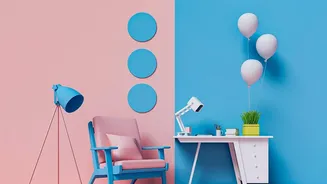
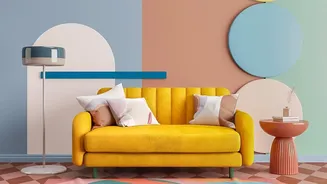
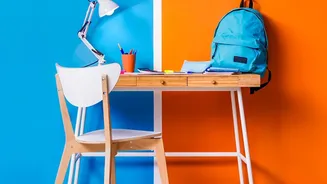
First, let's appreciate the foundation: colour-blocking. In its purest form, this interior design technique uses solid planes of contrasting or complementary colours to create visual structure. Think of a single, bold accent wall, a vibrant sofa against
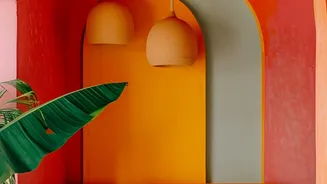
neutral surroundings, or a rug with large, distinct fields of colour. Originating from early 20th-century art movements like De Stijl, the idea is to let colour itself do the organizational work, turning a surface into a shape. This approach is confident and impactful, creating a focal point and defining a space with deliberate, clean boundaries. It’s an effective way to transform a room, but it’s only the first layer of the story.
Introducing Structure with Shapes
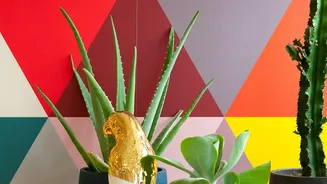
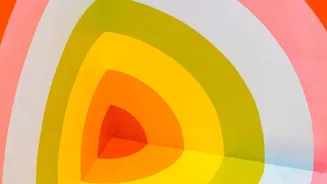
Now, add geometry. When those blocks of colour are defined by crisp lines, circles, and triangles, the entire dynamic changes. You’re no longer just looking at colour; you’re interpreting a composition. Geometric forms add a layer of logic, movement, and intention. A simple diagonal line can create visual interest and energy, while overlapping circles can soften a room's hard corners. This combination elevates the concept from just pairing colours to telling a visual story, where both shape and shade play a crucial role. Art that uses geometric colour-blocking feels more deliberate and sophisticated because it engages our brain on two levels simultaneously: the emotional pull of colour and the logical appeal of form.
The Psychology of Shape and Shade
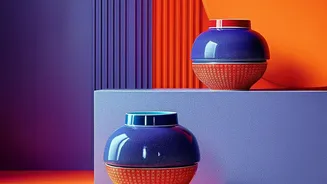
Every shape carries a subconscious meaning that influences the mood of a space. Squares and rectangles convey a sense of stability, order, and security, making them excellent for creating a balanced, calm environment. Circles and curves, on the other hand, feel softer, more harmonious, and welcoming; they represent unity and wholeness. Triangles are dynamic and full of energy, suggesting movement, direction, and even tension. When you pair these shapes with colour psychology, their impact multiplies. For example, a calming blue in a circular form enhances a feeling of soothing continuity. A vibrant, energetic red formed into a stable square creates a look that feels both powerful and grounded. This interplay allows you to precisely tune the atmosphere of a room.
Directing Energy and Focus
In practical terms, geometric colour-blocked art is a powerful tool for managing a room’s energy. The lines and forms can direct the eye, creating movement and flow. A piece with strong vertical lines can make a ceiling feel higher, while horizontal blocks can widen a narrow space. An artwork with triangular shapes pointing upward can add a sense of dynamism perfect for a creative studio or entryway. Conversely, a composition of interlocking squares or soft-edged polygons can bring a sense of reassuring order to a living room or home office. This type of art doesn’t just hang on the wall; it actively interacts with the architecture of the room, enhancing its strengths and correcting its weaknesses.
Choosing the Right Piece for Your Home
When selecting geometric art, consider its purpose. Do you want to energize a dull corner or create a tranquil retreat? For energy, look for high-contrast colours and dynamic shapes like triangles or chevrons. For calm, choose analogous colours (those next to each other on the colour wheel) and softer forms like circles or overlapping rectangles. The general rule for colour-blocking is to stick to two or three colours plus a neutral to avoid a chaotic feel. Also, consider scale. An oversized canvas can serve as the primary anchor for an entire room, making the space feel intentional and curated. Don’t be afraid to choose a single, confident piece that defines the personality of your space.