



Tashkent: The Modern Gateway
Your journey will likely begin in Tashkent, the vibrant capital of Uzbekistan. It’s a fascinating blend of Soviet-era architecture, modern gloss, and ancient history. Take a ride on the Tashkent Metro, where each station is a work of art, reminiscent
of Moscow's famous underground. Don’t miss the bustling Chorsu Bazaar, a massive, blue-domed market where you can soak in the local culture, haggle for spices, and taste fresh bread (non). The city also houses important religious sites like the Khast-Imam Complex. Direct flights from Delhi and Hyderabad make getting to this gateway city a breeze, with carriers like Uzbekistan Airways and Centrum Air offering regular services.
Samarkand: Crossroads of Cultures
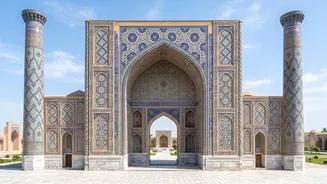
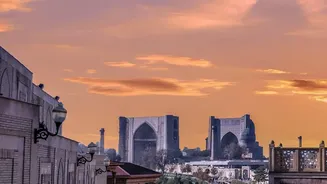
No trip to Uzbekistan is complete without visiting Samarkand, a name that evokes tales of grandeur and conquest. This is the city of Amir Timur (Tamerlane), and its historical connection to India's Mughal dynasty is profound, as its founder, Babur, was Timur's great-great-great-grandson. The heart of the city is the majestic Registan Square, a breathtaking ensemble of three madrasahs. You can almost feel the history in the air. Other must-see sites include the Gur-e-Amir mausoleum, Timur's final resting place, and the Shah-i-Zinda necropolis, a stunning street of tombs adorned with intricate blue tiles. The scale and beauty of the architecture here are simply unparalleled.
Bukhara: The Living Museum
If Samarkand is majestic, Bukhara is enchanting. This ancient city, with a history stretching back over 2,500 years, feels like a living museum. Its historic centre is a UNESCO World Heritage site, a maze of narrow alleys, mosques, and madrasahs. The Poi Kalyan complex, with its towering minaret that has stood for centuries, is a sight to behold, especially at sunset. You can wander through the old trading domes, visit the formidable Ark of Bukhara fortress, and relax by the Lyabi-Hauz, a tranquil pond surrounded by centuries-old buildings. Bukhara was a major centre of commerce, religion, and culture, and that spirit still feels alive in its streets today.
Khiva: A Journey Back in Time
Of all the Silk Road cities, Khiva is perhaps the most intact and atmospheric. Its walled inner city, Itchan Kala, is a pedestrian-only fortress filled with palaces, mosques, and minarets. Entering through its massive gates feels like stepping directly into the past. You can climb the Islam-Khodja minaret for a panoramic view of the sand-coloured city or get lost in the labyrinthine alleys of the Kunya-Ark, the old citadel. Unlike the grand avenues of Samarkand, Khiva offers an intimate experience of what a small, fortified Silk Road town was like. It’s a photographer’s dream and a perfect final stop on your Uzbek adventure.
A Taste of Uzbekistan
Uzbek cuisine shares delightful similarities with Indian food, making it both familiar and exciting for the Indian palate. The star dish is Plov, a flavourful rice pilaf with meat and vegetables, reminiscent of our own pulao. You'll also find Samsa, baked pastries that look and sound like samosas, though they are usually baked in a tandoor and stuffed with meat. Other popular dishes include Manti (steamed dumplings) and Shashlik (grilled skewers of meat). For vegetarians, while meat is central to the cuisine, you can find dishes like fresh salads (Achichuk) and vegetable-filled pastries. And of course, no meal is complete without Non, the traditional round bread that is sacred in Uzbek culture.