



A Celestial Lion Roars to Life
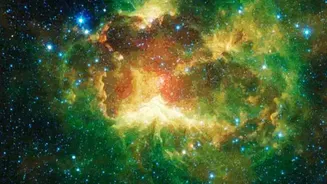
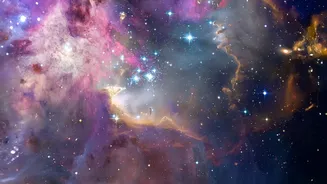
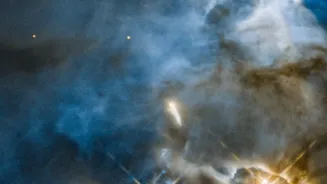
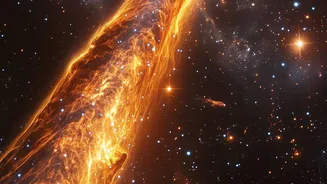
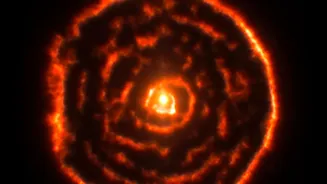
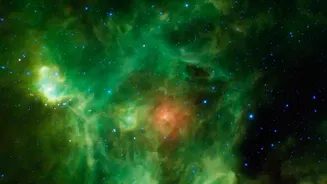
The new images, released by NASA and its partners, show the Lion Nebula in a completely new light. Where previous images showed a beautiful but hazy structure, Webb’s view cuts through the cosmic dust to reveal the intricate mechanics sculpting the nebula
from within. Known formally as NGC 2392, the object is a planetary nebula, the glowing remnants of a dying star similar to our own sun. Webb’s portrait showcases a central star, now a white dwarf, blasting radiation into the shells of gas and dust it previously ejected. This creates a spectacular scene: a central “face” of ionized gas surrounded by a magnificent, flowing “mane” of cooler material, giving the nebula its famous nickname. The level of detail is so sharp that scientists can distinguish delicate, comet-like tails of dust streaming away from the core.
The Power of Infrared Vision
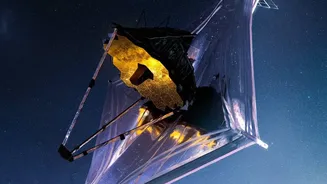
This fresh perspective is a direct result of the James Webb Space Telescope's groundbreaking technology. Unlike the Hubble Space Telescope, which primarily observes in visible and ultraviolet light, Webb is designed to see the universe in infrared. This capability is crucial for studying objects like the Lion Nebula. Infrared light can penetrate the dense clouds of gas and dust that obscure many cosmic phenomena, allowing astronomers to see the processes happening deep inside. For NGC 2392, Webb's combined Near-Infrared Camera (NIRCam) and Mid-Infrared Instrument (MIRI) have mapped the structure of both hot, ionized gas and cooler, dense dust clumps that were previously hidden. This provides a more complete picture of the violent, beautiful push-and-pull between the dying star and the material it cast off thousands of years ago.
A Glimpse into Our Sun's Future
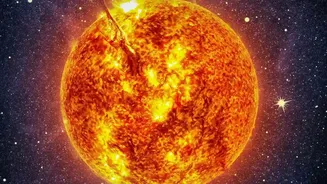
Beyond its sheer beauty, the Lion Nebula is a scientific treasure because it offers a preview of our own solar system's eventual fate. In about five billion years, our sun will exhaust its nuclear fuel and go through a similar process. It will shed its outer layers, creating a planetary nebula of its own, while its core collapses into a white dwarf. By studying NGC 2392, which lies about 4,200 light-years away, astronomers can refine their models of stellar evolution for sun-like stars. Webb’s new data helps scientists understand how the intense radiation from a white dwarf interacts with the surrounding material, destroying some dust while creating complex, resilient structures in other areas. These observations are critical for understanding how dying stars enrich the galaxy with heavy elements that will one day form new stars and planets.
Why A Lion? Unpacking the Name
The nickname “Lion Nebula” comes from its appearance in telescopic images, where the outer shell of gas and dust forms a halo around the bright inner region, resembling a lion's majestic mane. The central white dwarf serves as the “nose” of this cosmic lion. Interestingly, this object has had other names, including the Clownface Nebula and the Eskimo Nebula, though the latter has been retired by NASA out of cultural respect. The name Lion Nebula, sometimes specified as the Lion's Head Nebula, has gained popularity for its fitting description of the object's appearance, especially in the detailed images produced by Hubble and now, even more spectacularly, by Webb. The structures that form the mane are believed to be dense clumps of dust protecting cooler gas behind them, creating long, streaming tails.