



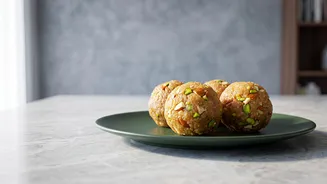
What Exactly Is Jaggery?
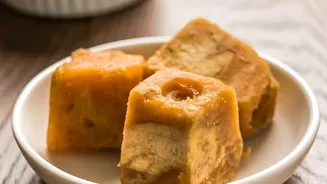
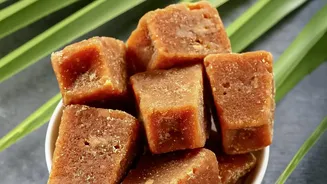
Jaggery, known as 'gur' in many parts of India, is a traditional, unrefined sugar made by boiling raw sugarcane juice or palm sap. Unlike white sugar, which is heavily processed to isolate pure sucrose, jaggery production is simpler. The juice is boiled
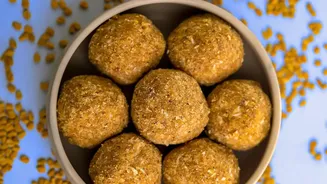
for hours until it reduces to a thick, dense liquid or paste, which then solidifies as it cools. This minimal processing is key to its character. Because it doesn't undergo separation of the molasses and crystals, jaggery retains a wealth of natural components. This is what gives it its characteristic golden-brown to dark-brown colour and its complex, earthy aroma.
The Showdown: A Deeper Sweetness
The core difference between sweetening with jaggery versus white sugar lies in the flavour profile. White sugar is 99.7% sucrose, providing a pure, one-dimensional sweetness. It sweetens a dish without adding any other flavour notes, which can be useful but also uninspired. Jaggery, on the other hand, is a far more complex ingredient. Because it retains its natural molasses content, it has a rich, caramel-like taste with deep, earthy undertones. Some even describe its fragrance as 'winy'. This isn't just sweetness; it's flavour depth. While white sugar simply adds a high note, jaggery provides a full-bodied, mellow sweetness that complements other ingredients instead of overpowering them. This complexity is what the headline refers to as a 'deeper sweetness'.
The Perfect Partner for Rice Flour
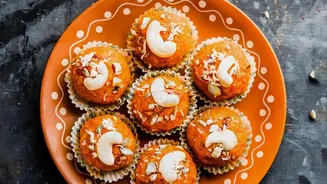
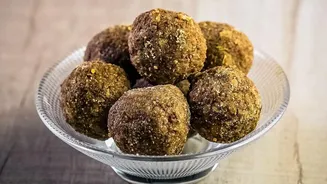
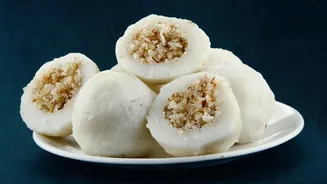
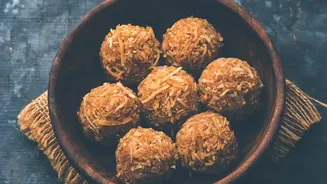
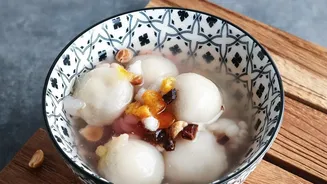
Rice flour, a staple in countless Indian desserts, is prized for its fine texture and neutral flavour. It’s a blank canvas, which is precisely why it pairs so beautifully with jaggery. While white sugar would make a rice flour dessert simply sweet, jaggery transforms it. The nutty, subtle taste of rice flour provides the perfect backdrop for jaggery’s smoky and caramel notes to shine. This dynamic is central to many traditional sweets across India, from Andhra Pradesh's 'chalimidi' to Bihar's 'dehori' and Tamil Nadu's 'kozhukattai'. In these desserts, the rice flour provides the body and texture, while the jaggery provides a soulful, aromatic sweetness that defines the dish's character.
More Than Just Flavour
Jaggery’s benefits extend beyond its taste. Its composition also affects the texture and appearance of desserts. The presence of molasses and invert sugars means jaggery is more moist than granulated sugar. This can result in baked goods and sweets that are softer and have a more tender crumb. Furthermore, jaggery imparts a beautiful, natural golden or deep brown colour to dishes, lending them a rustic and appealing look that bleached white sugar cannot replicate. From the rich hue of 'gur ke chawal' (jaggery rice) to the golden syrup soaking a 'malpua', the colour itself is part of the appeal.
A Naturally Gluten-Free Team
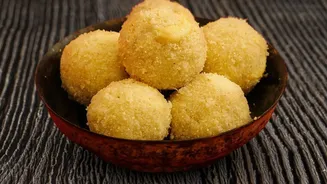
For those with dietary sensitivities, the combination of rice flour and jaggery is a fantastic gluten-free option. Rice flour is a well-known and widely used gluten-free flour, forming the base of many safe and delicious desserts for those with celiac disease or gluten intolerance. Pure jaggery, being derived from sugarcane or palm sap, is also naturally free of gluten. This makes the pairing a reliable and traditional choice for creating desserts that are both delicious and inclusive. Sweets like rice flour 'pedas' or dumplings sweetened with jaggery are perfect examples of treats that can be enjoyed by everyone, without the need for specialised ingredients.