






A New Bloom in the Cold Desert
Against the stark, majestic backdrop of Ladakh's mountains, a new and colourful sight has emerged. The Ladakh administration recently inaugurated what are being called the world's highest-altitude twin flower fields. Located at Choglamsar and Stakna in Leh,
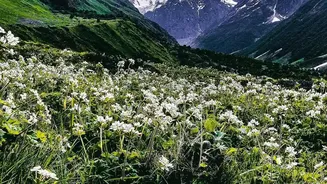
these gardens are situated at an elevation of 10,600 feet and cover a combined area of 40 acres. In a region known for its rugged, barren beauty, these fields now house over 2.5 million flowers, primarily Lilium and Gladiolus, creating striking visuals in shades of yellow, white, orange, and red. The project at Choglamsar was developed with remarkable speed, with the first blooms appearing just two months after planting began in July. Opened to the public in September, the gardens offer a new recreational space for residents and a unique attraction for tourists.
More Than Just a Pretty Sight
This initiative is much more than a simple beautification project; it's a strategic move to diversify Ladakh's economy and empower its communities. The development is a key part of the CSIR-Floriculture Mission, which aims to promote the cultivation of high-value flowers in regions with unique climatic conditions. Lieutenant Governor of Ladakh, Vinai Kumar Saxena, highlighted that the project is designed to create new livelihood opportunities, enhance agricultural skills, and provide a sustainable source of income for local farmers. By introducing commercial floriculture, the administration aims to tap into the growing demand for ornamental flowers in national markets, offering a profitable alternative to traditional farming. The gardens are envisioned as hubs for innovation, where science-led agriculture can thrive in a challenging environment.
The Science of High-Altitude Blooms
Cultivating millions of flowers in a cold desert is a significant scientific achievement. High-altitude regions like Ladakh present numerous challenges, including a short growing season, low oxygen levels, and extreme temperature fluctuations. The success of these gardens relies on a partnership between the local administration and scientific institutions like the CSIR-Institute of Himalayan Bioresource Technology (CSIR-IHBT). This collaboration provides crucial technical support, from selecting cold-tolerant flower varieties like Lilium, Gladiolus, and Tulips to implementing modern farming techniques suited for the environment. The Choglamsar park is set to function as a model floriculture centre, where local farmers and young entrepreneurs can receive training in scientific cultivation, post-harvest management, and other skills needed to build a successful enterprise.
Cultivating Economic Opportunity
The economic implications of this project are already becoming visible. The first commercial consignment of 15,000 premium Lilium stems has already been airlifted from Leh to major markets in Delhi, Mumbai, and Chandigarh. These high-quality flowers, with multiple buds per stem and a good shelf life, are expected to fetch premium prices, demonstrating the commercial viability of high-altitude floriculture. The project is creating direct employment, with local women engaged in cutting, sorting, and packaging the flowers for a daily wage. The plan involves the Agriculture Department managing the fields for the first year before handing them over to local self-help groups and cooperatives, ensuring the benefits flow directly into the community and fostering a new generation of agri-entrepreneurs.