


The Sound of a Coming Disaster
The massive 2022 eruption of the Hunga Tonga-Hunga Ha'apai volcano was a wake-up call. It triggered devastating tsunamis and sent shockwaves around the planet. In the aftermath, researchers analysing the data discovered something remarkable. The most
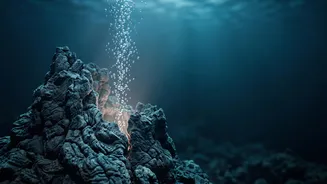
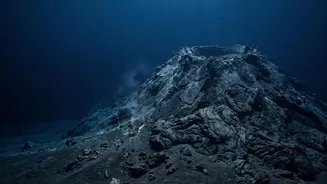
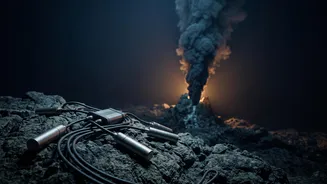
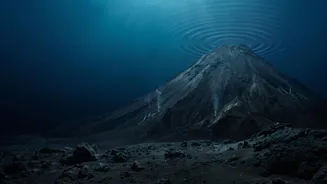
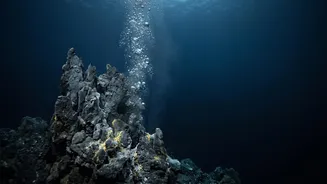
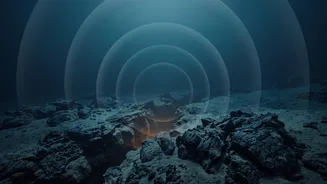
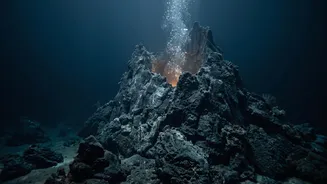
destructive tsunami wasn't caused by the initial blast, but by the volcano's caldera collapsing inward about 90 minutes later. This collapse produced a powerful, low-frequency sound—a hydro-acoustic signal—that travelled through the ocean for thousands of kilometres. An isolated underwater volcano can act like a giant bell, ringing out the sounds of its violent processes. These sounds were picked up by seismic stations far away, which, when tuned to the right frequencies, revealed a clear acoustic signature of the event.
Faster Than the Wave
Herein lies the breakthrough. These underwater sound waves travel at about 1.5 kilometres per second, which is more than seven times faster than a tsunami wave. A tsunami might travel at the speed of a jet plane, but sound moves through water significantly faster. This time difference creates a crucial window for early warnings. By the time a tsunami generated by a volcanic collapse reaches a coastline, an acoustic signal from the same event would have arrived much earlier. This could give authorities precious minutes, or even hours, to issue evacuation orders, a significant improvement on current systems that often struggle to predict volcanically-generated tsunamis.
The Limits of Current Systems
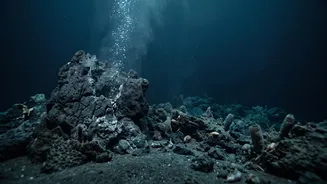
Monitoring submarine volcanoes is notoriously difficult. There are hundreds scattered across the globe, many in remote locations. Traditional warning systems are primarily designed for tsunamis caused by earthquakes. They rely on seismic sensors to detect ground shaking and sea-level buoys to confirm a wave has been generated. However, these methods are less effective for volcanic events. Volcanic tsunamis can be caused by various mechanisms, including landslides, pyroclastic flows, or caldera collapses, which are not always well-detected by distant seismometers. For instance, the closest seismometer to the Hunga eruption was 750 kilometres away in Fiji, and it only weakly detected the catastrophic collapse. Satellites can spot ash plumes but cannot see through clouds or confirm if a tsunami is on its way.
A New Era of Acoustic Monitoring
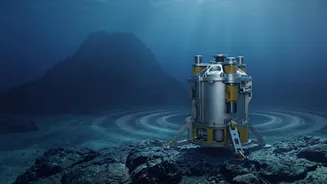
The research into the Hunga eruption has bolstered the case for integrating hydro-acoustic monitoring into global tsunami warning systems. The idea is to create networks that can automatically listen for, recognise, and locate the specific acoustic signatures of tsunami-generating events like a caldera collapse. This wouldn't replace existing systems but would add a vital layer of data, especially for the 13% of tsunamis caused by volcanic activity. Scientists have been studying underwater volcano sounds for years, learning to distinguish the short, low-frequency noises of magma bursts from the longer, broadband sounds of gas releases. Other research has even used the ambient noise of crashing ocean waves, measured by seismometers, to detect magma moving beneath the surface. These evolving techniques show a promising future where listening to the ocean becomes a key forecasting tool.