





A Mission to Cosmic Fossils
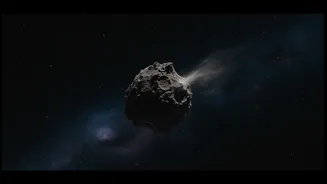
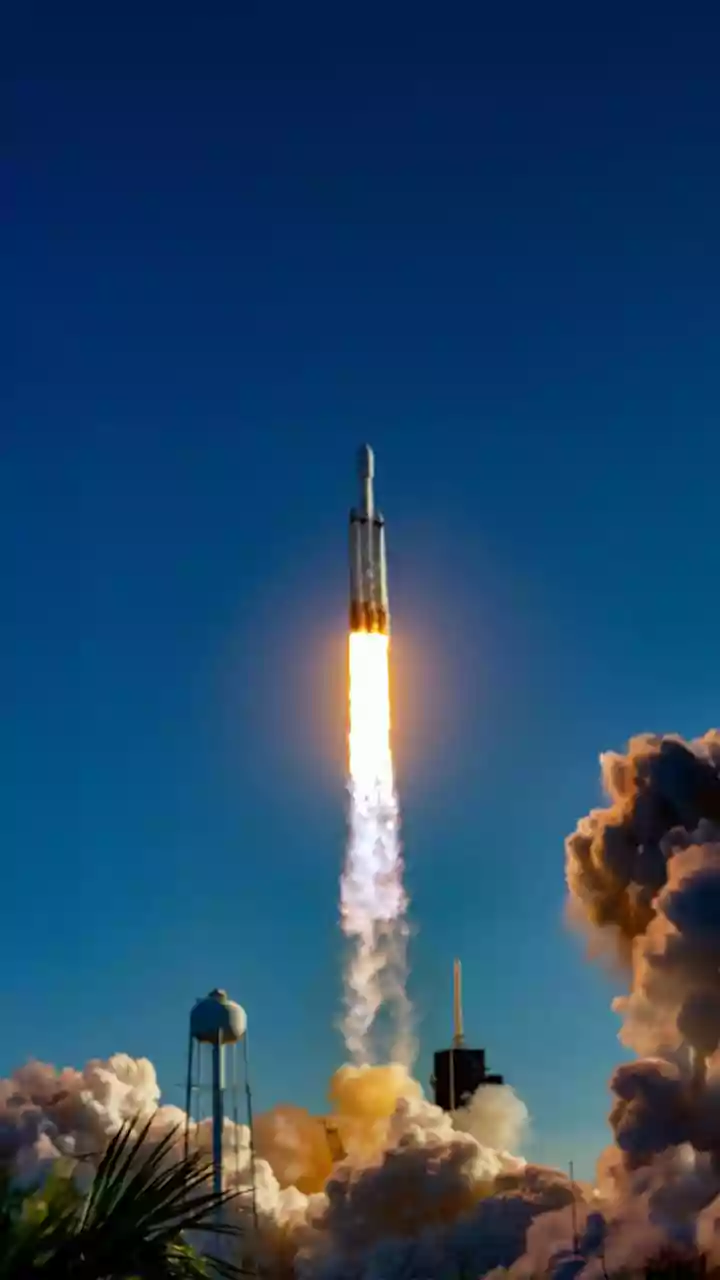
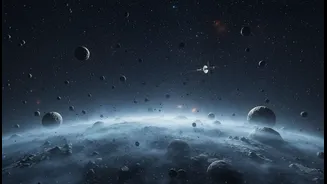
Launched in 2021, the Lucy spacecraft is on a grand tour of the Jupiter Trojan asteroids, two large swarms of space rocks that lead and trail the gas giant in its orbit around the sun. Scientists believe these asteroids are primordial bodies, leftovers
from the dawn of the solar system over 4.5 billion years ago. While geologic activity has erased the history of planets like Earth, these Trojans are like perfectly preserved fossils. By studying their composition, geology, and physical properties, Lucy aims to piece together the story of how the planets formed. The mission is aptly named after the fossilized human ancestor, 'Lucy', whose discovery revolutionized our understanding of human evolution. In the same way, this mission hopes to illuminate our cosmic lineage.
The Curious Case of Patroclus-Menoetius
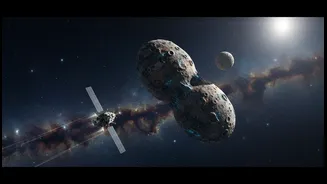
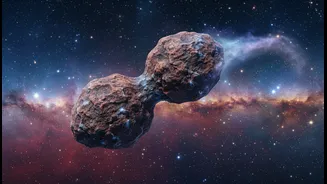
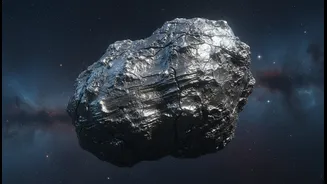
The grand finale of Lucy's primary mission, scheduled for 2033, is a flyby of a truly unique system: the binary asteroid Patroclus-Menoetius. This isn't a single object, but two bodies of nearly equal size—each about 100 kilometers in diameter—orbiting each other. From a distance, their close embrace gives them the appearance of a single, elongated, peanut-like object. What makes this pair so compelling is that they are the only large binary system known among the thousands of Trojan asteroids. Most asteroid pairs in the main belt are thought to be the result of violent collisions that broke a larger body apart. But scientists suspect Patroclus-Menoetius has a much more ancient and gentle origin story.
The Story Told by a Slow Dance
The key to unlocking the history of Patroclus-Menoetius lies in its motion. The two asteroids are locked in a slow, stable, and surprisingly delicate orbital dance around a common center of mass. Their journey together is not chaotic or frantic, as one might expect from the violent aftermath of a shattering impact. Instead, their gentle rotation suggests a far calmer beginning. Scientists theorize that these two bodies didn't collide but rather coalesced. In the very early solar system, the planetary building blocks formed from a collapsing cloud of dust and 'pebbles'. It’s believed that Patroclus and Menoetius came together gently within this primordial disk, two travelers who joined hands and never let go. Their fragile bond would not have survived a more turbulent formation.
A Window into a Younger Solar System
The survival of this binary pair provides a crucial clue for dating the history of our solar system. Current theories suggest that the giant planets—Jupiter, Saturn, Uranus, and Neptune—migrated from their original positions in a chaotic shuffle early in their history. This great planetary migration would have scattered countless smaller bodies, capturing some as Trojan asteroids. The very existence of the fragile Patroclus-Menoetius binary suggests this chaotic period must have happened very early, within the first 100 million years of the solar system's formation. If the migration had occurred later, the primordial disk would have been too collision-prone for such a delicate binary to survive intact before being captured into Jupiter's orbit.
Unlocking Our Own Origin Story
By studying this peanut-shaped pair and their Trojan companions, the Lucy mission is essentially conducting cosmic archaeology. These asteroids are believed to have formed in the outer solar system and may be rich in the same organic materials and water that were later delivered to Earth, providing the building blocks for life. Understanding their composition and formation tells us about the raw ingredients that were available when the planets, including our own, were being assembled. Each flyby, from the main-belt asteroid Donaldjohanson to the final rendezvous with Patroclus-Menoetius, adds another piece to the puzzle of how our solar system evolved from a disk of dust and gas into the complex system we see today. The motion of these distant rocks is a direct link to our deepest past.