





A New Window on the Cosmos
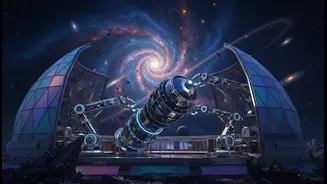
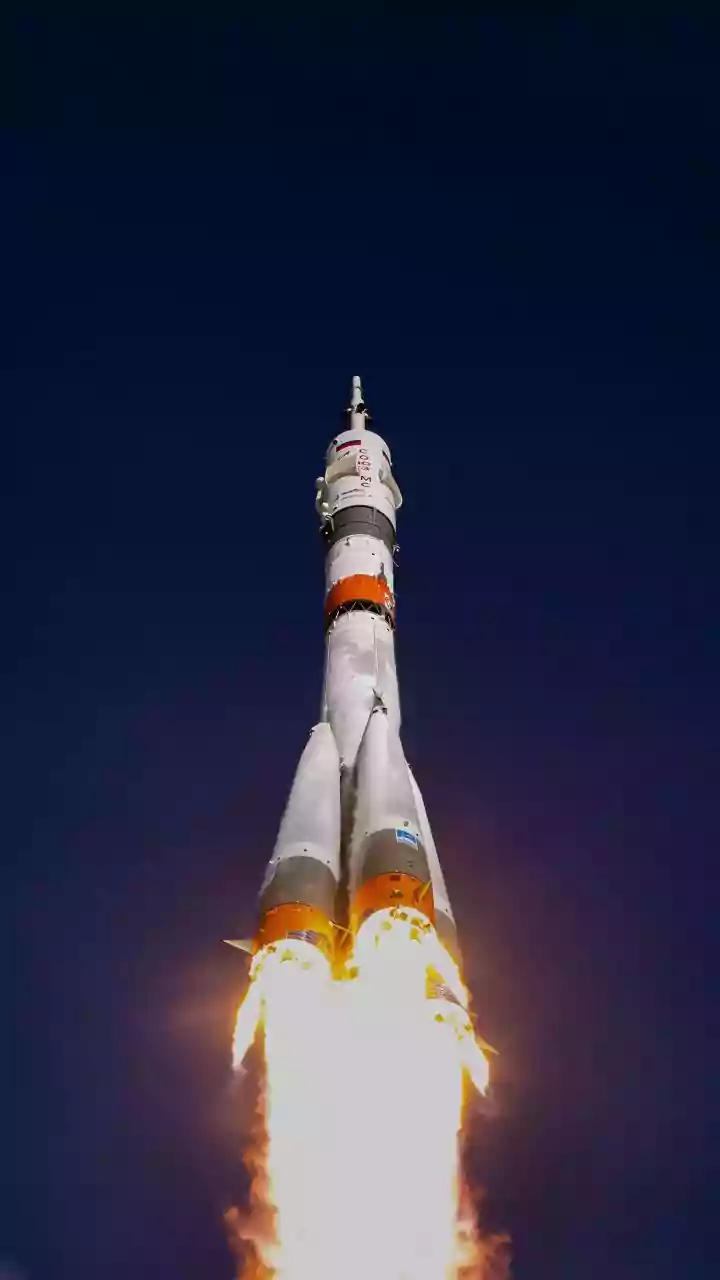
Set to launch in the 2040s, the Habitable Worlds Observatory is NASA's next flagship astrophysics mission after the James Webb Space Telescope (JWST) and the Roman Space Telescope. Its primary goal is profoundly ambitious: to become the first telescope
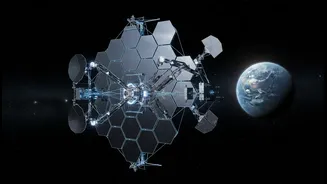
specifically designed to directly image Earth-sized planets around other stars and scan their atmospheres for biosignatures—gases like oxygen and methane that could indicate the presence of life. The HWO plans to survey at least 25 potentially habitable worlds, providing an unprecedented look at planets that might harbor life. But the mission isn't just about alien hunting; it will also conduct a broad range of astrophysical research, from studying the evolution of galaxies to exploring objects in our own solar system.
The Ghost of Telescopes Past
To understand the importance of HWO's design, we need to look at its predecessors. The Hubble Space Telescope, launched in 1990 into low-Earth orbit, was famously designed to be serviceable. When its primary mirror was found to have a flaw, a Space Shuttle mission was sent to install corrective optics, saving the entire program. Subsequent astronaut-led servicing missions upgraded its instruments, keeping it scientifically productive for over three decades. In stark contrast, the James Webb Space Telescope was designed as a single-shot mission. Orbiting a million miles from Earth at the second Lagrange point (L2), it is beyond the reach of any current human repair mission. Its deployment was a marvel of engineering, but had anything gone wrong, the multi-billion dollar observatory would have been lost. HWO is planned for the same distant L2 orbit, which makes the idea of repairing it much more complex.
Why is Finding New Worlds So Risky?
The HWO represents a monumental technological leap, and with that comes immense risk. The observatory will need to be about 100 times more stable than JWST to perform its observations. It must block the blinding light of a host star to detect the incredibly faint light reflecting off a planet that is billions of times dimmer. This requires a coronagraph with optics so precise they can make adjustments smaller than the width of an atom. Developing such cutting-edge technology for an $11 billion mission that cannot be fixed is a high-stakes gamble. A single point of failure—a stuck mirror segment, a malfunctioning sensor, or a flawed instrument—could jeopardize the primary scientific goal of the mission.
Engineering for a Second Chance
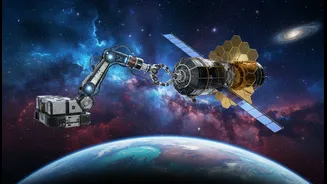
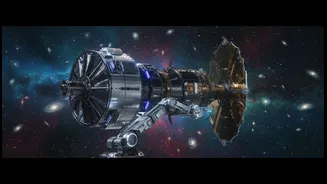
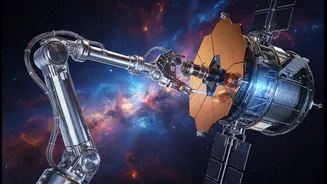
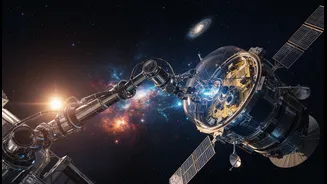
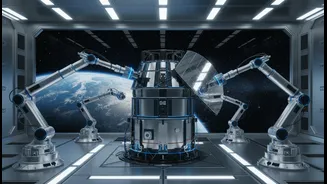
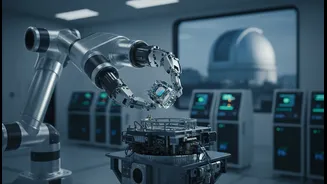
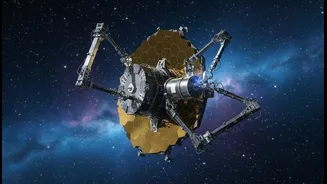
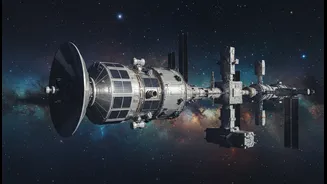
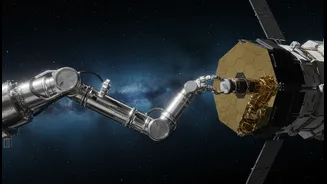
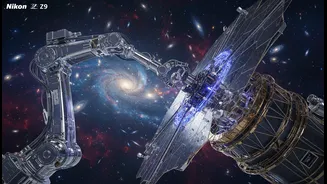
Learning from both Hubble and Webb, NASA is mandating that HWO be designed for servicing from its very inception. However, with astronauts unable to travel to the L2 point, this servicing will be robotic. The plan involves a modular design, where critical systems and scientific instruments are built as standardized Line-Replaceable Units (LRUs). These modules would feature docking interfaces and connectors optimized for robotic manipulation. In the future, a robotic servicing spacecraft could rendezvous with HWO, latch on, and swap out a failing component or even install a brand-new, more advanced scientific instrument. This not only provides a safety net against mission-ending failures but builds in the capacity for evolution.
Confidence in an Upgradeable Future
The decision to make HWO serviceable has profound implications. It reduces the overall program risk by providing a way to recover from unforeseen problems. More importantly, it allows engineers to incorporate more ambitious, cutting-edge technology into the initial design, knowing there's a fallback if it doesn't perform perfectly. Perhaps most excitingly, it future-proofs the observatory. As technology advances over the coming decades, HWO won't be stuck with its launch-day hardware. New instruments with capabilities we can't even imagine today could be installed, dramatically extending the telescope's scientific lifetime and return on investment. This approach gives astronomers confidence that this generational mission won't just launch, but will thrive, adapt, and continue delivering discoveries for decades to come.