




The idea is captivating: a home filled with lush greenery that not only looks beautiful but also scrubs the air clean. For decades, we've been told that houseplants are nature's air purifiers. But is your snake plant really a substitute for an open window?
The Myth's Origin: A NASA Study
The belief that houseplants can purify indoor air has its roots in a 1989 NASA study. With sights set on long-term space missions, researchers looked for ways to clean the air in sealed environments like a space station. They placed common houseplants in small, airtight plexiglass chambers and injected volatile organic compounds (VOCs) like formaldehyde and benzene. The results were promising: the plants, along with the microorganisms in their soil, were able to remove a significant portion of these pollutants from the sealed chambers. This 'Clean Air Study' quickly became famous, spawning countless articles and lists of the 'best air-purifying plants' for the home.
The Reality Check: Your Home Isn't a Space Station
The problem is that a typical home or office is nothing like a small, sealed laboratory chamber. Your rooms are much larger and are constantly exchanging air with the outside through open windows, doors, and general ventilation systems. More recent analyses have put the NASA findings into perspective. A 2019 review of decades of research concluded that the rate at which plants clean the air is far too slow to compete with a building's natural air exchange. In other words, simply opening a window for a few minutes removes pollutants far more effectively than a handful of plants can over days.
The Sheer Numbers Required
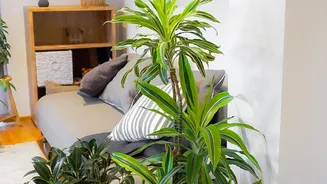
To replicate the air-cleaning effects seen in the lab, the number of plants you would need is staggering. Researchers have calculated that you'd require anywhere from 10 to 1,000 plants per square meter of floor space to make a meaningful difference to indoor air quality. For a modest 1,500-square-foot home, that could mean housing over 680 plants to achieve a noticeable effect. This essentially turns your living room into a dense jungle, a scenario that is impractical for almost everyone. So, while it's technically true that plants absorb some pollutants, the effect in a normal home environment is negligible.
The Real, Proven Benefits of Houseplants
Just because they aren't miracle air purifiers doesn't mean houseplants are useless. Far from it. Their most significant benefits are psychological and aesthetic. Studies have consistently shown that the presence of indoor plants can reduce stress, lower anxiety, and improve mood. Interacting with plants, even just by watering them, has been found to induce physiological relaxation. In office environments, the presence of greenery has been linked to increased productivity, improved concentration, and higher job satisfaction. Simply put, plants make a space feel more calming, vibrant, and alive, which has a tangible impact on our well being.
Choose Plants for Joy, Not for a Job
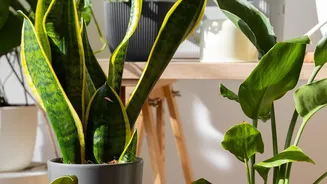
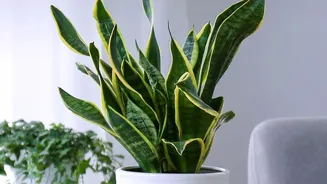
So, how should you approach bringing plants into your home? Focus on what they are guaranteed to deliver: beauty and a connection to nature. Choose plants that you find visually appealing and that suit your home's light conditions and your ability to care for them. Plants with soft, rounded shapes are often perceived as more relaxing. Hardy classics like Snake Plants (Sansevieria), Spider Plants (Chlorophytum comosum), and Pothos (Epipremnum aureum) are popular for a reason: they are resilient and look great with minimal fuss. Think of them as living decor that enhances your environment and offers a rewarding hobby, rather than as a functional air cleaning appliance.